Scallop shell Symbolism
Attribute of Venus Anadyomene; birth, purification, and the passage from sea (nature) to shore (culture).
Common Themes
Artworks Featuring This Symbol
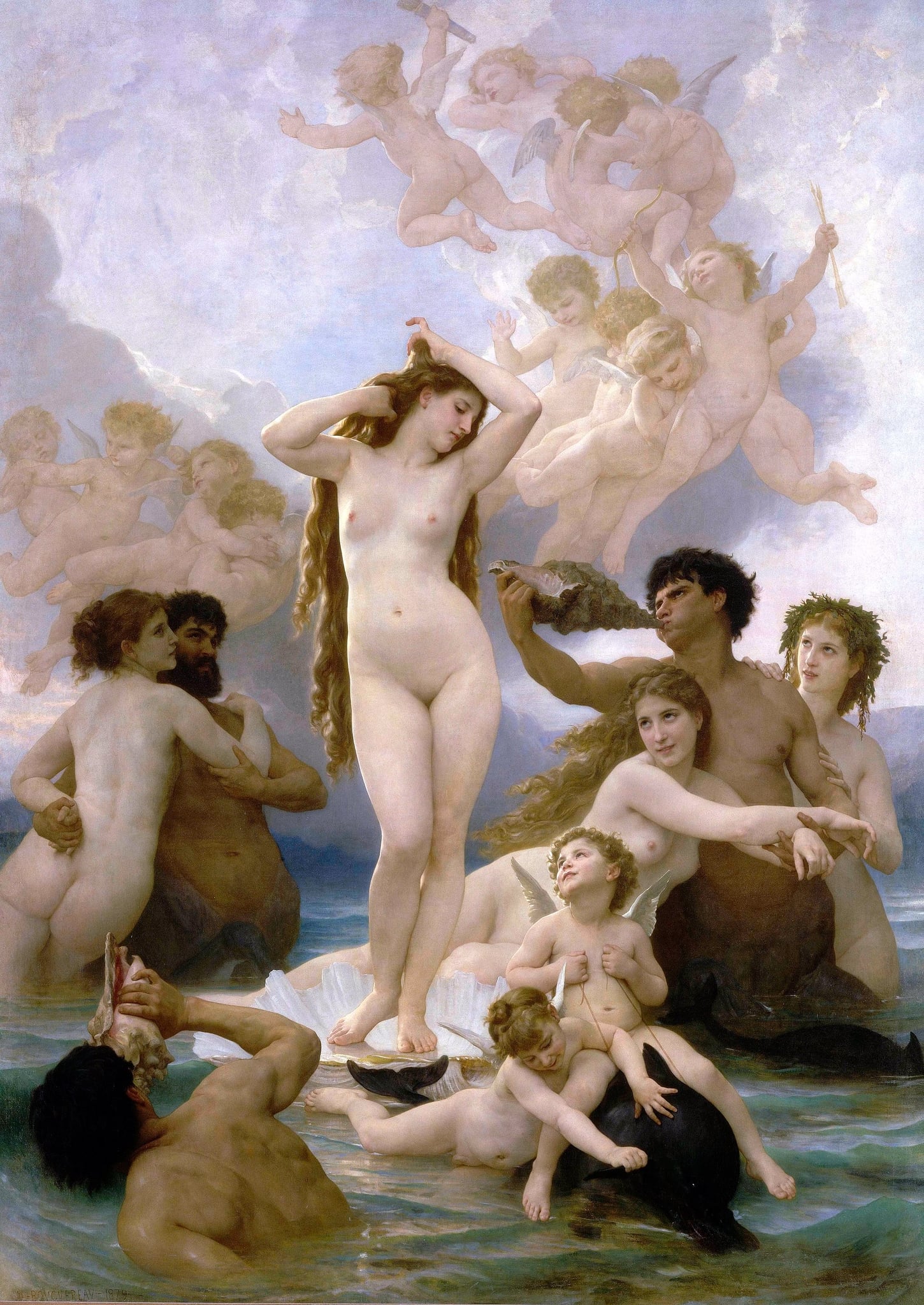
The Birth of Venus (Bouguereau)
William-Adolphe Bouguereau (1879)
A triumphant epiphany of <strong>Venus</strong> rising on a scallop shell, surrounded by tritons, nereids, dolphins, and a swirling halo of <strong>putti</strong>. Bouguereau fuses classical iconography with a porcelain finish to proclaim the civilizing power of <strong>ideal beauty</strong> and <strong>erotic love</strong> <sup>[1]</sup><sup>[5]</sup>.
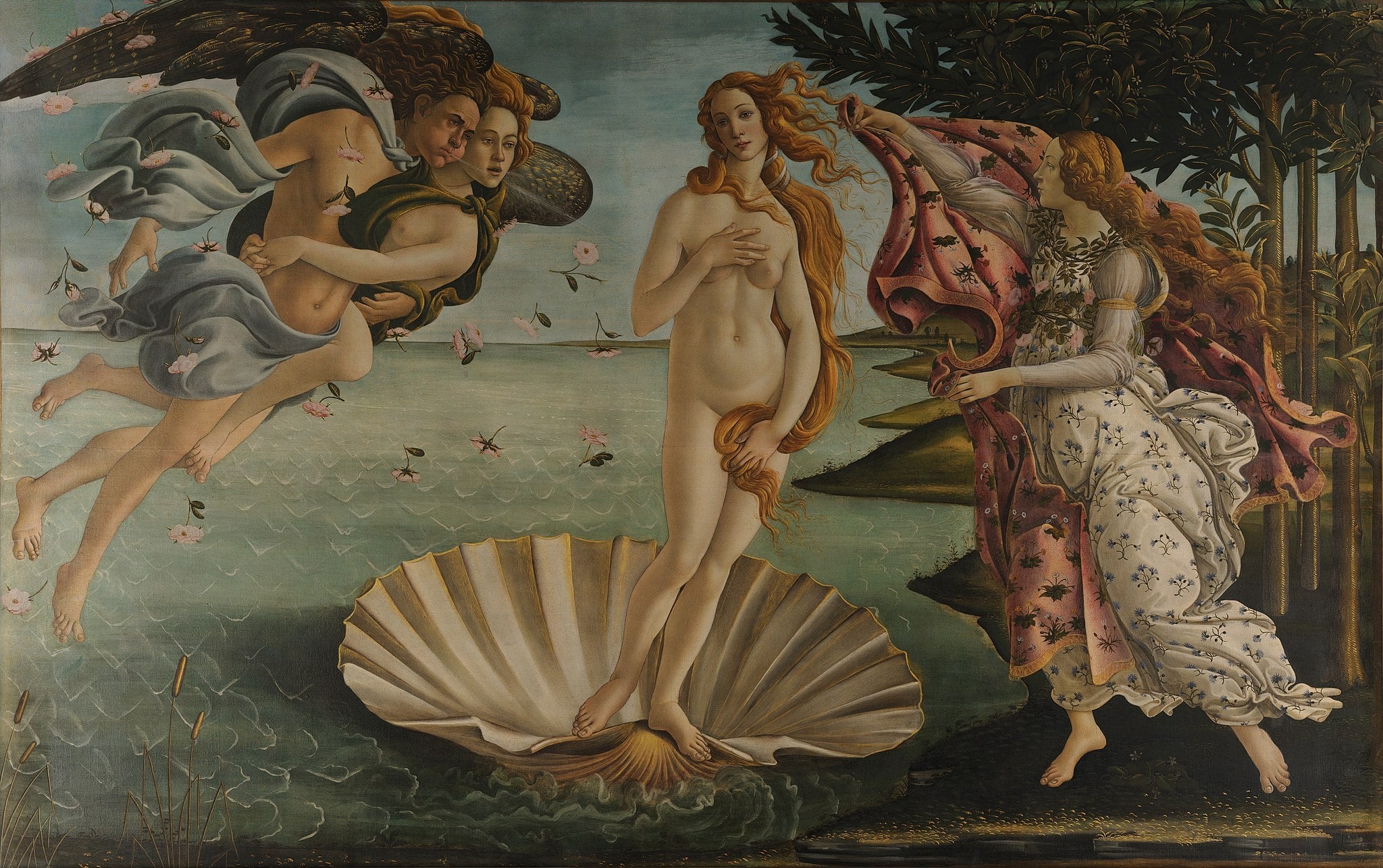
The Birth of Venus
Sandro Botticelli (c. 1484–1486)
In The Birth of Venus, <strong>Sandro Botticelli</strong> stages the sea-born goddess arriving on a <strong>scallop shell</strong>, blown ashore by intertwined <strong>winds</strong> and greeted by a flower-garlanded attendant who lifts a <strong>rose-patterned mantle</strong>. The painting’s crisp contours, elongated figures, and gilded highlights transform myth into an <strong>ideal of beauty</strong> that signals love, spring, and renewal <sup>[1]</sup><sup>[2]</sup>.