Wheatfield with Crows
Study Print Studio
Create a personal study print
Build a companion study sheet around the part of this painting that speaks to you most. Choose a detail, shape an interpretation, and walk away with something personal and display-worthy.
Fast Facts
- Year
- 1890
- Medium
- Oil on canvas
- Dimensions
- c. 50.2 × 103 cm
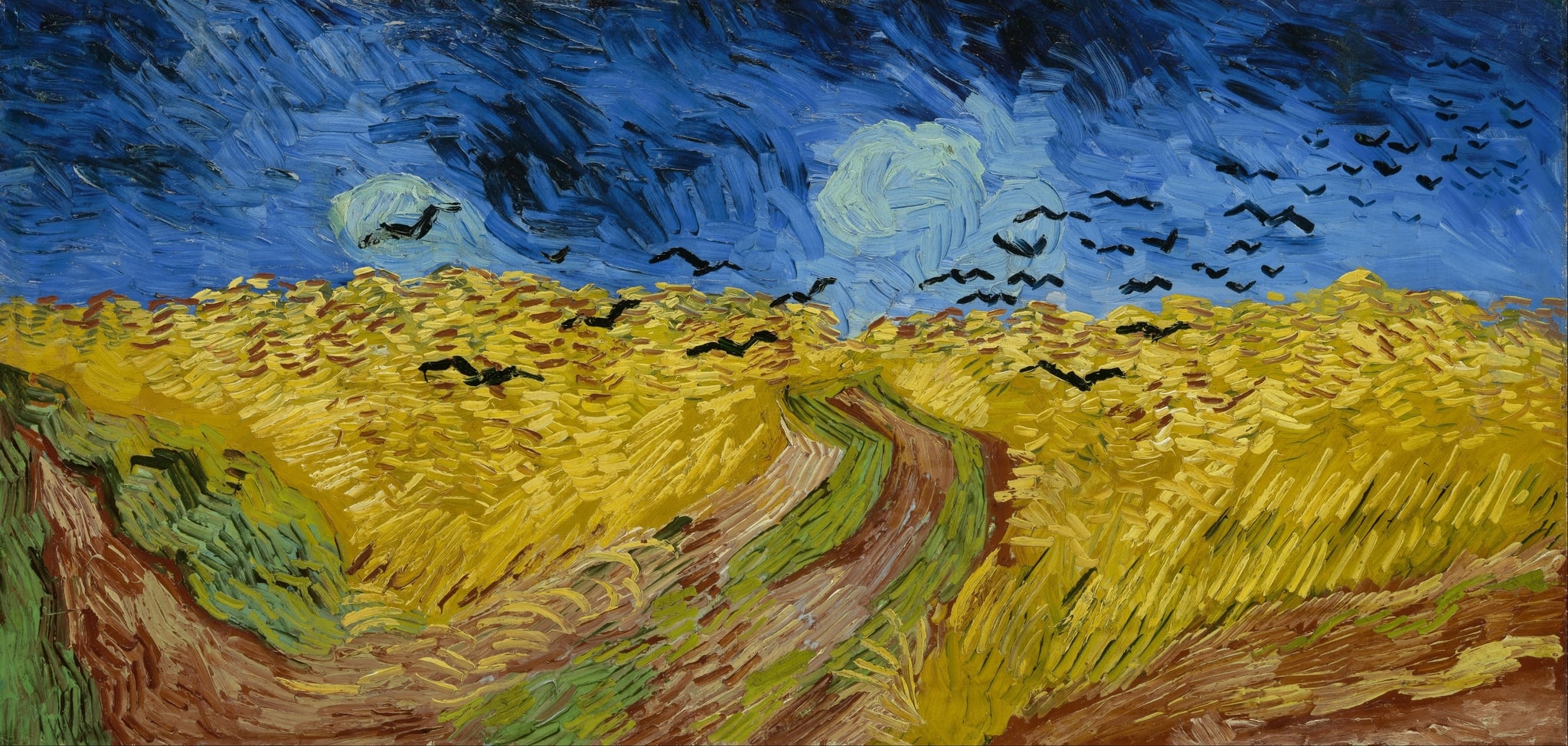
Click on any numbered symbol to learn more about its meaning
Meaning & Symbolism
Explore Deeper with AI
Ask questions about Wheatfield with Crows
Popular questions:
Powered by AI • Get instant insights about this artwork
Interpretations
Material/Color Theory: Chromatic Opposition as Rhetoric
Source: The Met (Heilbrunn Timeline of Art History)
Formal Analysis: The Double‑Square as Wide‑Screen Drama
Source: Van Gogh in Auvers-sur-Oise (2023–24 exhibition catalog); Double‑square painting overview
Psychological Interpretation: Interruptions, Not Endings
Source: Van Gogh Museum (Letters project); The Art Newspaper (Martin Bailey); Encyclopaedia Britannica
Environmental/Seasonal Reading: Precarious Harvest
Source: Van Gogh Museum (Letters project); The Art Newspaper (Martin Bailey)
Reception History: Myth, Evidence, and Afterlife
Source: Van Gogh Museum research; Smithsonian Magazine; Los Angeles Times; The Art Newspaper (Martin Bailey)
Explore Specific Elements
Dive deeper into individual scenes and details within Wheatfield with Crows.
The Murder of Crows
A dark flock of crows carves across the storm-blue sky in Van Gogh’s Wheatfield with Crows, turning a panoramic landscape into an oncoming encounter. Often called a “murder of crows” in English, this advancing wave of birds charges the scene with urgency and menace while channeling the artist’s late‑Auvers ambition to make nature speak feelings he described as “sadness, extreme loneliness.”
The Three Paths
Van Gogh’s "three paths" split the foreground of Wheatfield with Crows into abrupt, diverging tracks that refuse to lead into the distance. Flaring red-brown ruts against green borders and gold grain, they pull the scene toward us and stage the painting’s charged tension between blockage and vitality.
The Turbulent Sky
Van Gogh’s turbulent sky in Wheatfield with Crows is a storm-charged band of deep blue that bears down on the wheat with sweeping, agitated strokes. Compressed by the panoramic double‑square format, it becomes the painting’s engine of feeling—volatile, electric, and alive with crows that slice across the horizon.
Related Themes
About Vincent van Gogh
More by Vincent van Gogh
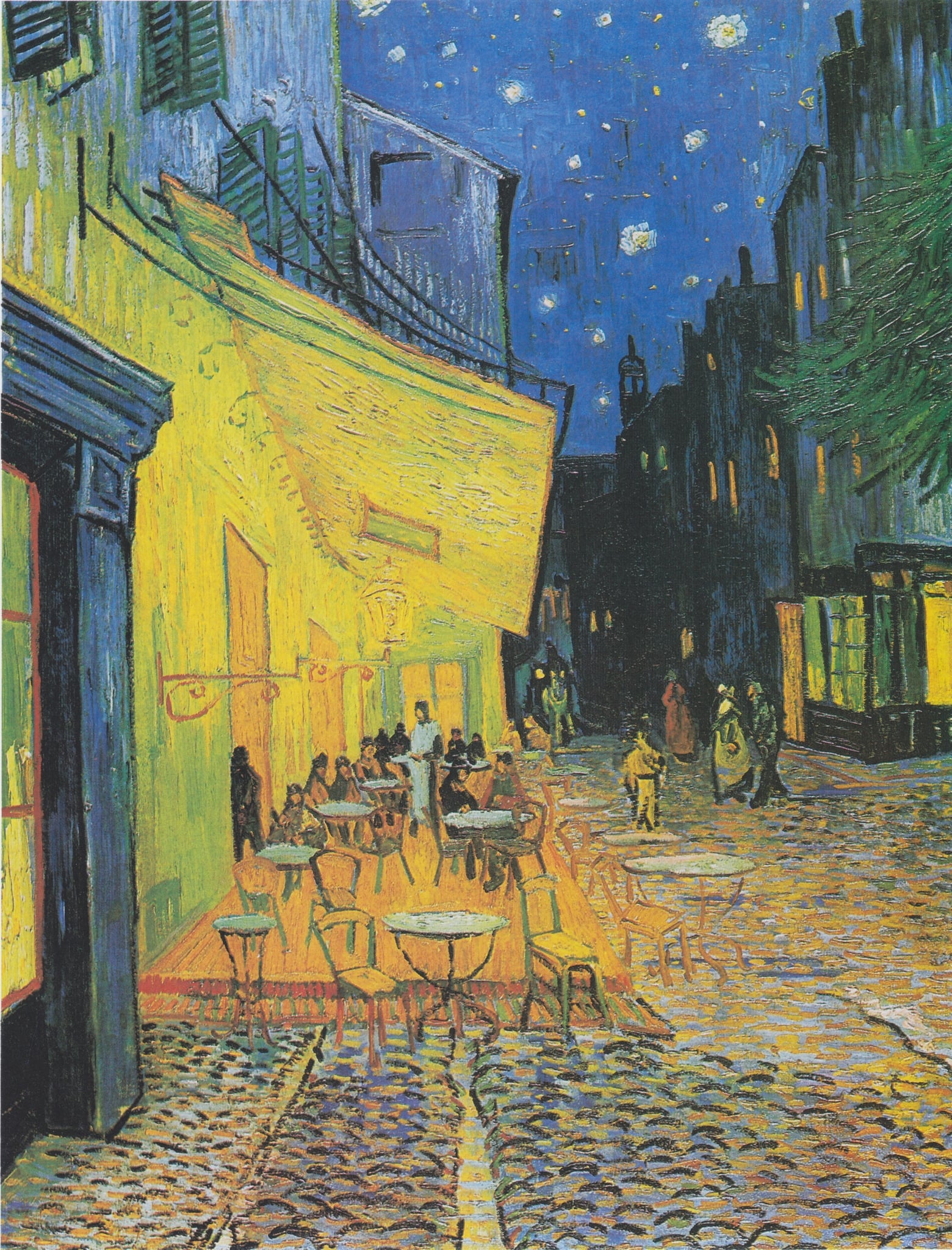
Café Terrace at Night
Vincent van Gogh (1888)
In Café Terrace at Night, Vincent van Gogh turns nocturne into <strong>luminous color</strong>: a gas‑lit terrace glows in yellows and oranges against a deep <strong>ultramarine sky</strong> pricked with stars. By building night “<strong>without black</strong>,” he stages a vivid encounter between human sociability and the vastness overhead <sup>[1]</sup><sup>[2]</sup>.
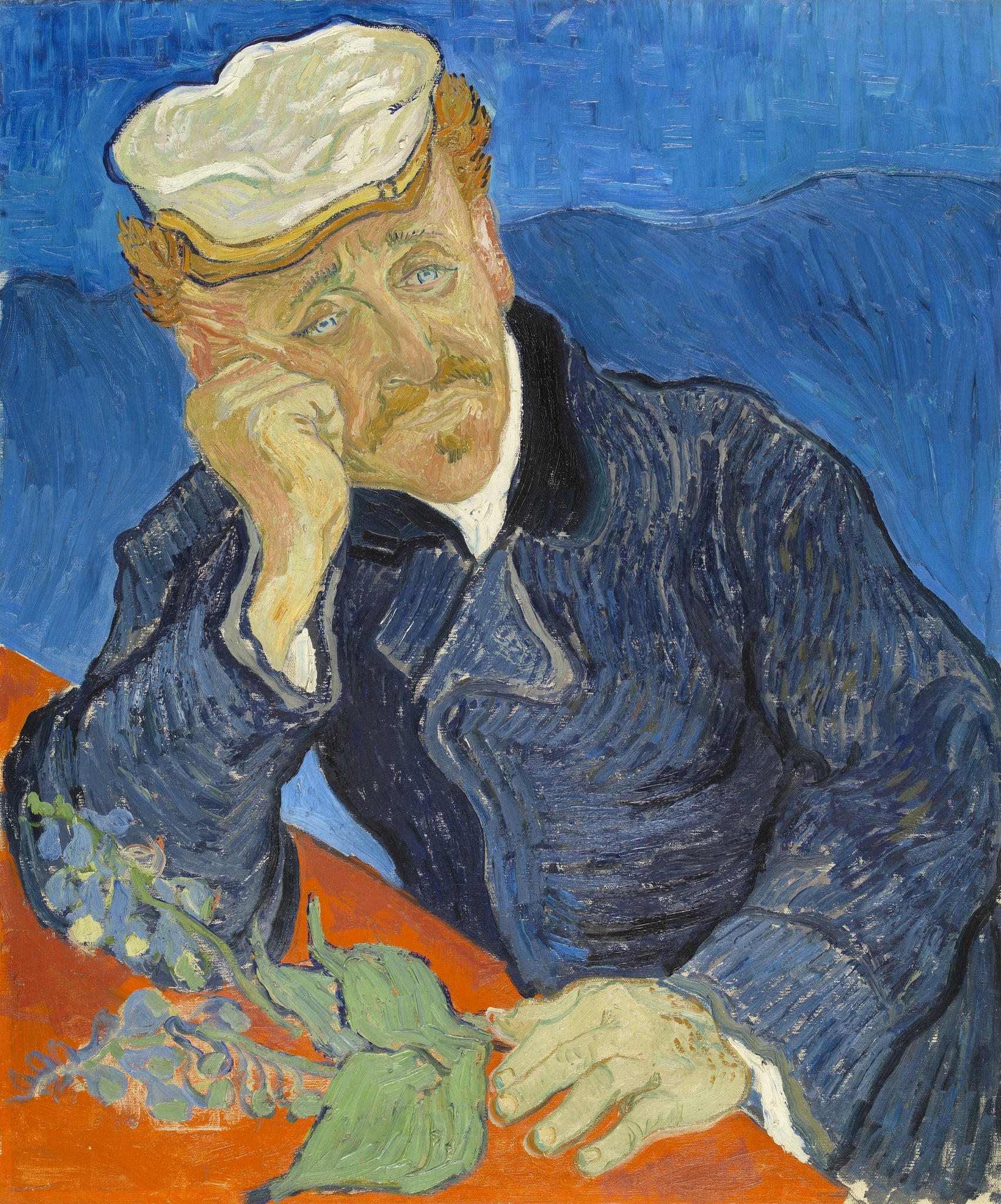
Portrait of Dr. Gachet
Vincent van Gogh (1890)
Portrait of Dr. Gachet distills Van Gogh’s late ambition for a <strong>modern, psychological portrait</strong> into vibrating color and touch. The sitter’s head sinks into a greenish hand above a <strong>blazing orange-red table</strong>, foxglove sprig nearby, while waves of <strong>cobalt and ultramarine</strong> churn through coat and background. The chromatic clash turns a quiet pose into an <strong>empathic image of fragility and care</strong> <sup>[1]</sup><sup>[2]</sup>.
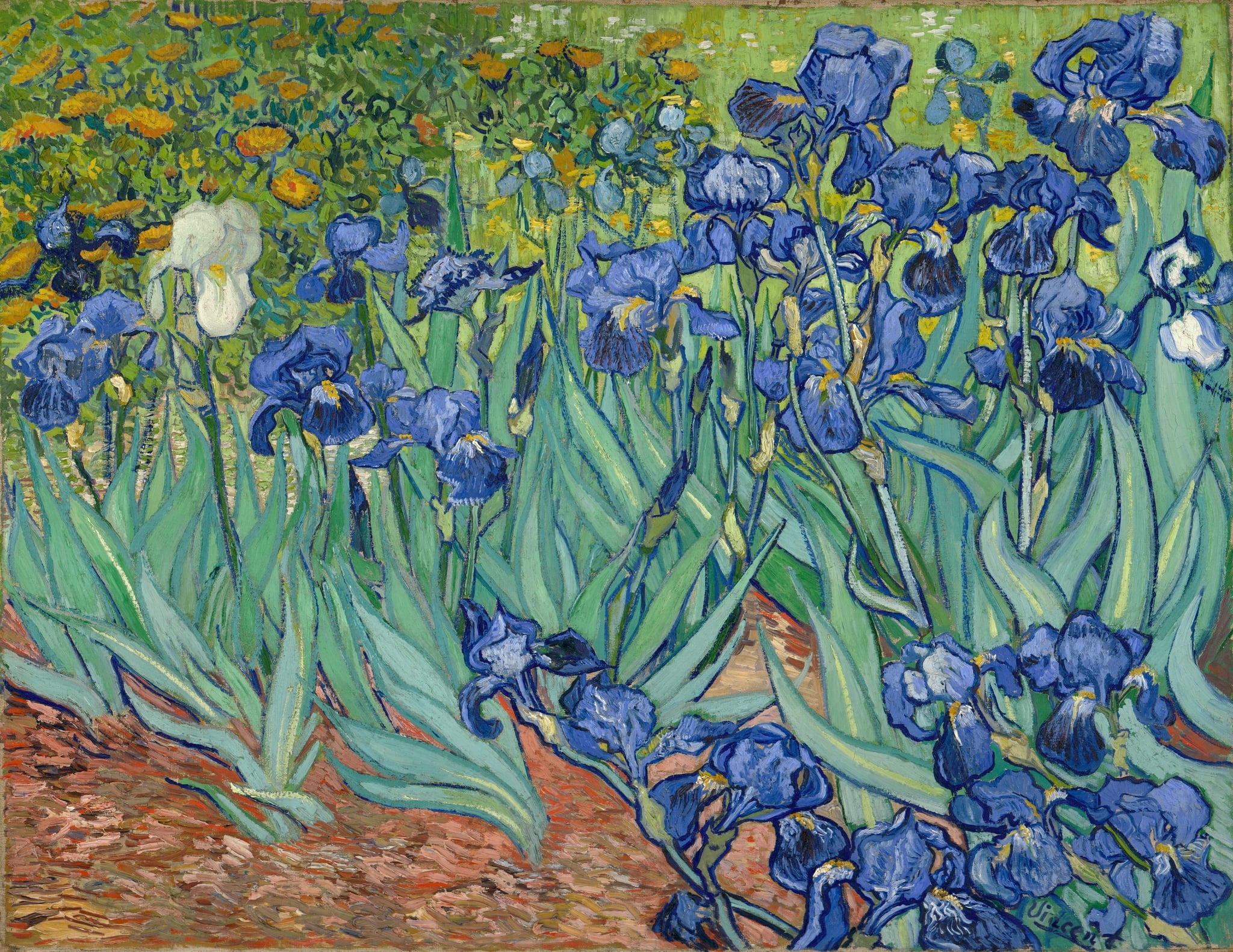
Irises
Vincent van Gogh (1889)
Painted in May 1889 at the Saint-Rémy asylum garden, Vincent van Gogh’s <strong>Irises</strong> turns close observation into an act of repair. Dark contours, a cropped, print-like vantage, and vibrating complements—violet/blue blossoms against <strong>yellow-green</strong> ground—stage a living frieze whose lone <strong>white iris</strong> punctuates the field with arresting clarity <sup>[1]</sup><sup>[2]</sup>.
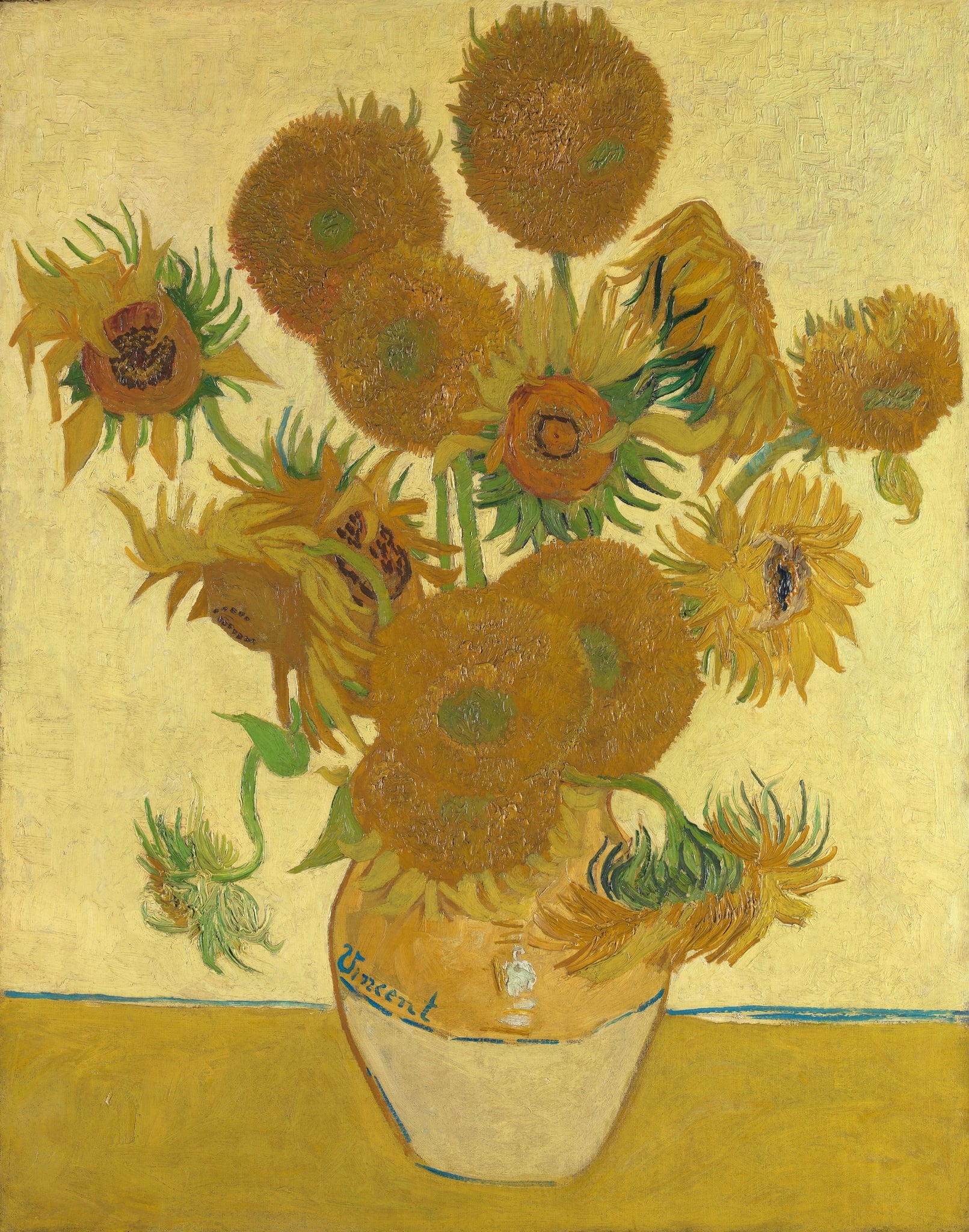
Sunflowers
Vincent van Gogh (1888)
Vincent van Gogh’s Sunflowers (1888) is a <strong>yellow-on-yellow</strong> still life that stages a full <strong>cycle of life</strong> in fifteen blooms, from fresh buds to brittle seed heads. The thick impasto, green shocks of stem and bract, and the vase signed <strong>“Vincent”</strong> turn a humble bouquet into an emblem of endurance and fellowship <sup>[1]</sup><sup>[2]</sup>.
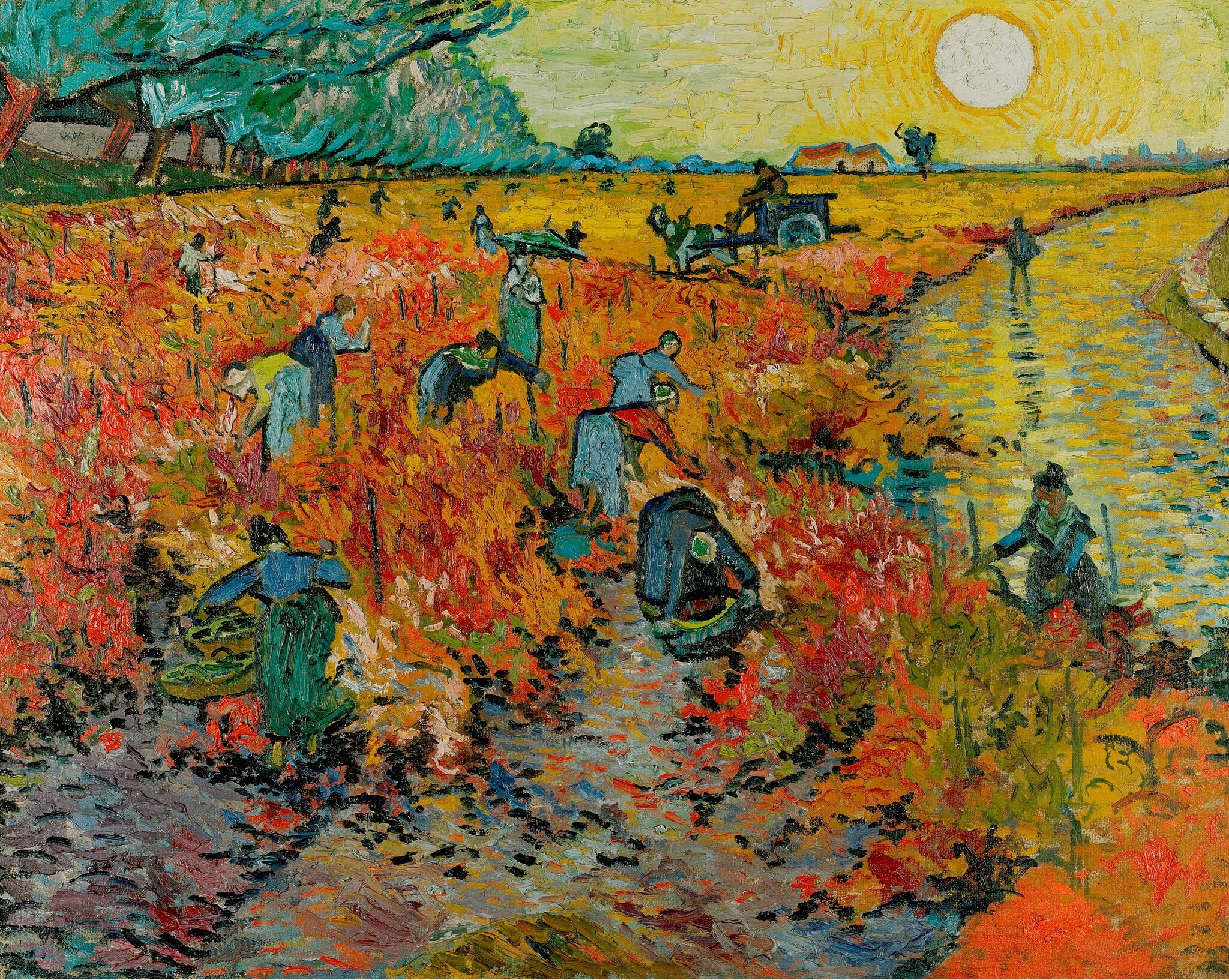
The Red Vineyard
Vincent van Gogh (1888)
In The Red Vineyard, Vincent van Gogh forges a vision of <strong>autumn labor under a blazing sun</strong>, where harvesters flow diagonally through scarlet vines while a band of <strong>yellow light</strong> flares along a reflective roadway. The scene fuses <strong>exhaustion and ripeness</strong>, turning work into a rhythmic, almost liturgical procession <sup>[1]</sup><sup>[3]</sup>.
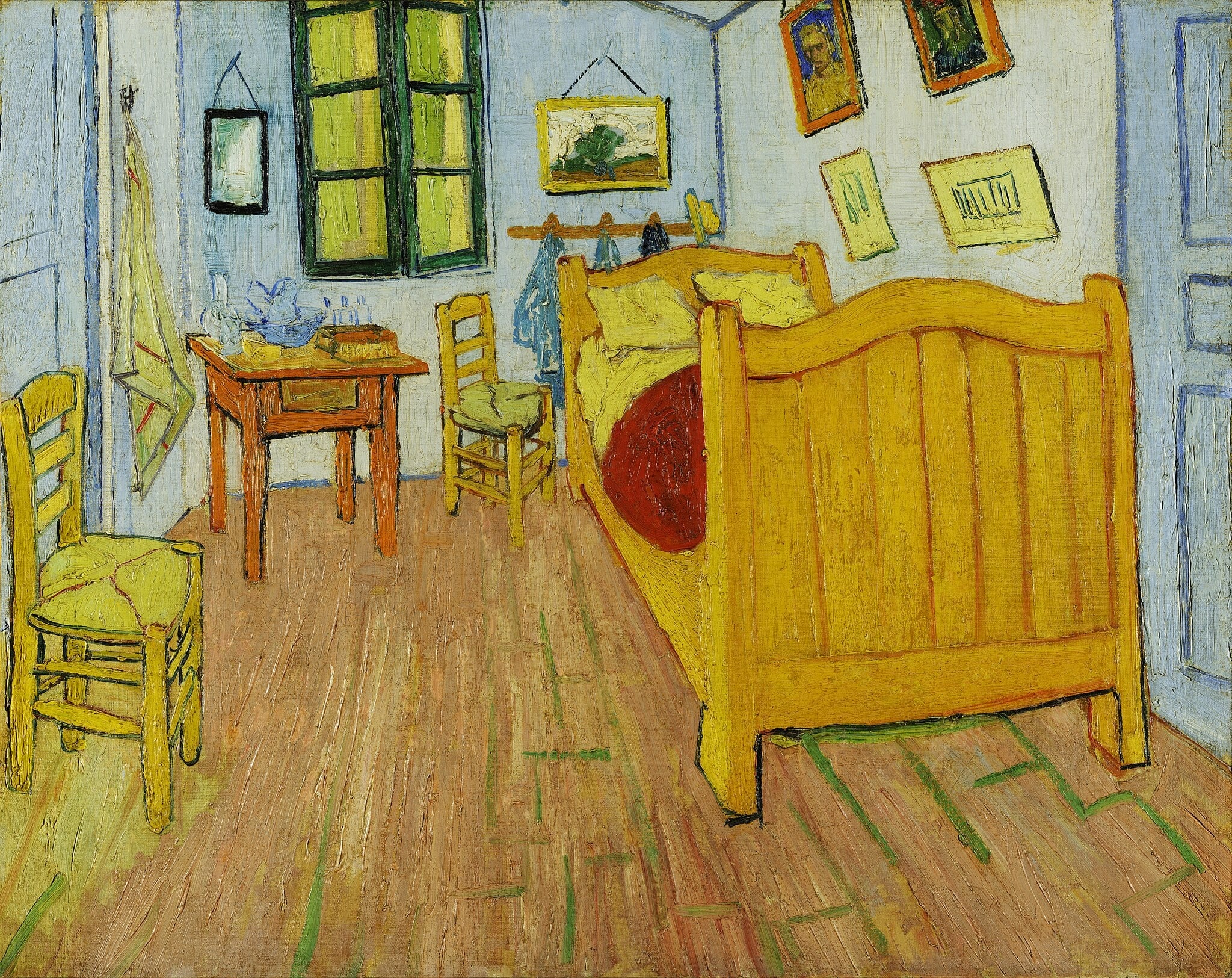
The Bedroom
Vincent van Gogh (1889)
Vincent van Gogh’s The Bedroom turns a modest room into a psychological stage, using <strong>clashing color</strong> and <strong>tilted space</strong> to test whether color alone can evoke rest. The bright yellow bed, twin chairs, and green‑shuttered window press forward as the floor tilts and pictures cant, so that <strong>refuge and unease</strong> exist side by side <sup>[1]</sup><sup>[2]</sup>.