Sonja Knips

by Gustav Klimt

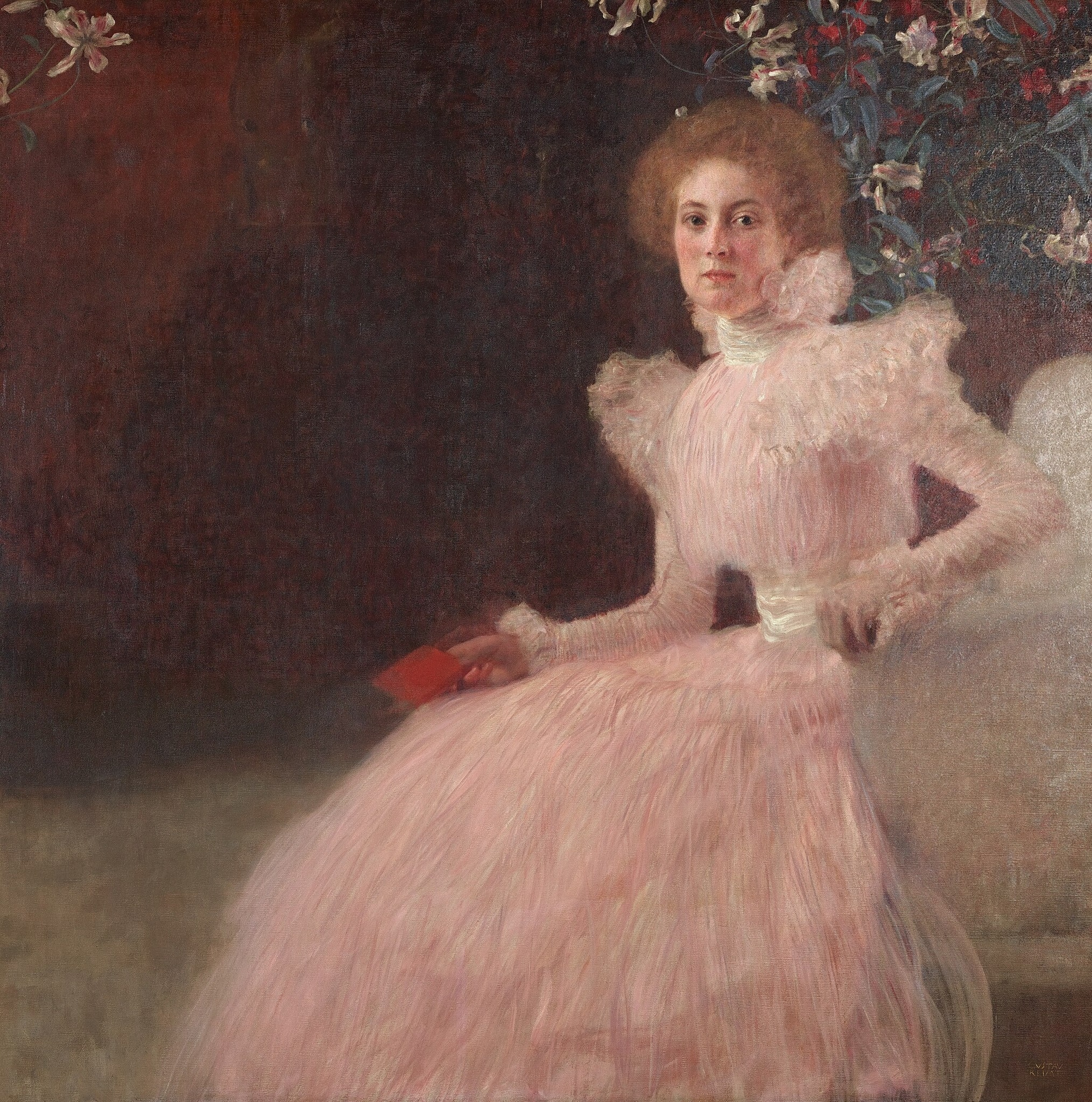
In Sonja Knips, Gustav Klimt stages a poised young woman as a modern self—held taut between lucid presence and ornamental dissolution. The square canvas, the feathery pink dress, the climbing white lilies, and the single red sketchbook in her hand crystallize an identity that is reflective, intelligent, and self‑aware within a decorous world [1][2][4].
💰

Market Value

$120-180 million

How much is Sonja Knips worth?

Study Print Studio

Create a personal study print

Build a companion study sheet around the part of this painting that speaks to you most. Choose a detail, shape an interpretation, and walk away with something personal and display-worthy.

Fast Facts

Year
1897/1898
Medium
Oil on canvas
Dimensions
141 × 141 cm
Location
Österreichische Galerie Belvedere, Vienna (Upper Belvedere)
See all Gustav Klimt paintings in Vienna
Sonja Knips by Gustav Klimt (1897/1898) featuring Red sketchbook, White lilies, Pink tulle dress, Self‑possessed gaze (illuminated face)

Click on any numbered symbol to learn more about its meaning

Meaning & Symbolism

Klimt organizes the square field diagonally, opening a dark, unoccupied expanse on the left while compressing figure, chair edge, and blooming lilies on the right. This asymmetry is not ornamental garnish but a strategy: the void builds pressure around the sitter’s head and shoulders, intensifying her self‑possessed gaze and the sense that she is ready to rise. Against the velvety darkness, the face and hair receive the most precise modeling, while the pink tulle flickers into near‑immaterial strands—a painterly dissolution that deliberately tests the boundary between depiction and pattern 13. Contemporary observers already singled out this “trickling pink” surface, and here it operates like a veil that both clothes and dematerializes, aligning feminine elegance with modernist abstraction rather than academic finish 23. Two charged anchors prevent her from dissolving into atmosphere. First is the floral spray: lilies climb into the darkness and echo the ruffles at collar and sleeves, creating a visual bridge that fuses figure and ground. Their conventional purity is complicated by their lushness and proximity to the sitter’s body, turning decor into double‑coded symbolism—innocence edged by awakening desire 23. Second is the small crimson rectangle in her hand, identified by the Belvedere as Klimt’s own red sketchbook. This is not a coy accessory but an assertion of agency: it signifies an intimacy with artistic process and marks the sitter as a participant in, not merely an object of, art‑making. The brilliant red punctures the decorous pinks and browns like a signature of individuality, a modern self declaring presence within the very codes of society portraiture 124. Formally, Sonja Knips is Klimt’s breakthrough in portrait design. Choosing, for the first time, a square canvas, he neutralizes vertical grand‑manner hierarchies and horizontal narrative sprawl, opting instead for a balanced plane where ornament and likeness can negotiate on equal terms 3. The diagonal binding of chair, torso, and lilies anticipates the planar emphasis and surface orchestration that will culminate in his “golden” portraits, while the indeterminate setting (garden or interior) relocates meaning from locale to interiority 13. In this way the painting participates in an international modernist dialogue—critics and curators note affinities with Whistler’s atmospheric restraint—yet it remains distinctly Viennese in its Secessionist pursuit of a Gesamtkunstwerk: the portrait later hung in a Hoffmann‑designed interior, confirming its role as a node in a larger design ecosystem 23. The result is a new image of femininity—cultivated, erotically alive, and intellectually alert—achieved not by anecdote but by Klimt’s orchestration of surface, format, and symbolic accents. That is why Sonja Knips is important: it sets the template for Klimt’s modern portraiture, where individuality emerges from the very tension between figure and ornament, presence and pattern 123.

Explore Deeper with AI

Ask questions about Sonja Knips

Popular questions:

Powered by AI • Get instant insights about this artwork

💬 Ask questions about this artwork!

Interpretations

Design Ecology & the Gesamtkunstwerk

Rather than ending at the frame, this portrait was conceived to resonate within an orchestrated environment. Installed in the Knips villa designed by Josef Hoffmann, it functioned as a node in a Secessionist Gesamtkunstwerk—a total work of art where furniture, architecture, and painting formed a continuous aesthetic field. This placement reframes the image from mere society likeness to an instrument of lifestyle modernity, aligning Knips with avant-garde design culture and embedding Klimt’s planar orchestration into lived space. The square format’s calm and the ornamental lilies read differently in such a setting: they are not just motifs but interfaces with patterned walls, textiles, and lighting. In this ecology, the sitter’s cultivated self-presentation becomes inseparable from the designed domestic sphere—art and life mutually specifying one another 31.

Source: Prestel (Tobias G. Natter); Belvedere teaching dossier

Feminist Agency and Patronage Networks

The small crimson object is not incidental: the Belvedere identifies it as Klimt’s red leather sketchbook, a gift whose survival in the museum’s collection anchors this portrait in real artistic exchange. By holding the tool of production, Knips is coded as an insider to process, a subtle inversion of the passive muse. Biographically, she patronized Viennese Modernism and commissioned Hoffmann and, later, Wiener Werkstätte designs, placing her at the center of a network that shaped Vienna 1900. Read through this lens, the portrait is a declaration of female cultural capital: social standing converted into aesthetic authorship-by-proxy, with the red flare puncturing decorum to signal intellectual affinity and self-assertion within elite circles 43.

Source: Belvedere Online Collection (Rotes Skizzenbuch); Prestel (Tobias G. Natter)

Formalist Innovation and Transnational Dialogue

As Klimt’s first square portrait, Sonja Knips marks a decisive format shift: the square neutralizes vertical hierarchies and opens a field for planar negotiation between figure and ornament. Curators explicitly connect the work to Whistler’s atmospheric restraint, locating Klimt within an international portrait modernism that values tonal economy and compositional poise. The diagonal chain—chair edge, torso, blooms—acts like a structural armature, while the dark void is a calculated negative space that presses meaning toward surface and gaze. This compositional intelligence anticipates later “golden” portraits, where ground and garment become co-equal agents, and underscores Klimt’s role in redefining the modern portrait as a designed plane rather than a staged narrative 23.

Source: Belvedere (Google Arts & Culture feature); Prestel (Tobias G. Natter)

Materiality as Meaning: The ‘Trickling Pink’

Contemporary critic Ludwig Hevesi praised the painting’s “trickling pink,” a phrase that names not color alone but a method: layered, flickering touches that dematerialize tulle into vibrating paint. This technical choice produces a threshold condition—fabric as near-atmosphere—so that luxury couturier effect is inseparable from painterly experimentation. Against the velvety darkness, Klimt sharpens the face and hair while allowing the dress to disperse into strokes, staging a dialectic of precision and dissolution that would guide his mature practice. The result is a portrait that reads on two registers: a display of fashion and a manifesto of surface, showing how matter, touch, and optical shimmer become vehicles for psychological charge and modernist abstraction 23.

Source: Belvedere (Google Arts & Culture feature); Prestel (Tobias G. Natter)

Symbolic Botany: Lilies as Bridge and Threshold

The lily spray is more than decor. Rising into the dark, its pale heads echo the sitter’s ruffles and establish a visual bridge between figure and field, flattening spatial depth while tethering the body to ornament. Iconographically, lilies carry associations of purity, but here their lush proximity to neckline and sleeves turns purity into ambiguous sensuality—a classic Secessionist maneuver where symbol and surface interlock. By mirroring textures across dress and flora, Klimt makes botany do double duty: it is both a compositional hinge and a semantic gradient from innocence to erotic charge, a move that anticipates the ornamental totalizations of his later portraits 23.

Source: Belvedere (Google Arts & Culture feature); Prestel (Tobias G. Natter)

Reinventing the Society Portrait: Class, Calm, and Control

Knips’s patrician status is legible, yet Klimt pointedly declines anecdotal opulence—no vistas, heraldry, or showpiece interiors. The square’s compositional calm and the dark void reframe status as interiority and control: authority is concentrated in posture, gaze, and a single red accent rather than dispersed across furnishings. This restraint aligns with Secession ideals that prized refined design over ostentation, repositioning the elite portrait as a study in cultivated self-mastery. By muting setting and amplifying surface orchestration, Klimt converts class display into aesthetic discipline, setting a template for modern portraiture in which social standing is expressed through formal intelligence, not narrative spectacle 153.

Source: Belvedere teaching dossier; Britannica (Klimt/Secession); Prestel (Tobias G. Natter)

Related Themes

About Gustav Klimt

Gustav Klimt (1862–1918), co-founder of the Vienna Secession, pivoted from controversial public commissions to a decorative-symbolist language in his Golden Period. Drawing on Byzantine mosaics and modern design, he fused opulent surfaces with psychological intensity. By 1908–09, he transformed scandal into canon, and The Kiss became Vienna’s emblem of modern love.
View all works by Gustav Klimt

More by Gustav Klimt

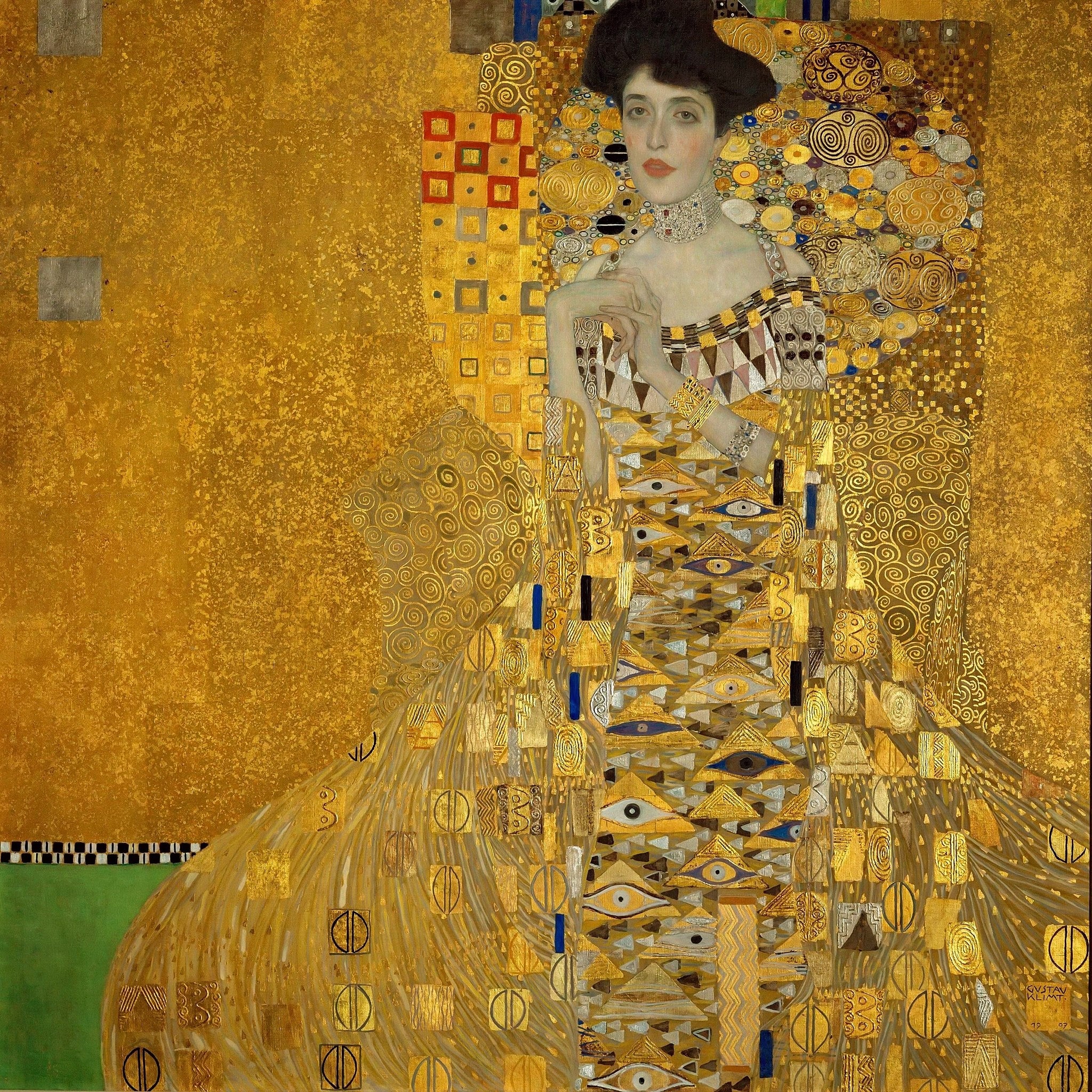
Portrait of Adele Bloch-Bauer I by Gustav Klimt

Portrait of Adele Bloch-Bauer I

Gustav Klimt (1907)

Gustav Klimt’s Portrait of Adele Bloch-Bauer I stages its sitter as a <strong>secular icon</strong>—a living presence suspended in a field of gold that converts space into <strong>pattern and power</strong>. The naturalistic face and hands emerge from a reliquary-like cascade of eyes, triangles, and tesserae, turning light, ornament, and status into the painting’s true subjects <sup>[1]</sup><sup>[2]</sup>.
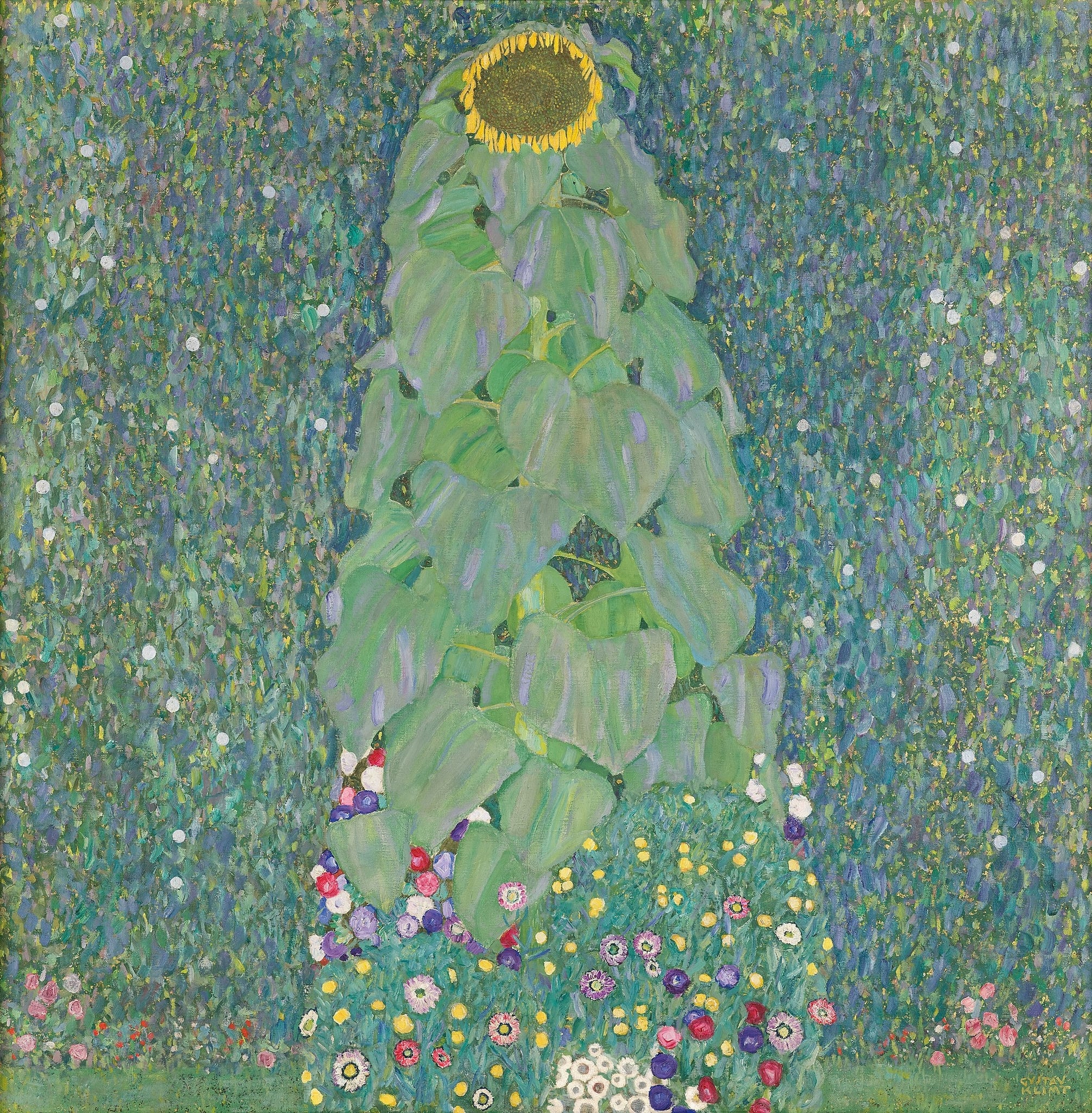
Sunflower by Gustav Klimt

Sunflower

Gustav Klimt (1907/1908)

Gustav Klimt’s Sunflower turns a single bloom into a <strong>monumental, figure-like presence</strong>. A tapering stack of broad, drooping leaves rises from a <strong>mosaic-like carpet of round blossoms</strong>, crowned by a gold-flecked disc that glows against a cool, stippled field. The work fuses <strong>portrait, icon, and landscape</strong> into one emblem of vitality and quiet sanctity <sup>[1]</sup><sup>[2]</sup>.
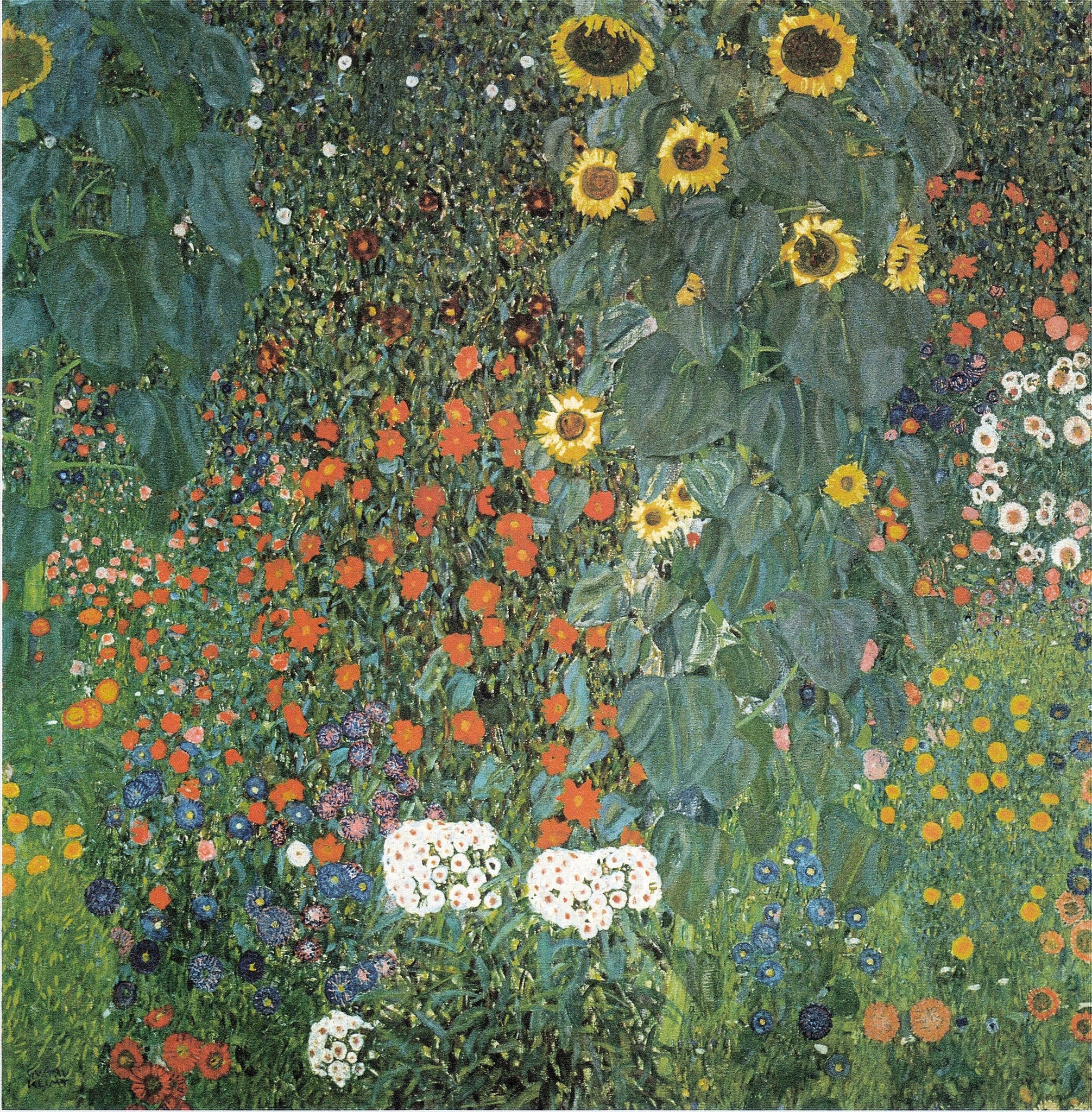
Cottage Garden with Sunflowers by Gustav Klimt

Cottage Garden with Sunflowers

Gustav Klimt (1906–1907 (signed 1907))

Cottage Garden with Sunflowers is a square, horizonless field of blooms where a vertical column of <strong>sunflowers</strong> anchors an all-over weave of color and pattern. Klimt fuses <strong>ornament and nature</strong>, turning a humble Litzlberg cottage plot into a radiant matrix of cyclical life and renewal <sup>[1]</sup><sup>[4]</sup><sup>[5]</sup>.
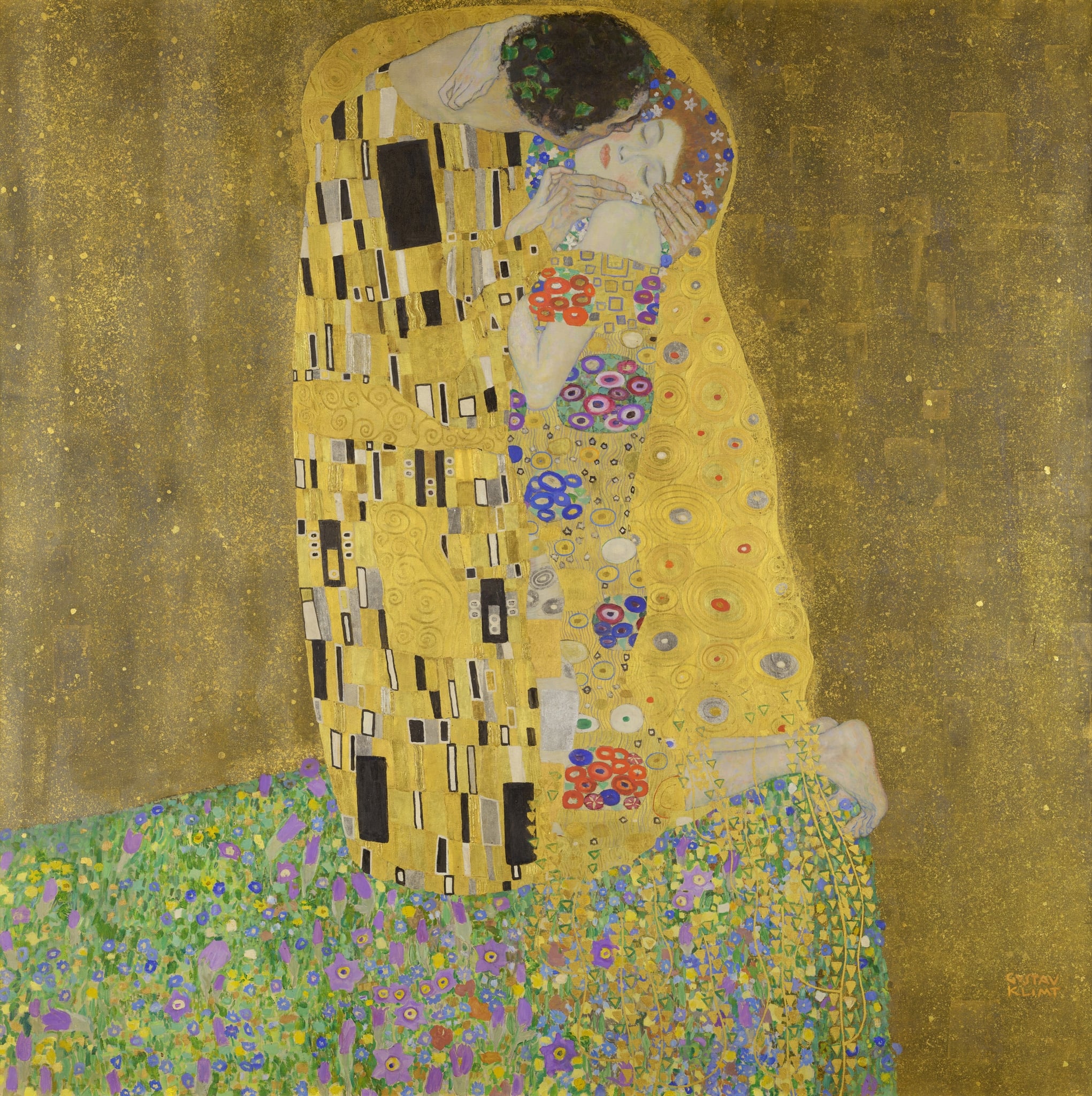
The Kiss by Gustav Klimt

The Kiss

Gustav Klimt (1908 (completed 1909))

The Kiss stages human love as a <strong>sacred union</strong>, fusing two figures into a single, gold-clad form against a timeless field. Klimt opposes <strong>masculine geometry</strong> (black-and-white rectangles) to <strong>feminine organic rhythm</strong> (spirals, circles, flowers), then resolves them in radiant harmony <sup>[1]</sup><sup>[2]</sup>.
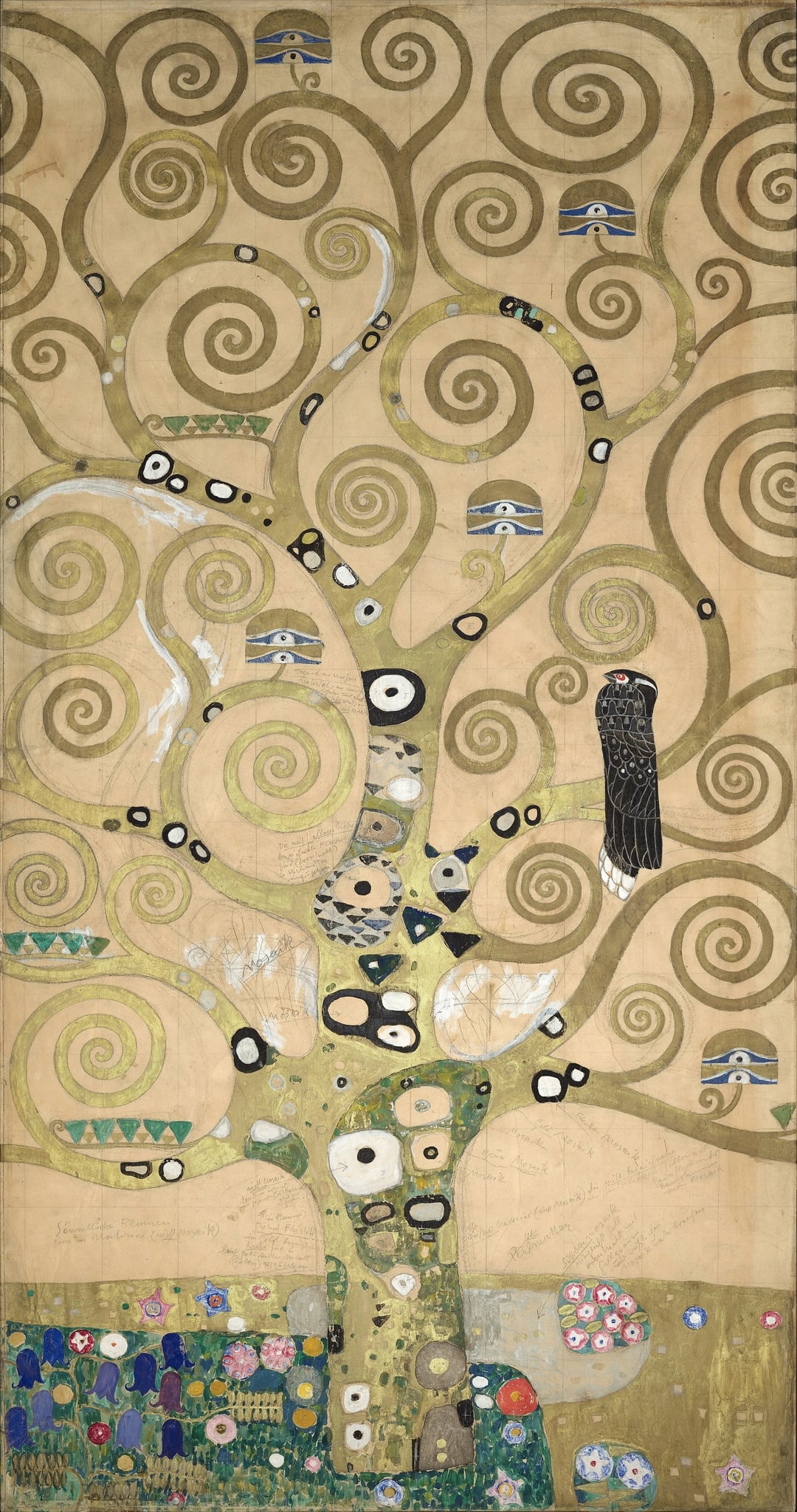
The Tree of Life by Gustav Klimt

The Tree of Life

Gustav Klimt (1910–1911 (design; mosaic installed 1911))

Gustav Klimt’s The Tree of Life crystallizes a <strong>cosmological axis</strong> in a gilded ornamental language: a rooted trunk erupts into <strong>endless spirals</strong>, embedded with <strong>eye-like rosettes</strong> and shadowed by a black, red‑eyed bird. Designed as part of the Stoclet dining‑room frieze, it fuses <strong>symbolism and luxury materials</strong> to link earthly abundance with timeless transcendence <sup>[1]</sup><sup>[2]</sup>.
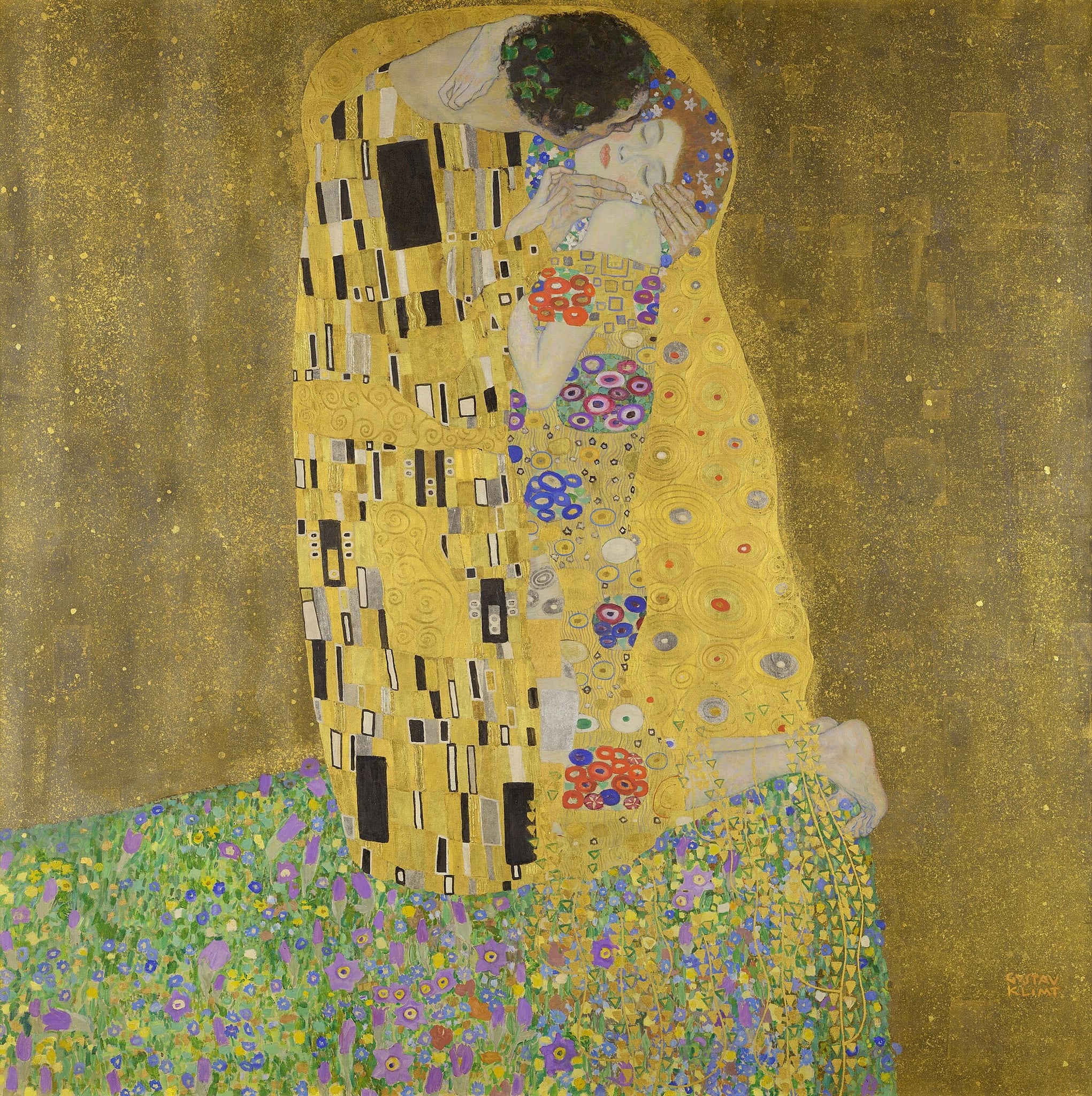
The Kiss (Lovers) by Gustav Klimt

The Kiss (Lovers)

Gustav Klimt (1907–1908 (Belvedere lists 1908/09))

The Kiss (Lovers) crystallizes Klimt’s <strong>Golden Period</strong> ideal: erotic union staged as a sacred vision. Two bodies fuse beneath a single golden mantle, poised on a flowered ledge at the brink of the unknown, where <strong>pattern becomes symbol</strong> and intimacy becomes icon.