Most Expensive Alfred Sisley Paintings
Alfred Sisley occupies a quietly commanding place in the Impressionist market: not the most flamboyant name, but one whose consistent mastery of light, atmospheric subtlety and riverscape compositions has made his canvases highly collectible. This list highlights the price tiers that collectors and institutions pay for those qualities, from the top-tier "The Bridge at Villeneuve‑la‑Garenne" at roughly $10–15 million, to winter masterpieces like "Effet de neige à Louveciennes (Snow Effect at Louveciennes)" and "The Church at Moret," each in the $8–12 million bracket, and the dramatic "Flood at Port‑Marly" fetching $6–10 million. Mid‑range works such as "Sand Heaps" ($1.2–6.0 million), "The Loing and the Mills of Moret, Snow Effect" ($2–6 million) and pastoral perspectives like "Avenue of Poplars near Moret‑sur‑Loing" ($1–4.5 million) and "Regatta at Molesey near Hampton Court" ($1.5–4.5 million) demonstrate how subject, provenance and condition influence value, while smaller street views and urban scenes such as "Street in Moret" ($500,000–2.5 million) and "View of the Canal Saint‑Martin" ($500,000–2 million) remain accessible entry points for collectors seeking Sisley’s singular sensitivity to atmosphere and place.
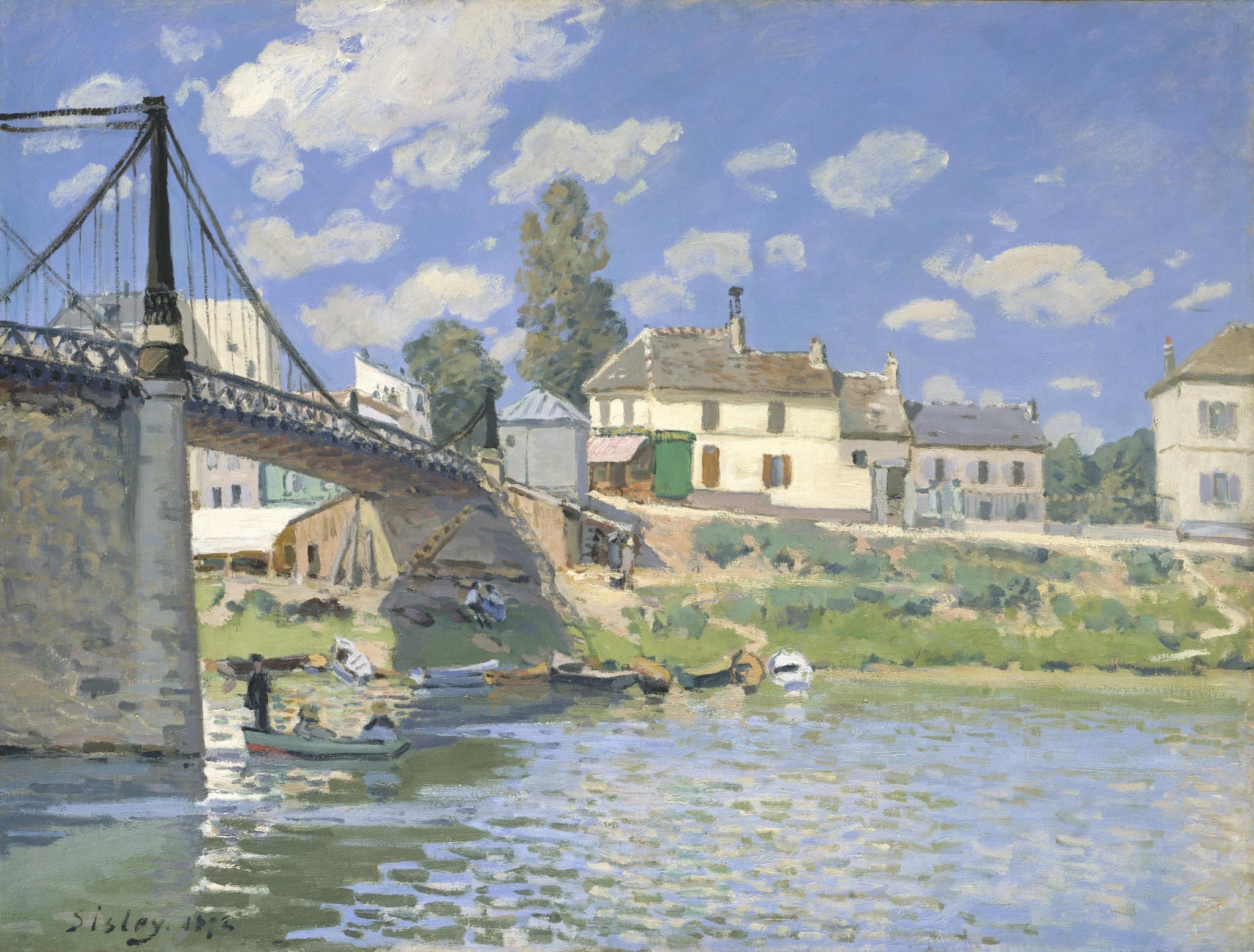
$10-15 million
With Durand‑Ruel/Faure provenance and long Met ownership, this museum‑grade 1872 bridge scene is estimated $10–15M and could challenge Sisley’s auction record for a top river subject.
See full valuation →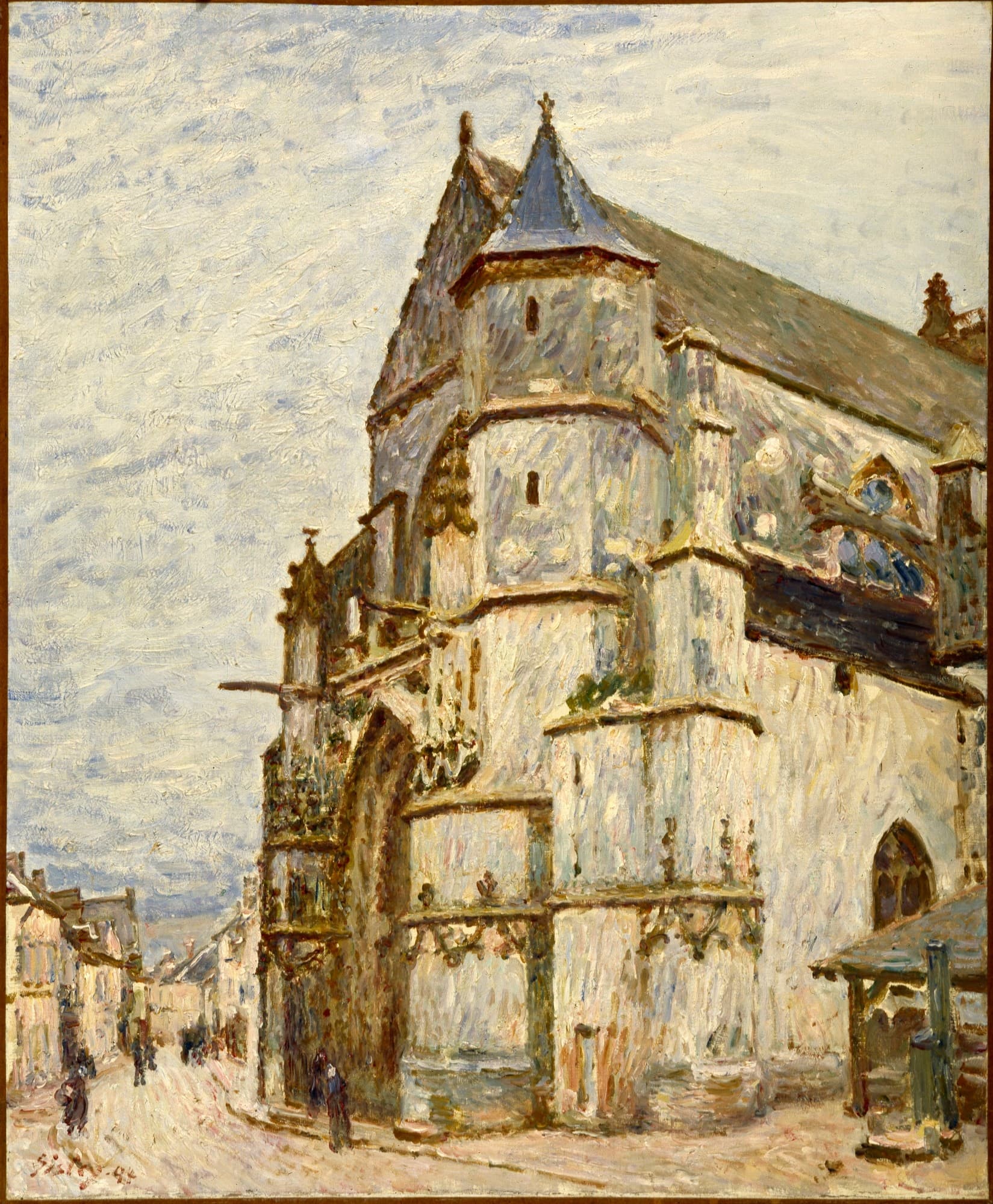
$8–12 million
A museum‑grade 1894 Church at Moret comparable to the Detroit Institute’s quality and size is estimated $8–12M, reflecting late‑career premium and Sisley benchmarks.
See full valuation →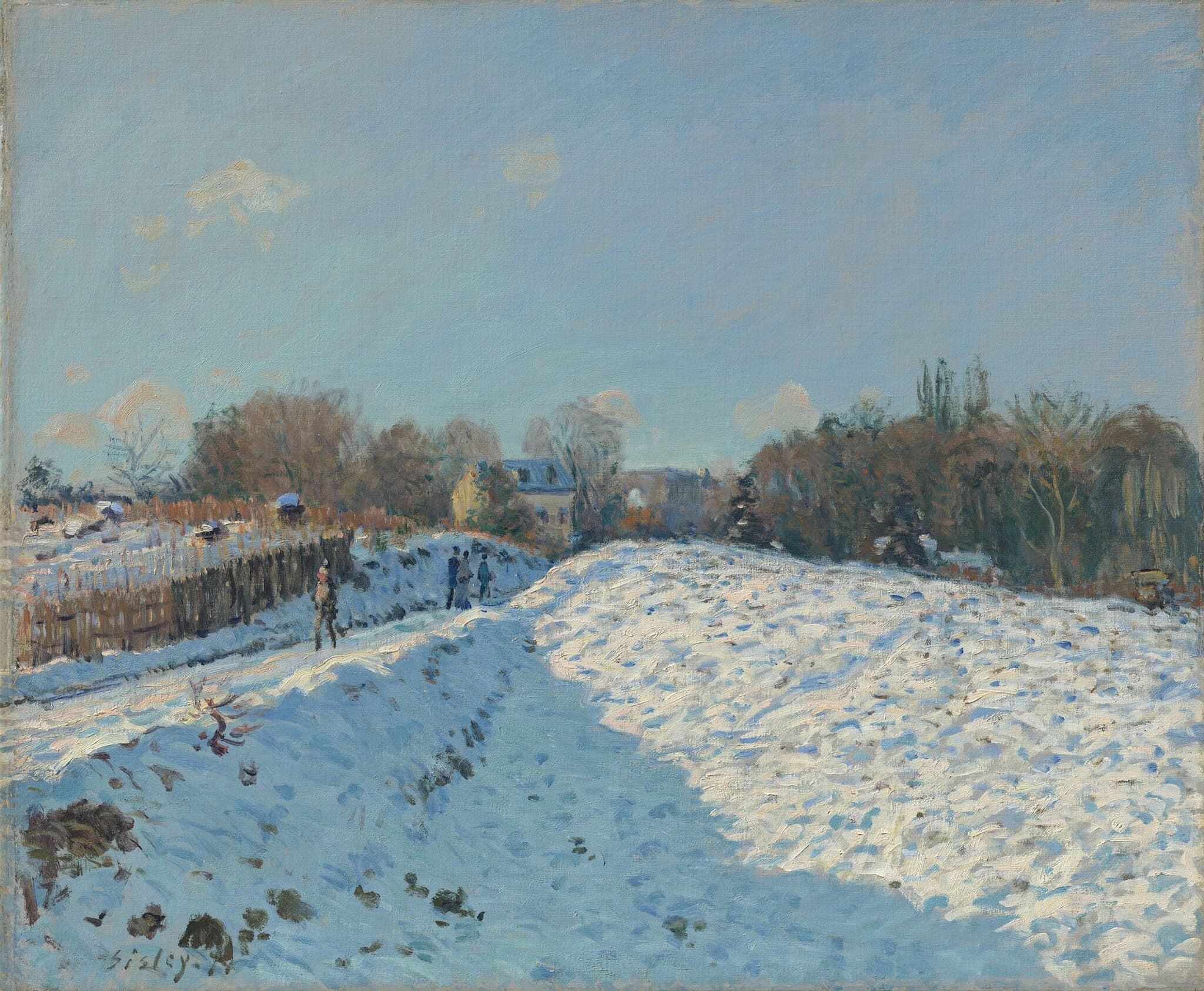
$8,000,000–$12,000,000
Anchored to the £7,358,750 (≈$9.06M) Sotheby’s 2017 sale and Hasso Plattner/Museum Barberini provenance, an identical 1874 canvas is estimated $8–12M today.
See full valuation →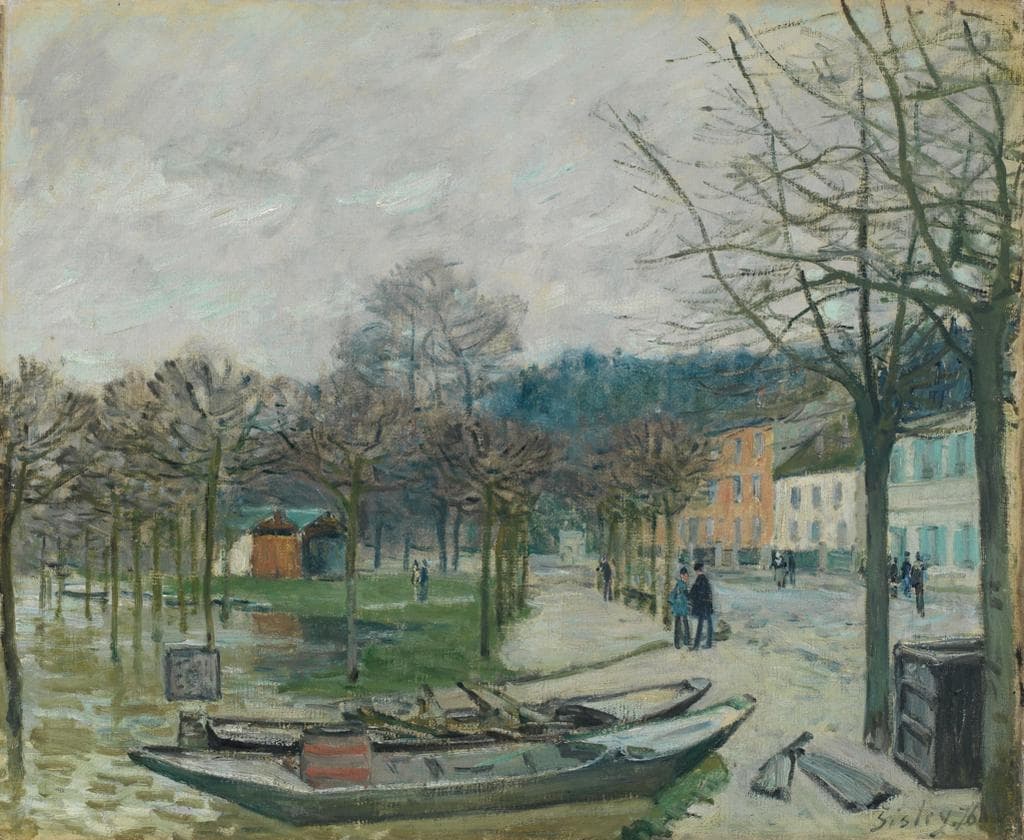
$6-10 million
Part of a marquee 1876 Port‑Marly series with museum counterparts, this Daulte 236 work is estimated $6–10M for a major NY/London evening sale.
See full valuation →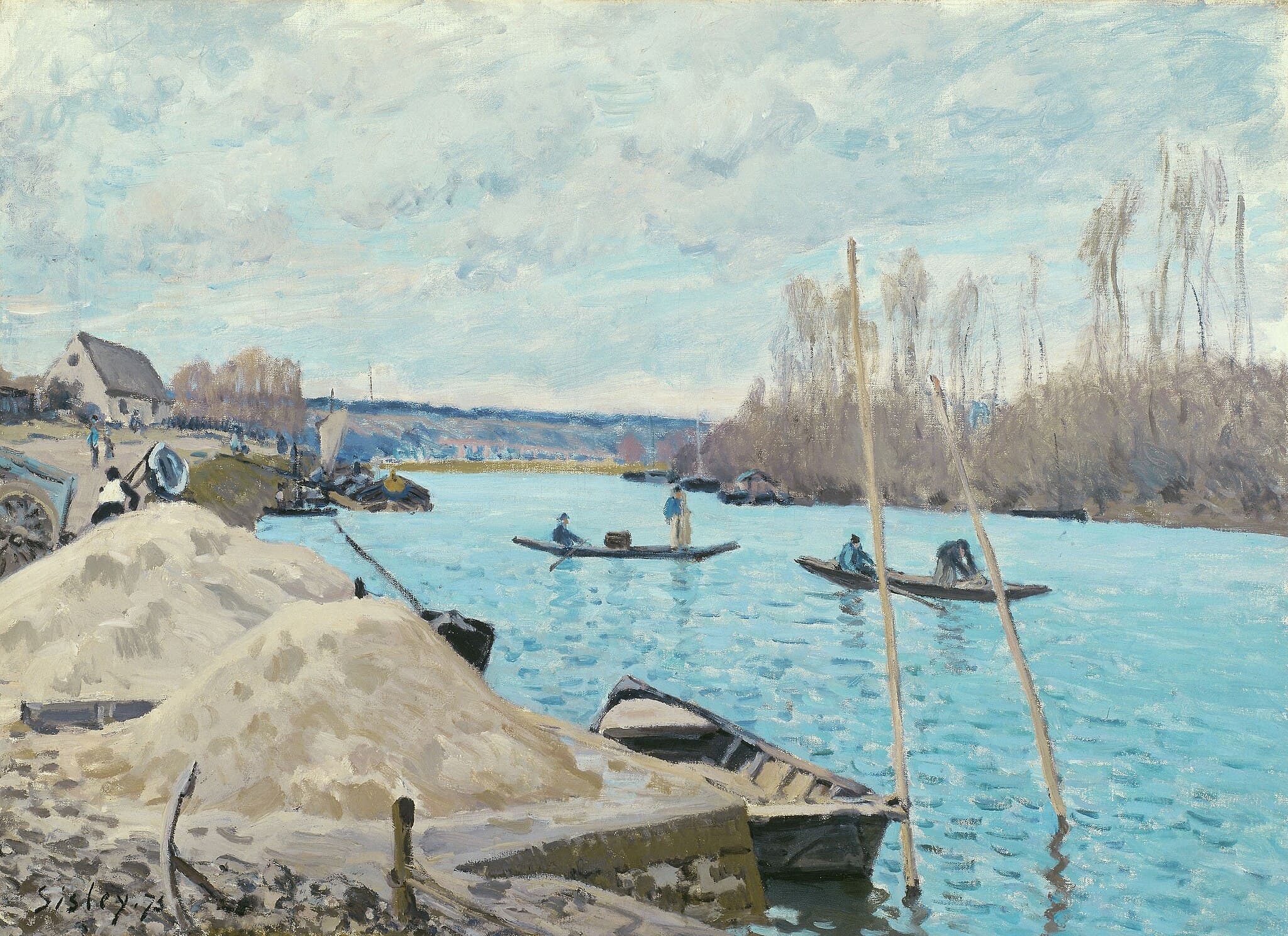
$1.2-6.0 million
Held by the Art Institute of Chicago (accession 1933.1177) and never traded recently, a comparable 1875 Sand Heaps canvas is hypothetically estimated $1.2–6.0M.
See full valuation →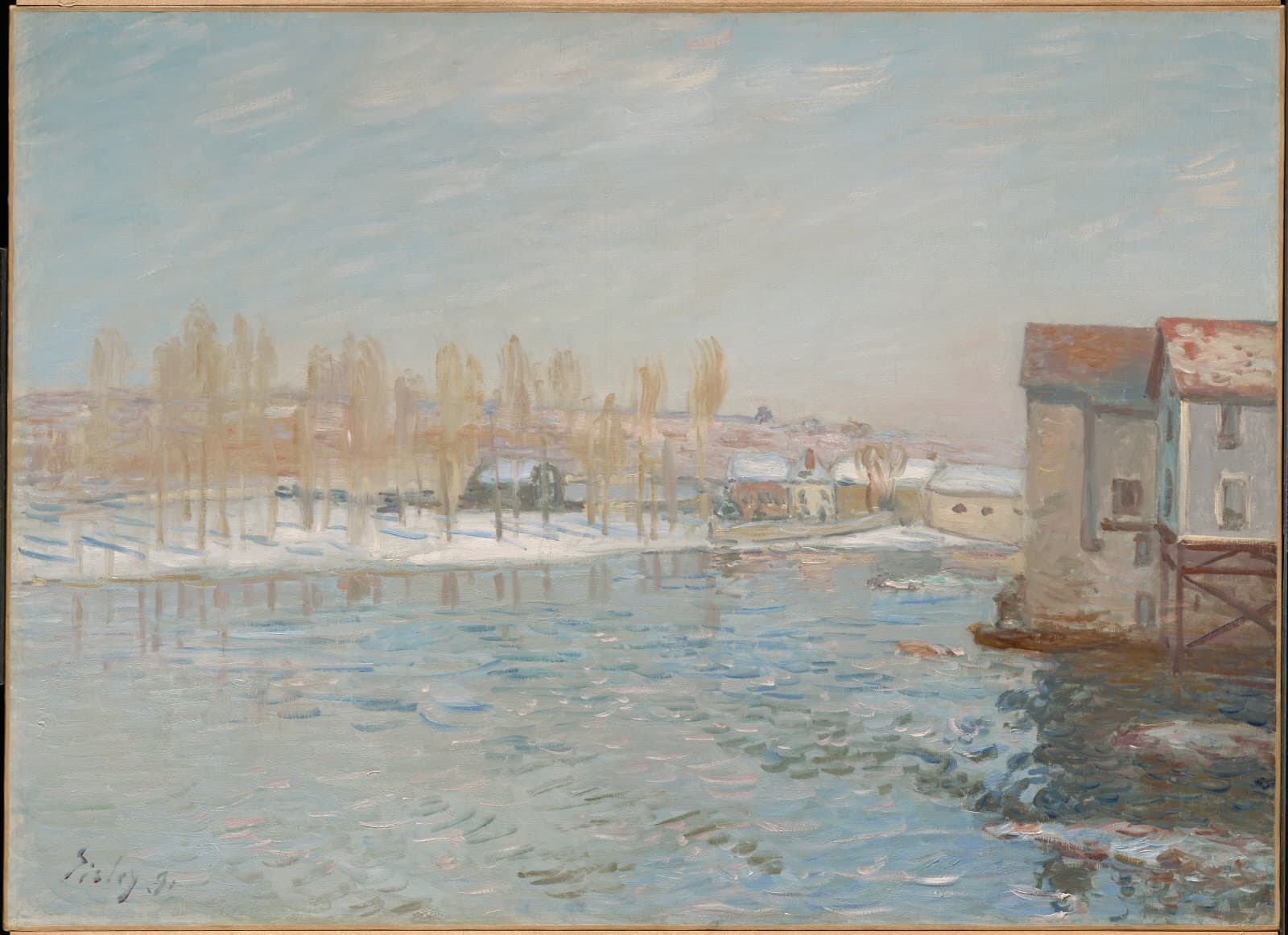
$2,000,000–$6,000,000
In the Sterling and Francine Clark collection with no modern sale record, this 1891 Loing snow scene is provisionally estimated $2–6M based on Moret/Loing comparables.
See full valuation →
$1,000,000–$4,500,000
Anchored by a near‑identical Moret poplars sale at Christie’s NY (US$4.21M, 2018), a privately held Avenue of Poplars is estimated $1–4.5M at auction.
See full valuation →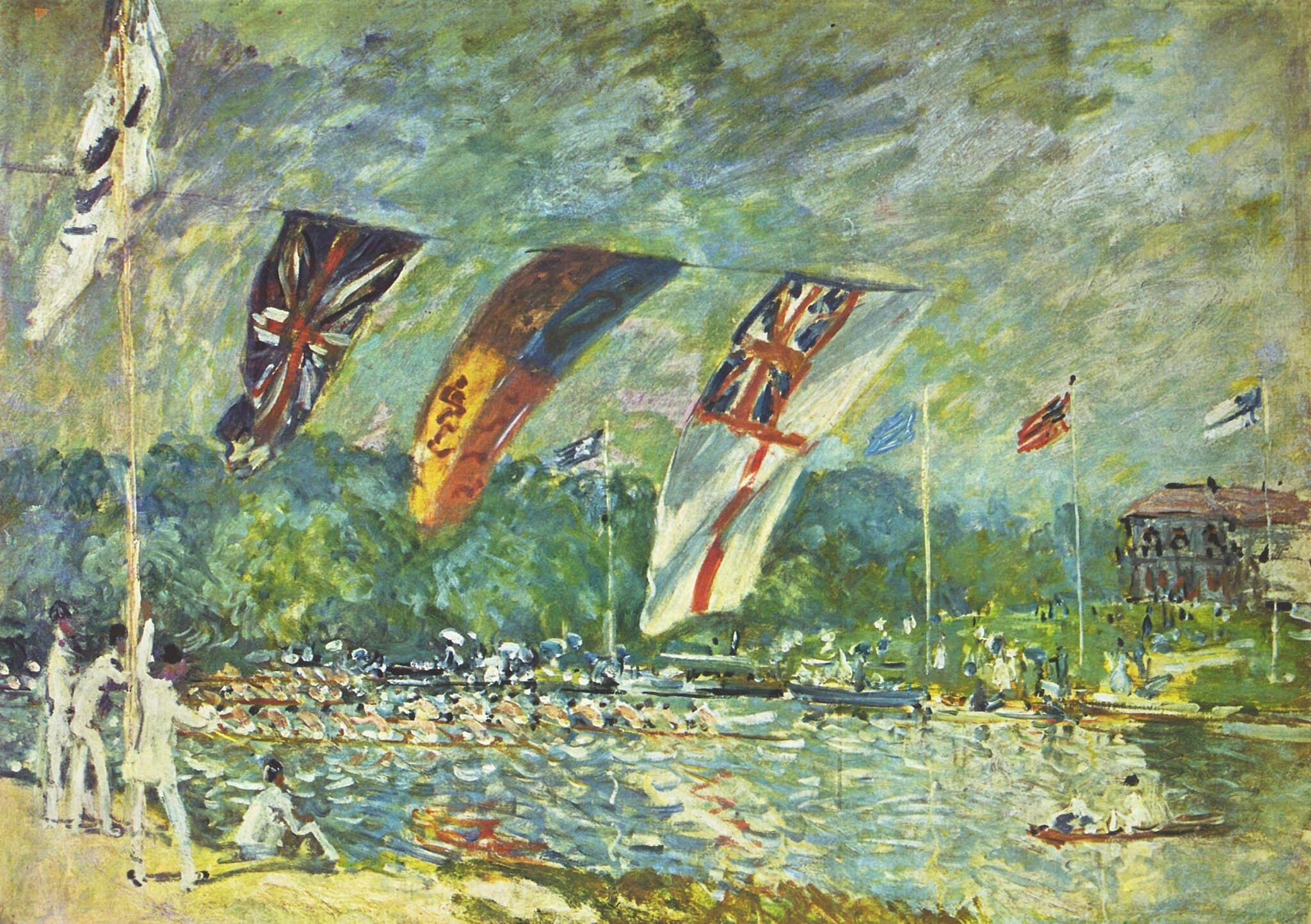
$1,500,000–$4,500,000
With Caillebotte bequest provenance and Musée d’Orsay custody (RF 2787), Les Régates à Molesey (1874) is estimated about $1.5–4.5M if offered today.
See full valuation →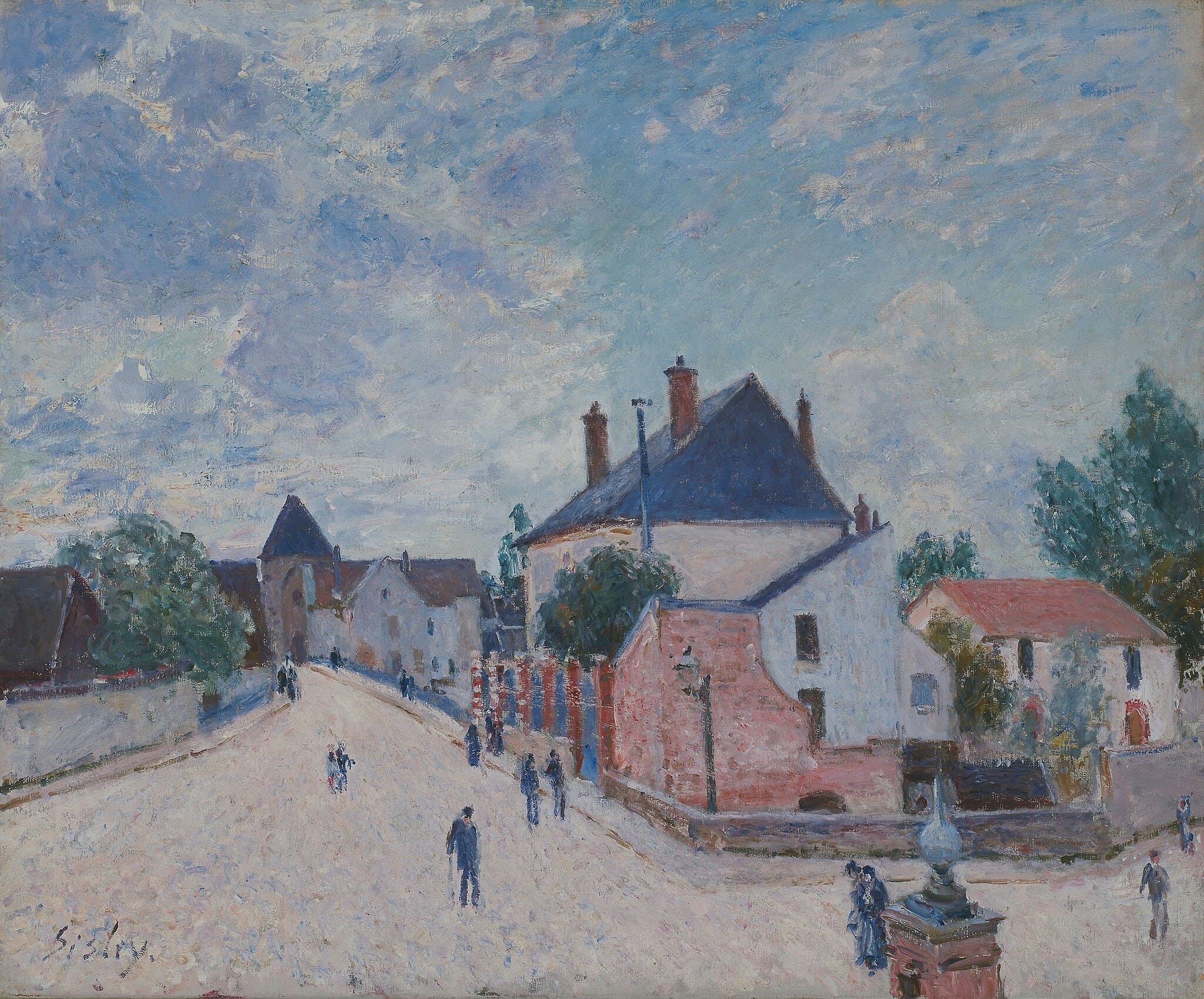
$500,000–$2,500,000
Based on the Art Institute of Chicago’s documented Street in Moret and recent comparables, a well‑provenanced sale‑ready Moret canvas is estimated $500K–2.5M.
See full valuation →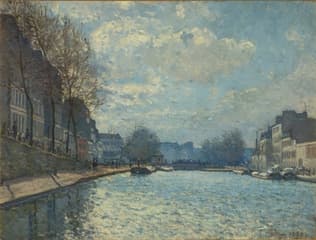
$500,000 - $2,000,000
A documented 1870 Salon work in the Musée d’Orsay, this Canal Saint‑Martin is estimated $500K–2M, reflecting strong institutional provenance but moderate subject and size.
See full valuation →What Drives Value in Alfred Sisley's Work
Period & Signature Motifs (early‑1870s Seine and snow scenes)
Sisley’s market is strongly time‑and‑subject specific: his early‑1870s Seine suburb pictures and 1874 snow compositions are the most coveted. Works like The Bridge at Villeneuve‑la‑Garenne (1872), Regatta at Molesey (1874) and Effet de neige à Louveciennes (1874) consistently outperform later, undistinguished village views. Collectors prize the modern infrastructure, fresh palette and plein‑air clarity of this moment; similar subjects from other dates or secondary views fetch materially less.
Canonical series scarcity (Moret church, Moret snows, Port‑Marly floods)
Serial projects that Sisley revisited—The Church at Moret (1893–94) series, Loing and the Mills of Moret snows, and the 1876 Flood at Port‑Marly—carry a pronounced premium because top examples are museum‑held and well published. With major versions in Orsay, Fitzwilliam and other institutions, privately available canvases are rare; when a fresh, autograph example from these series appears it tends to catalyze competitive bidding and approaches the upper single‑digit millions.
Execution of atmosphere: snow, water reflections and painterly subtlety
Sisley’s value is tightly linked to his technical handling of transient atmosphere—snow effects, reflective water and crystalline light distinguish masterpieces from routine works. The 1874 snow scene that set the auction ceiling demonstrates how faithful, delicate handling of powdery light and reflection elevates a canvas. Condition and any conservation that alters these subtle passages (relining, overpaint) therefore have outsized impact on price because they directly affect the qualities collectors buy in Sisley.
Artist‑specific provenance pedigree (Durand‑Ruel, Faure, Caillebotte, major museum accessions)
Provenance tied to Sisley’s primary dealers and noted collectors—Durand‑Ruel and Faure—or to landmark bequests and museum accessions (Caillebotte to the state; Met, Thyssen, Clark, Art Institute) materially upgrades a Sisley. The Bridge at Villeneuve‑la‑Garenne (Durand‑Ruel → Faure → Met) and Carmen Thyssen’s Flood at Port‑Marly illustrate how these chains confer scholarship, exhibition history and ‘trophy’ status, closing the gap between mid‑market and evening‑sale multiples.
Market Context
Alfred Sisley occupies a reliable, blue‑chip niche among Impressionists: prices generally sit below Monet and Renoir but are comparable to Pissarro for like‑for‑like quality. His auction record remains c. $9.06m (Sotheby’s London, 2017) and top 1870s–1880s oils—snow scenes, Seine bridges and Moret views—typically trade in the mid‑six to low‑seven figures, with mid‑market works in the high six‑figure to low‑million range. Demand is international (New York, London, Paris) and driven by canonical subject, scale, condition and museum or single‑owner provenance (Met or similar institutional associations command premiums). After a softening in 2023–24 the market has stabilized at the top, producing selective, competitive bidding for textbook, well‑documented works while mid‑tier lots face greater price discipline.