Most Expensive Berthe Morisot Paintings
Berthe Morisot occupies a singular market standing among Impressionists: once undervalued in a male-dominated canon, her paintings now command serious sums as collectors prize their intimacy, modern compositional daring, and subtle handling of light. At the apex sits The Cradle, estimated at $50–65 million, a work whose quiet domesticity and deft brushwork have made it a trophy for institutions and private collectors alike. Other notable market successes include Summer's Day ($23–32 million) and Woman at Her Toilette ($12–18 million), while Après le déjeuner (After Lunch) and The Harbour at Lorient both appear in the $8–16 million and $9–15 million ranges, respectively, signaling consistent demand for Morisot’s lyrical visions. Readings and portraits such as Reading ($9–14 million), Femme et enfant au balcon ($4–7 million), The Sisters ($1–6 million), The Artist's Daughter with a Parakeet ($800,000–$2,000,000), and The Mother and Sister of the Artist ($400,000–$1,500,000) further demonstrate how provenance, rarity, and the artist’s progressive feminine gaze translate into collectible value, making Morisot one of the most sought-after women painters on the market today.
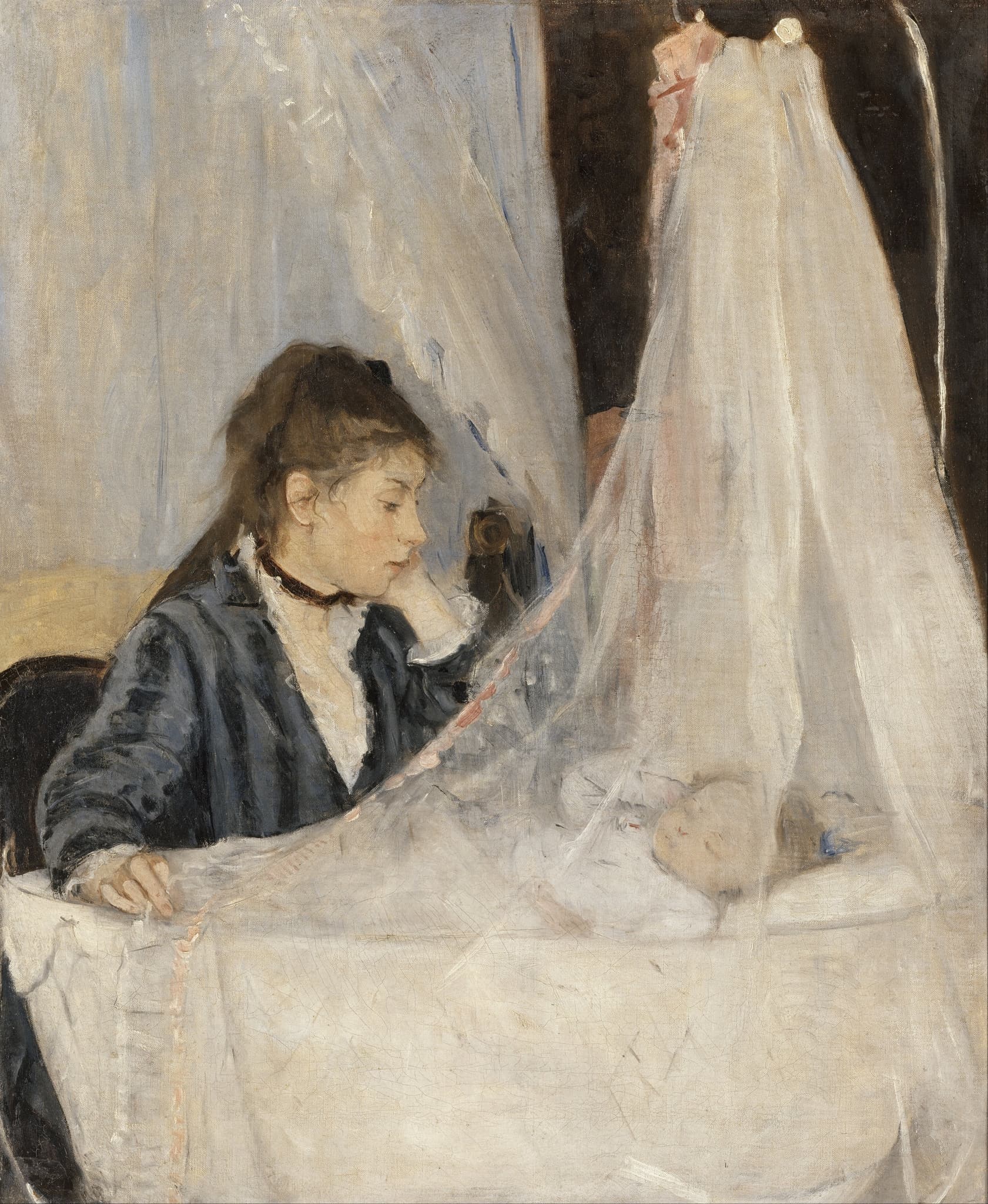
$50-65 million
At $50–65M, the estimate extrapolates well above Morisot’s auction record, treating The Cradle as a trophy‑level, freely tradable masterpiece commanding premium museum‑market prices.
See full valuation →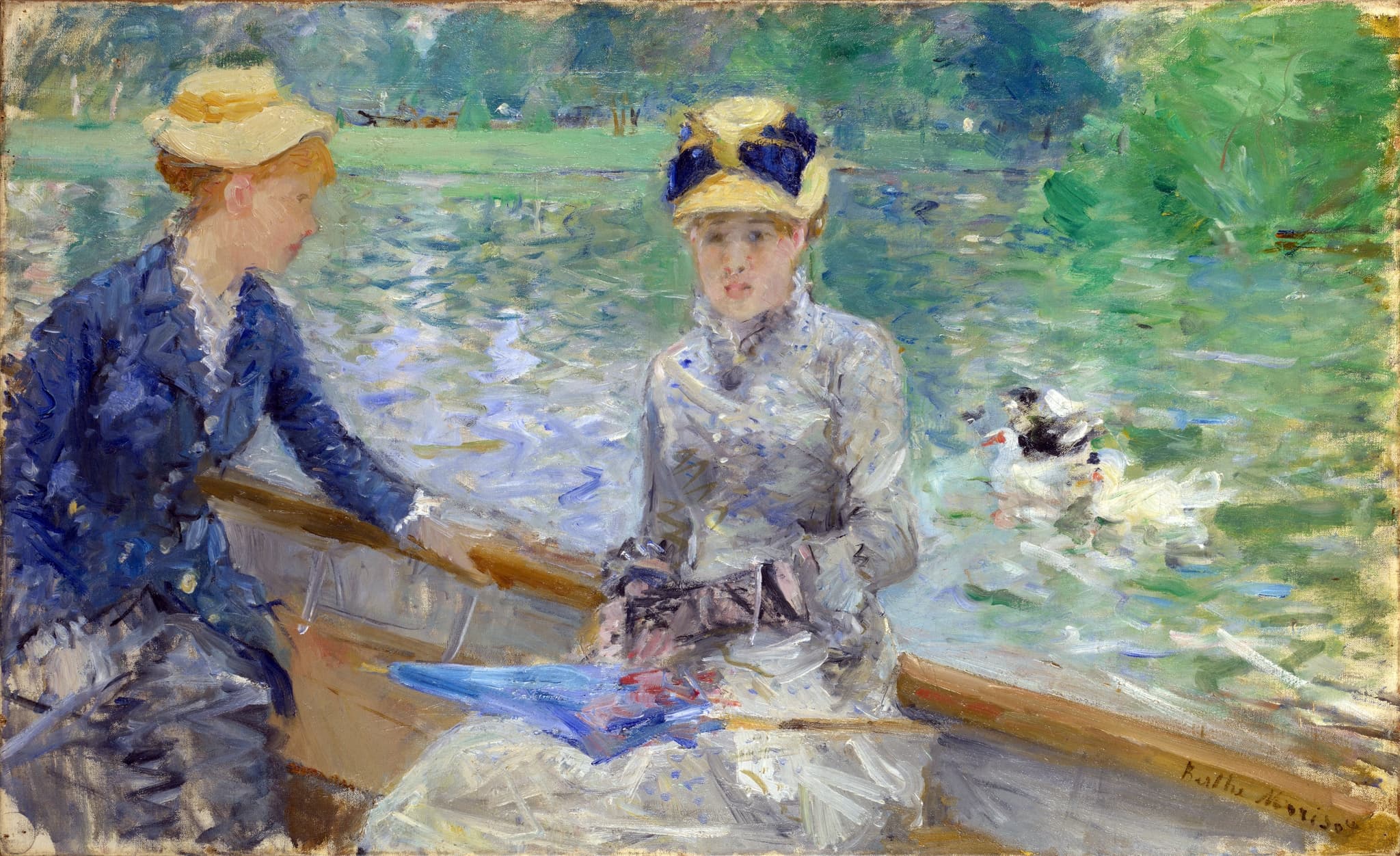
$23-32 million
The $23–32M range applies a canonical‑masterpiece premium to Summer’s Day, pushing it above typical Morisot sales based on exceptional fame, rarity, and museum‑level provenance.
See full valuation →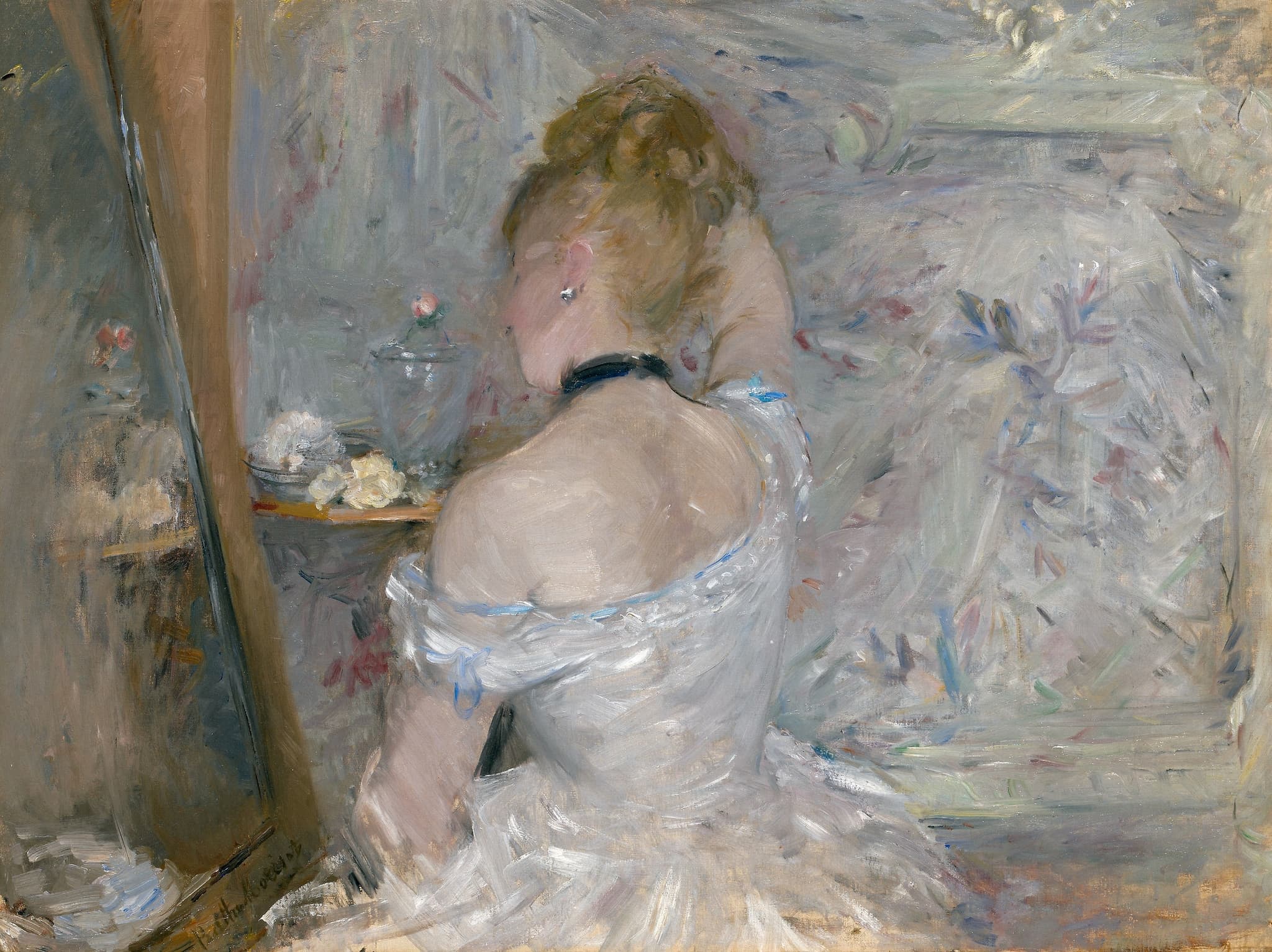
$12-18 million
Estimated $12–18M at auction, with an insurance/replacement benchmark near $20M, anchored to the work’s prime‑period date and record‑tier Morisot comparables.
See full valuation →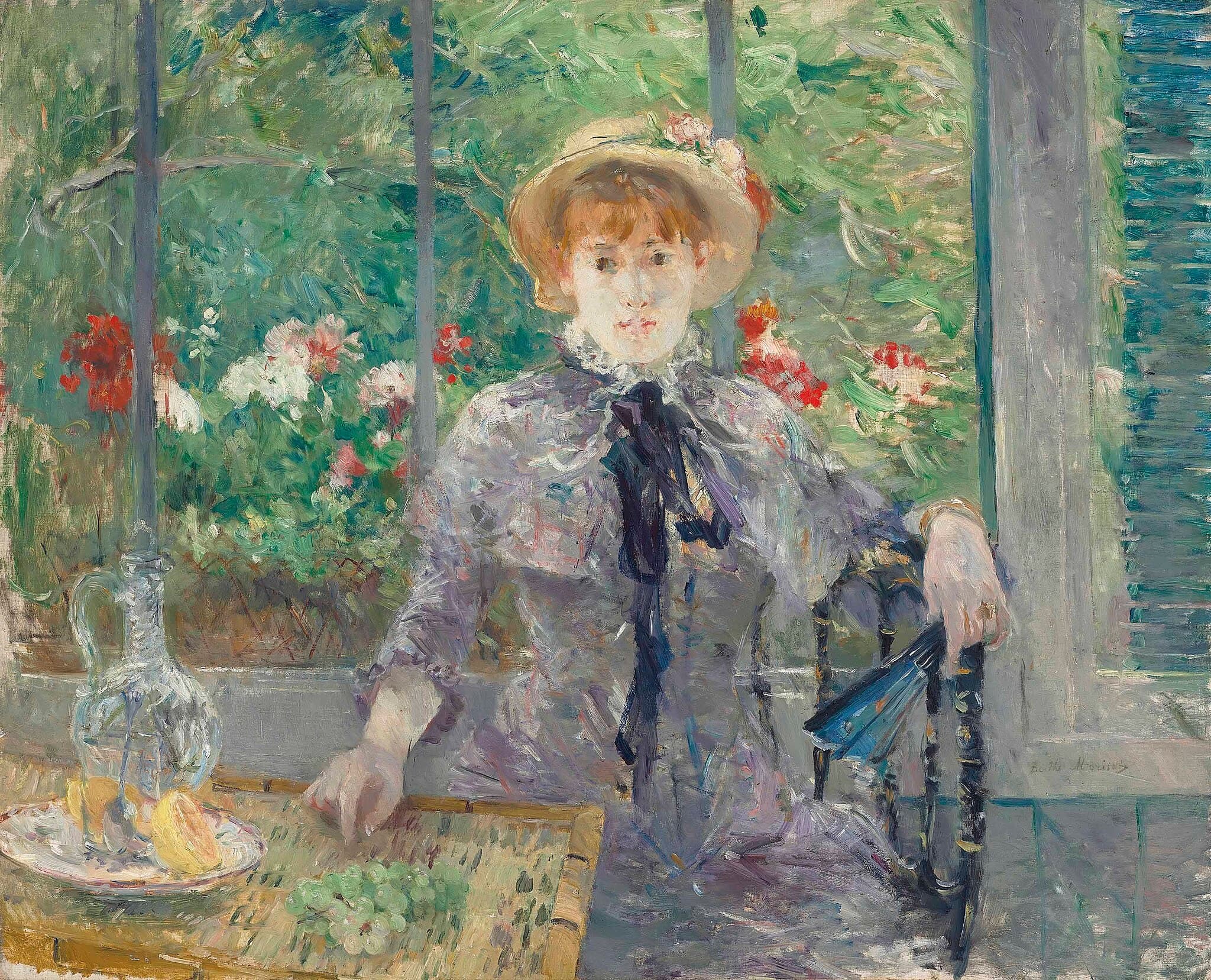
$8.0-16.0 million
Anchored to Christie’s 2013 $10,924,931 sale, Après le déjeuner is now defensibly valued $8–16M (most likely ≈$12M), contingent on attribution, condition and sale channel.
See full valuation →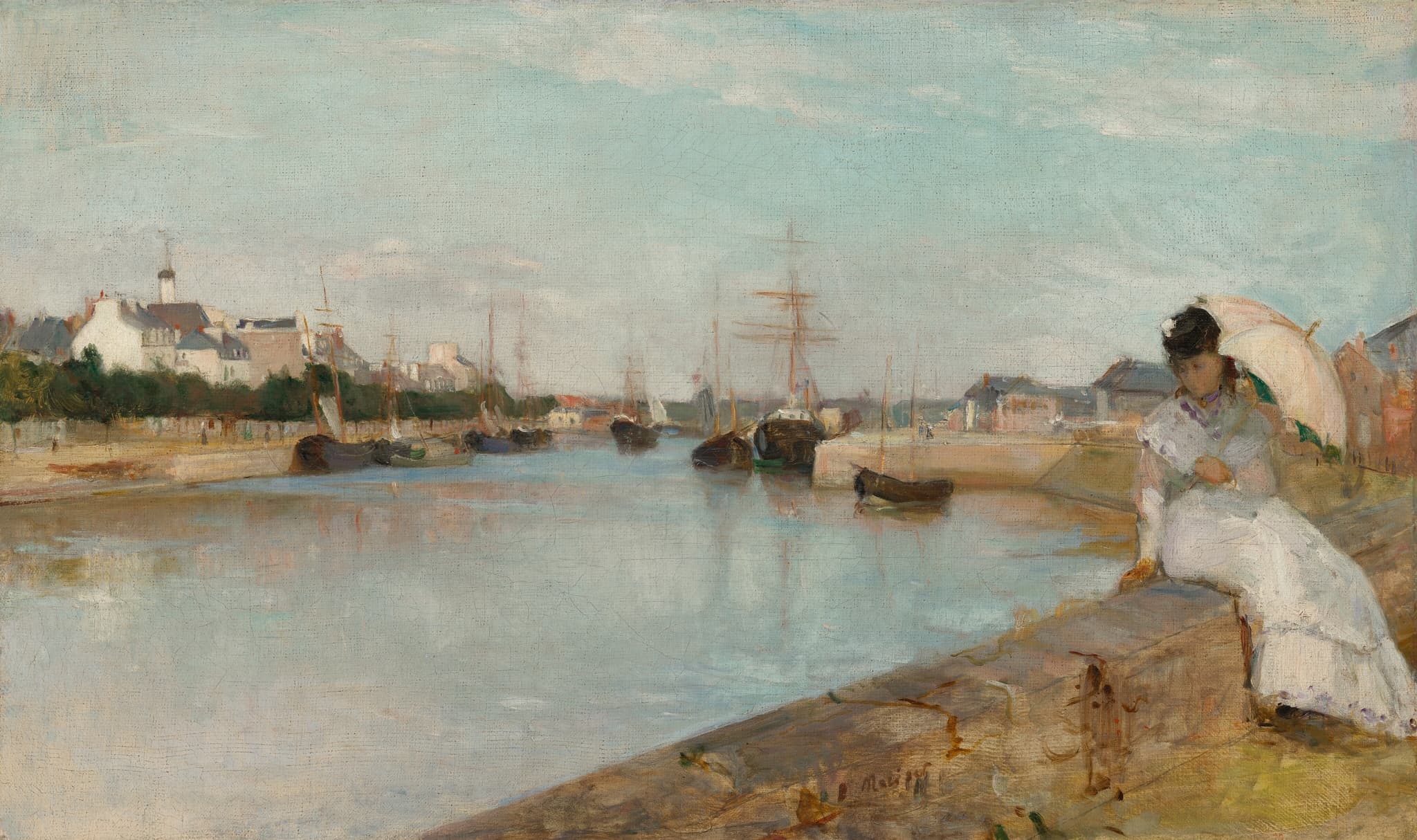
$9-15 million
Valued $9–15M at evening sale (replacement ≈$16M), The Harbour at Lorient’s early 1869 date and gift to Édouard Manet make it a record‑challenging Morisot.
See full valuation →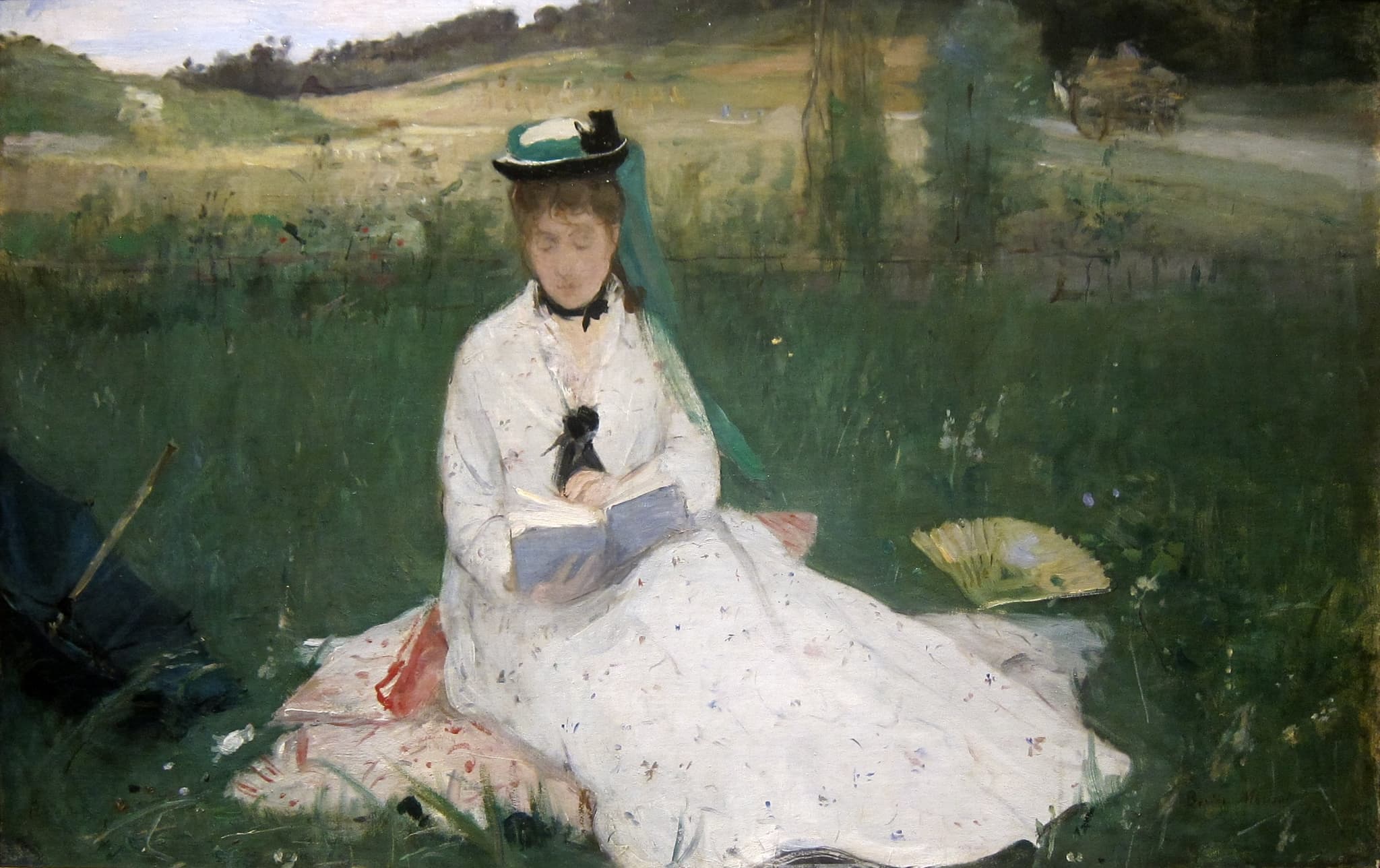
$9-14 million
Reading, exhibited in the 1874 Impressionist show, is estimated $9–14M at auction with a recommended insurance guideline near $16M, reflecting prime early‑1870s comparables and Morisot’s $10.9M record.
See full valuation →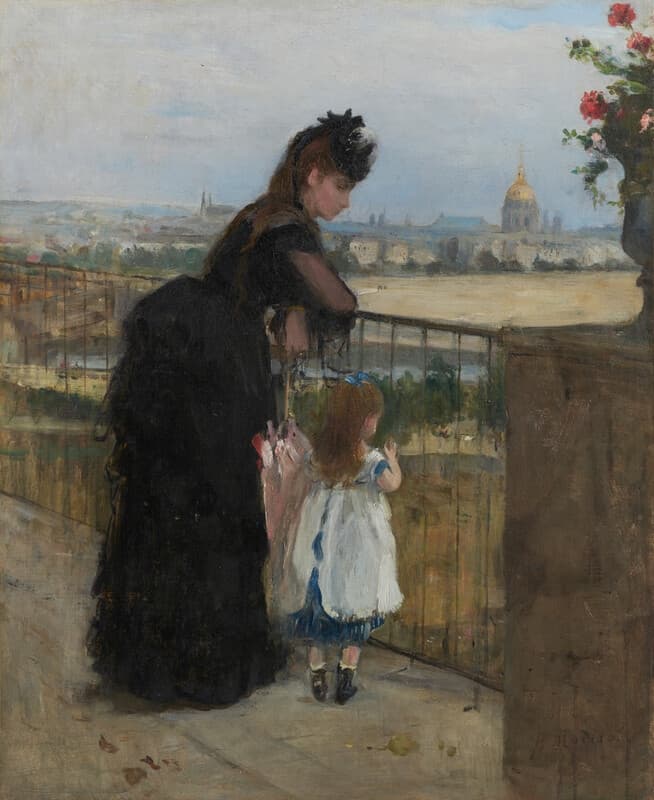
$4,000,000-$7,000,000
Anchored to the identical canvas’s Feb 2017 Christie’s result of US$5,073,570, Femme et enfant au balcon is valued US$4.0–7.0M, adjusted for condition and catalogue‑raisonné entry.
See full valuation →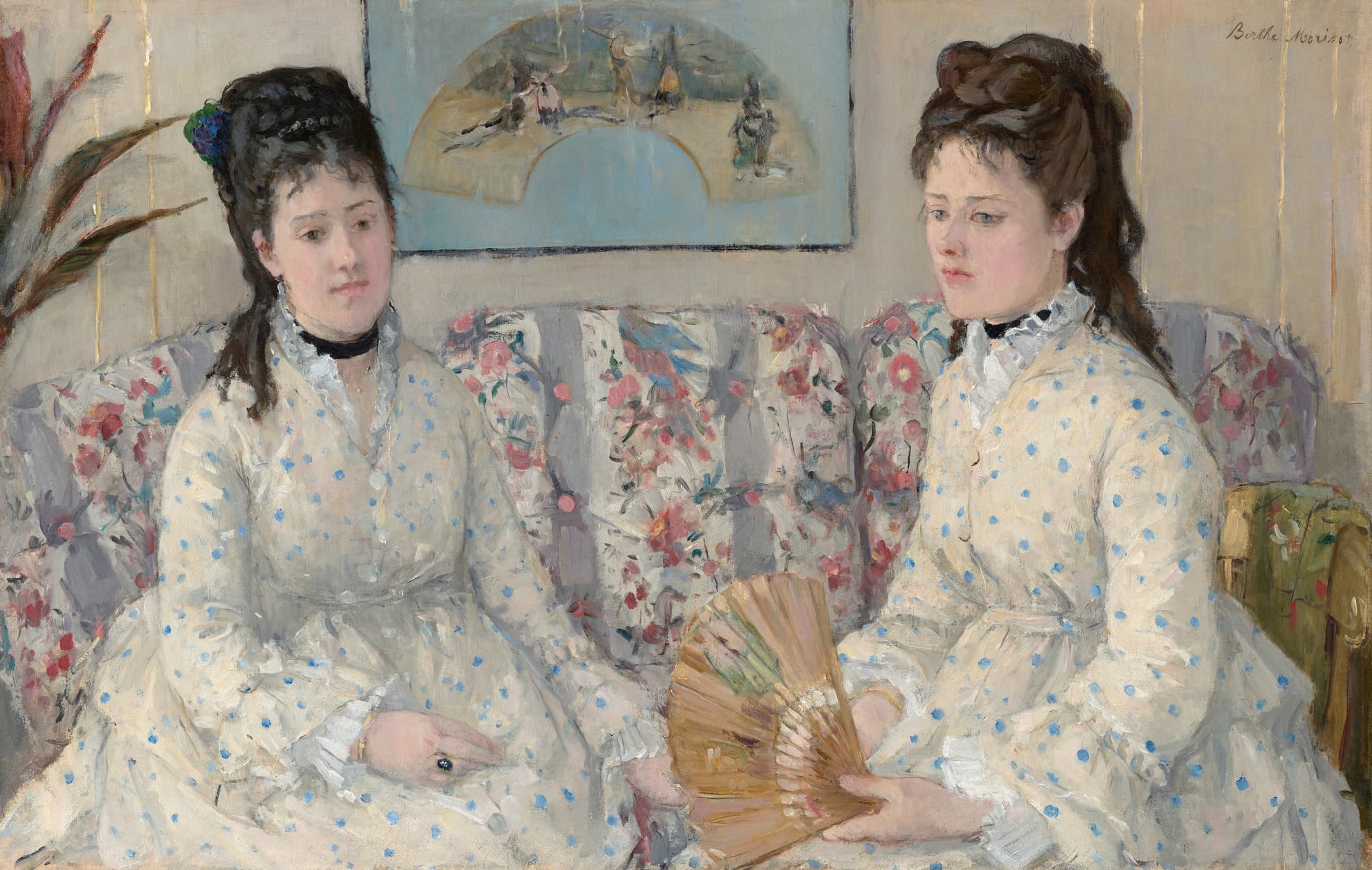
$1,000,000–$6,000,000
Assuming the NGA’s The Sisters (1869), the practical auction estimate of $1–6M reflects museum ownership and documented Bernheim‑Jeune/Durand‑Ruel/Carstairs provenance.
See full valuation →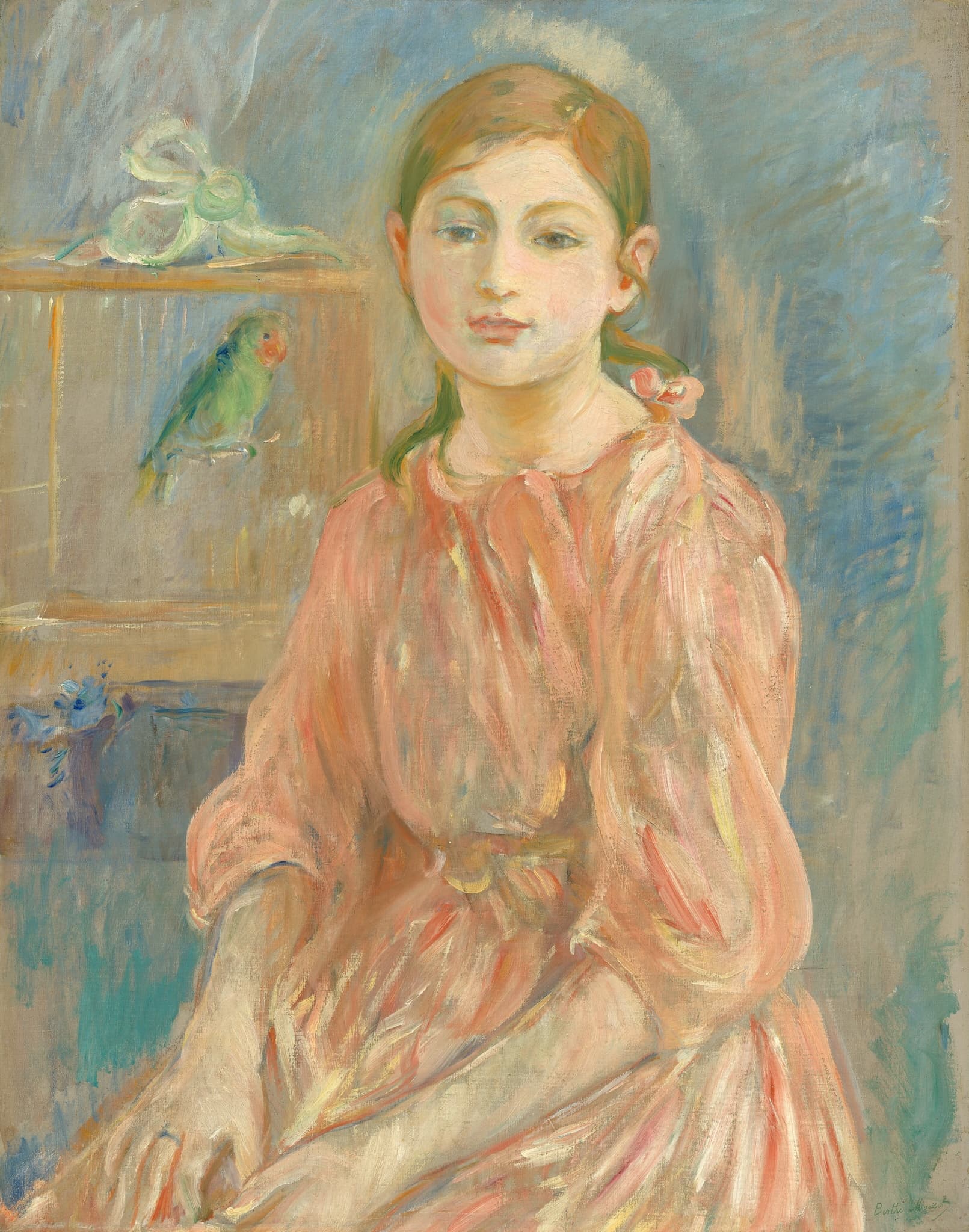
$800,000-$2,000,000
Based on a related 1890 sale at Christie’s Paris (~€1.08M/~$1.25M) and strong NGA provenance, The Artist’s Daughter with a Parakeet is estimated $800K–2M.
See full valuation →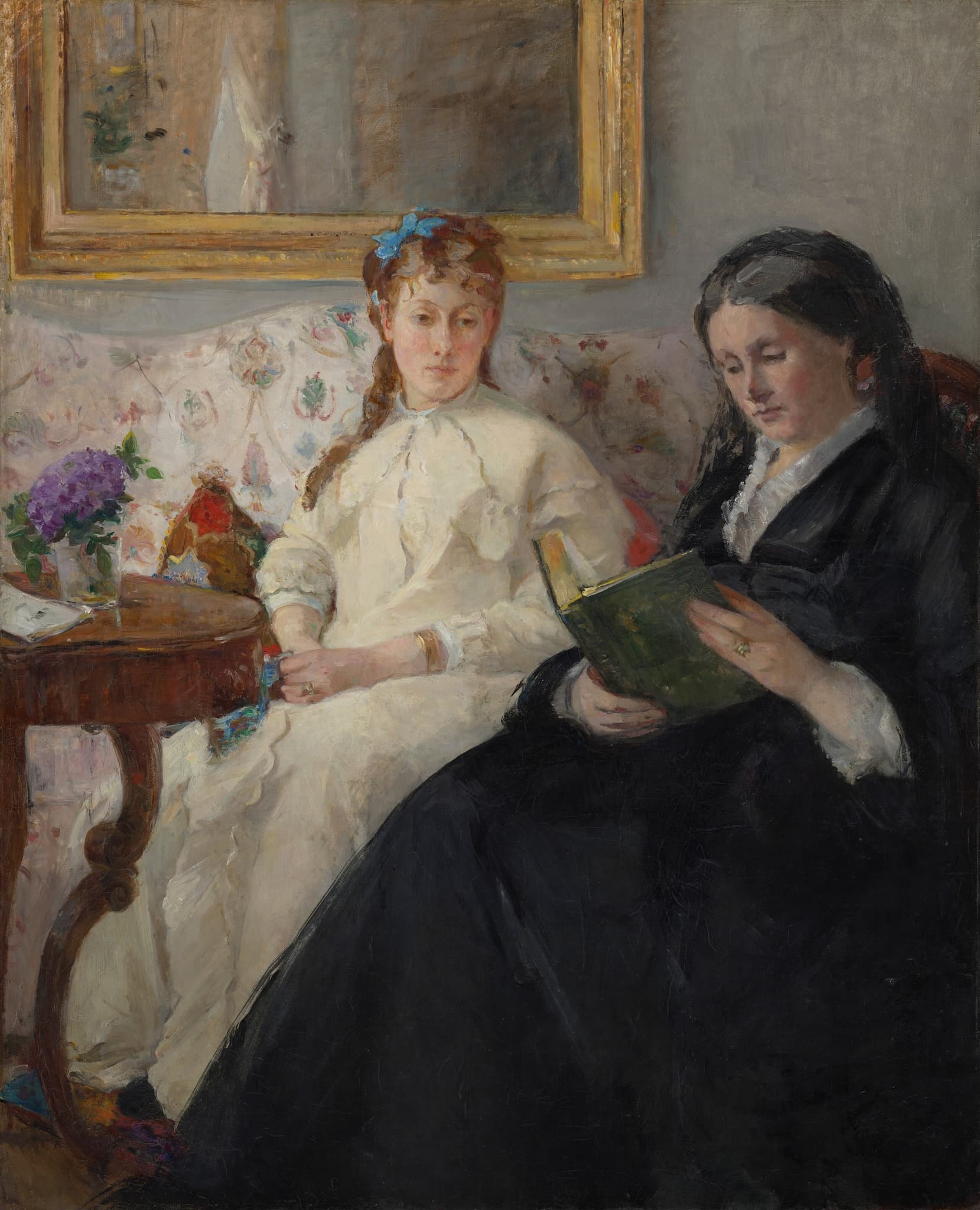
$400,000–$1,500,000
With NGA accession 1963.10.186 and secure exhibition history, The Mother and Sister of the Artist is defensibly valued $400K–1.5M against comparable early domestic Morisot oils.
See full valuation →What Drives Value in Berthe Morisot's Work
Prime period & exhibition pedigree
Morisot’s market is heavily period‑driven: oils from the early 1870s and the core 1870s–1880s mature phase (Reading, 1873; The Cradle, 1872; Après le déjeuner, 1881) command the largest premiums. Works exhibited in the 1874 Impressionist show or other lifetime exhibitions carry documented provenance and scholarship that lift bids—Après le déjeuner’s $10.9M 2013 result exemplifies how prime dating and exhibition history set the artist’s top bracket.
Signature subjects and iconic images
Certain Morisot motifs function as value multipliers: motherhood/child scenes, toilette images, and high‑visibility garden/figure compositions (The Cradle; Summer’s Day; Femme et enfant) are treated as canonical. The Cradle’s textbook status produces trophy‑level insurance estimates ($50–65M modelled) and Summer’s Day earns a 1.6–2.2× ‘canonical image’ uplift in estimates. Repeat reproduction and curatorial centrality turn specific pictures into price leaders for the artist.
Provenance, museum ownership and exhibition footprint
Morisot works with deep institutional chains (The Cradle to Musée d’Orsay; Summer’s Day via Bernheim‑Jeune to the National Gallery; Woman at Her Toilette at the Art Institute of Chicago) attract outsized buyer confidence and premiums. Museum stewardship, catalogue citations and long exhibition histories both reduce attribution risk and create a market scarcity effect—museum‑grade provenance often shifts an item from day‑sale pricing into evening‑sale, seven‑figure territory.
Execution type, scale and subject category (finished oil vs study; figure vs landscape)
Buyers differentiate between fully realized, mid‑to‑large finished oils and studies or small sketches: Julie Manet portraits and finished domestic interiors sell materially higher than loose studies (The Artist’s Daughter with a Parakeet is valued below larger finished Julie Manet canvases). Likewise, figure/interior and maternal subjects outperform landscapes/marines unless the landscape has exceptional provenance or an early date (The Harbour at Lorient with a Manet connection).
Market Context
Berthe Morisot’s auction market is firmly blue‑chip: her benchmark remains Après le déjeuner (Christie’s London, 2013) at roughly $10.9 million, while high‑quality oils such as Fillette portant un panier ($5.31m, 2021) and several mid‑seven‑figure day‑ and evening‑sale results in 2024–2025 demonstrate steady depth. Institutional reassessment and major museum exhibitions—driven by collectors and museums rebalancing art history to foreground women Impressionists—have tightened supply of top‑tier works and intensified competition for family‑and‑domestic subjects from the 1870s–80s. The market shows a clear flight to quality: overall volumes softened in 2023–2024 amid fewer trophies, but trophy‑level, museum‑caliber canvases retained strong demand and regained momentum into late‑2025, positioning canonical Morisot oils to command significant premiums.