Body
The body symbolism in this group charts how modern artists turn gesture, posture, and gaze into primary vehicles of meaning, shifting from inherited sacred and classical idioms toward intimate, psychological, and sociopolitical registers.
Member Symbols
Featured Artworks
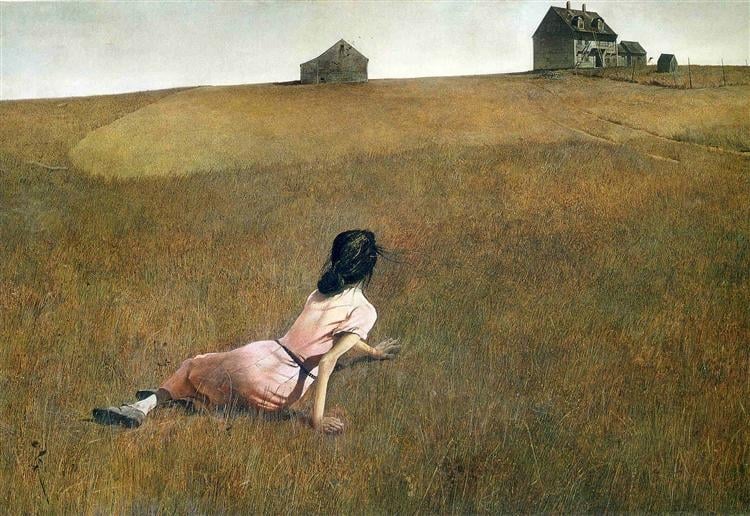
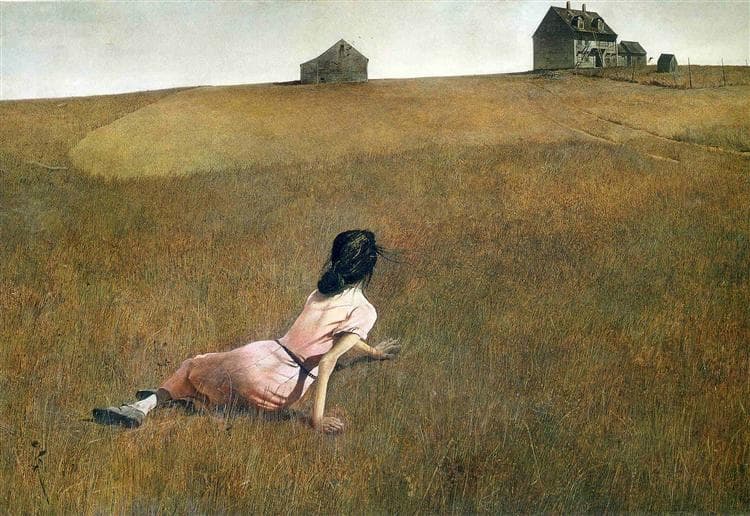
Christina's World
Andrew Wyeth (1948)
Andrew Wyeth’s Christina’s World distills vast rural space and human resolve into a single, charged image: a woman in a <strong>faded pink dress</strong> braces on the <strong>up-slope</strong> toward a weathered farmhouse. The diagonal pull between her body and the <strong>Olson House</strong> turns distance itself into <strong>yearning and endurance</strong> <sup>[1]</sup><sup>[4]</sup>. Wyeth’s spare, <strong>egg tempera</strong> surface makes every brittle grass blade feel like an act of will <sup>[1]</sup><sup>[3]</sup>.
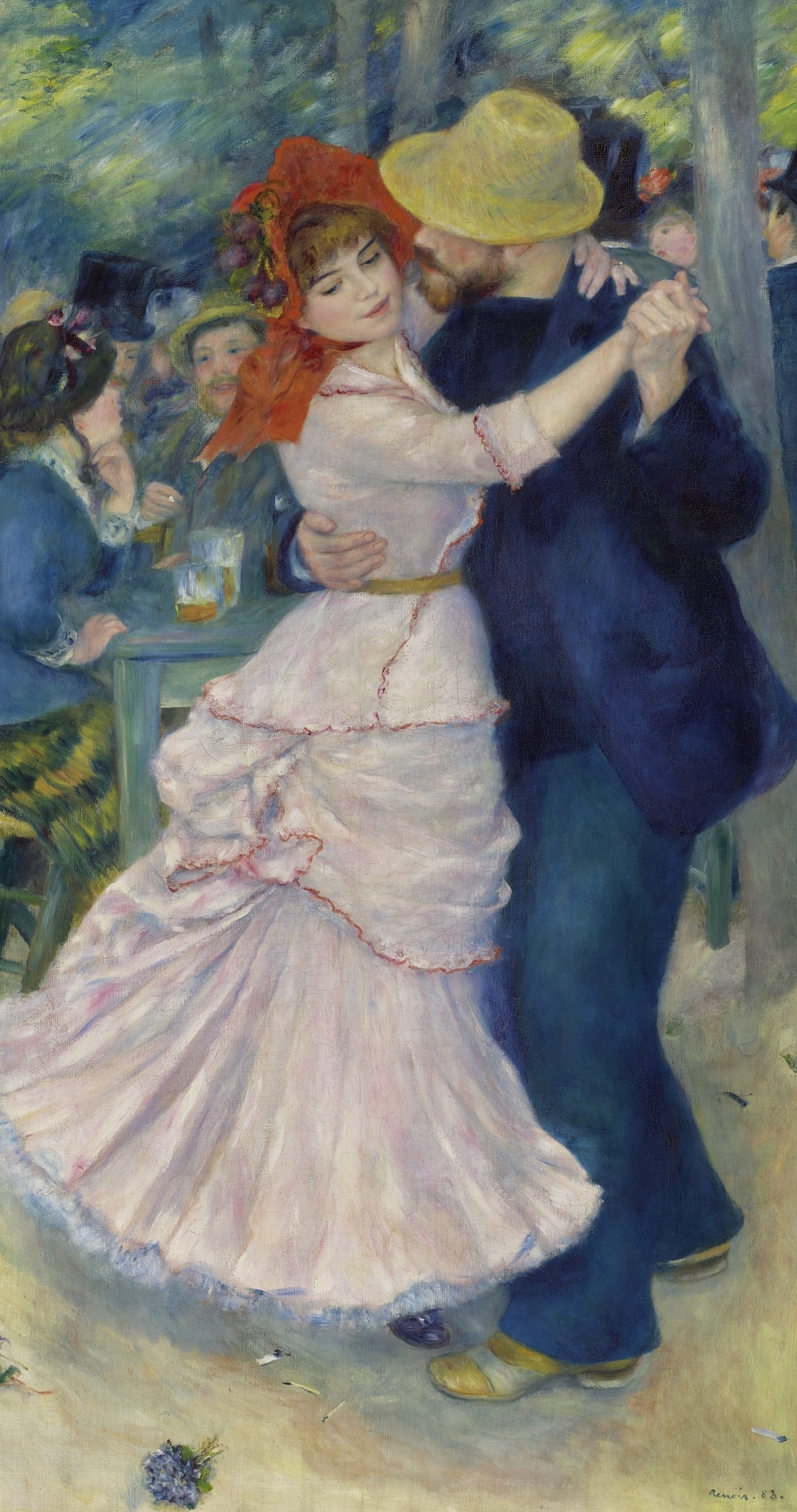
Dance at Bougival
Pierre-Auguste Renoir (1883)
In Dance at Bougival, Pierre-Auguste Renoir turns a crowded suburban dance into a <strong>private vortex of intimacy</strong>. Rose against ultramarine, skin against shade, and a flare of the woman’s <strong>scarlet bonnet</strong> concentrate the scene’s energy into a single turning moment—modern leisure made palpable as <strong>touch, motion, and light</strong> <sup>[1]</sup><sup>[2]</sup>.
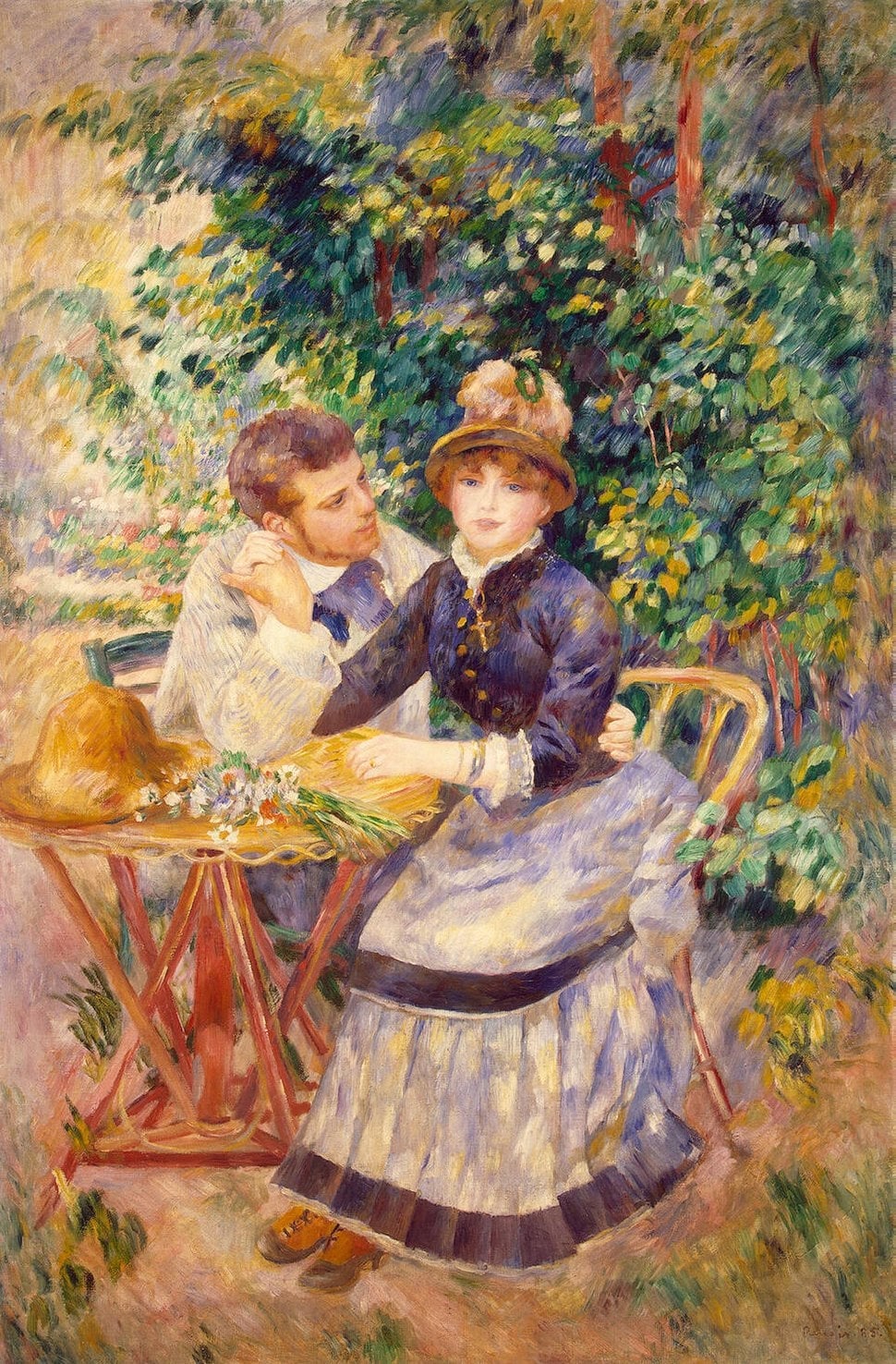
In the Garden
Pierre-Auguste Renoir (1885)
In the Garden presents a charged pause in modern leisure: a young couple at a café table under a living arbor of leaves. Their lightly clasped hands and the bouquet on the tabletop signal courtship, while her calm, front-facing gaze checks his lean. Renoir’s flickering brushwork fuses figures and foliage, rendering love as a <strong>transitory, luminous sensation</strong> <sup>[1]</sup><sup>[3]</sup>.
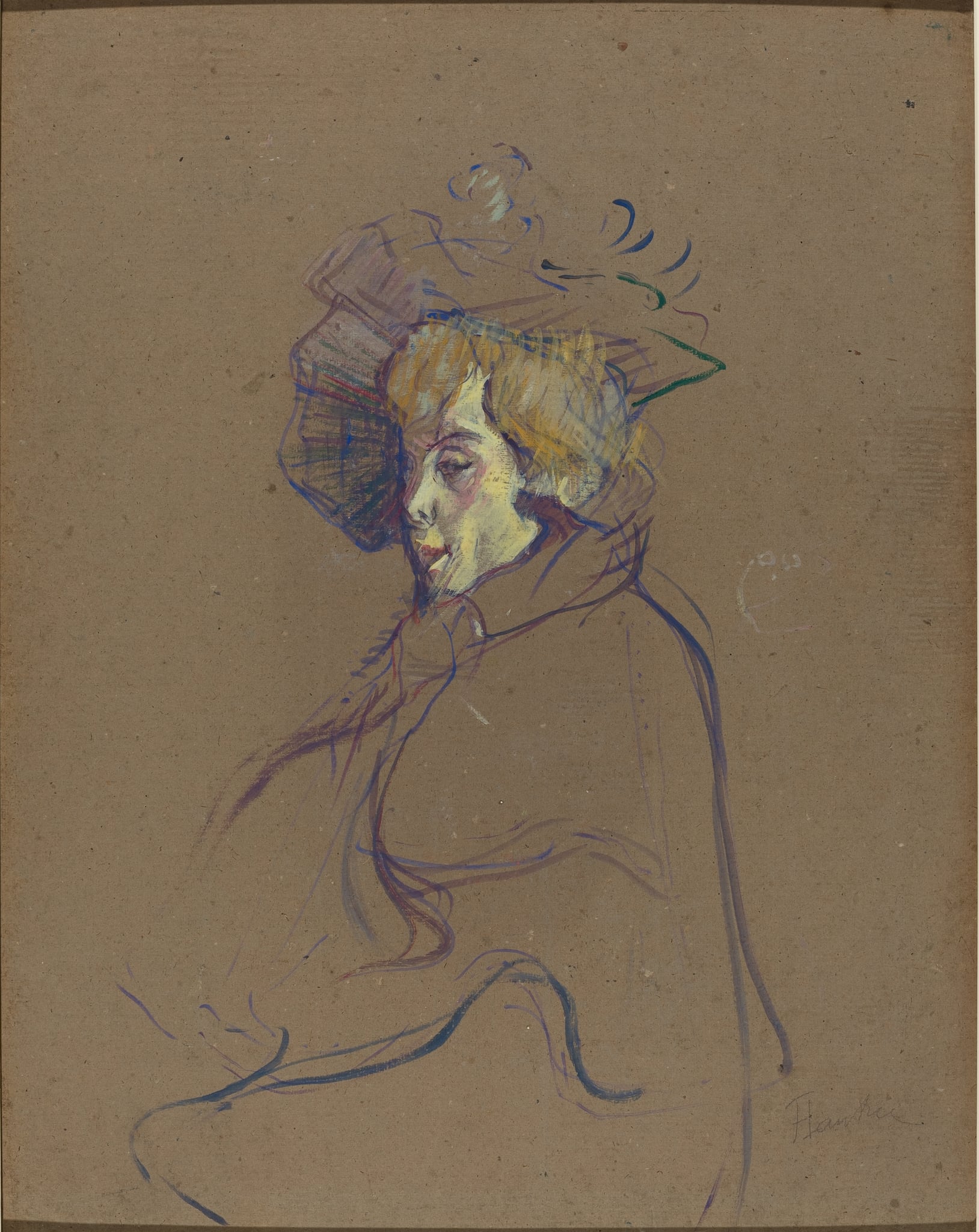
Jane Avril
Henri de Toulouse-Lautrec (c. 1891–1892)
In Jane Avril, Henri de Toulouse-Lautrec crystallizes a public persona from a few <strong>urgent, chromatic strokes</strong>: violet and blue lines whirl into a cloak, while green and indigo dashes crown a buoyant hat. Her face—sharply keyed in <strong>lemon yellow, lilac, and carmine</strong>—hovers between mask and likeness, projecting poise edged with fatigue. The raw brown ground lets her <strong>whiplash silhouette</strong> materialize like smoke from Montmartre’s nightlife.
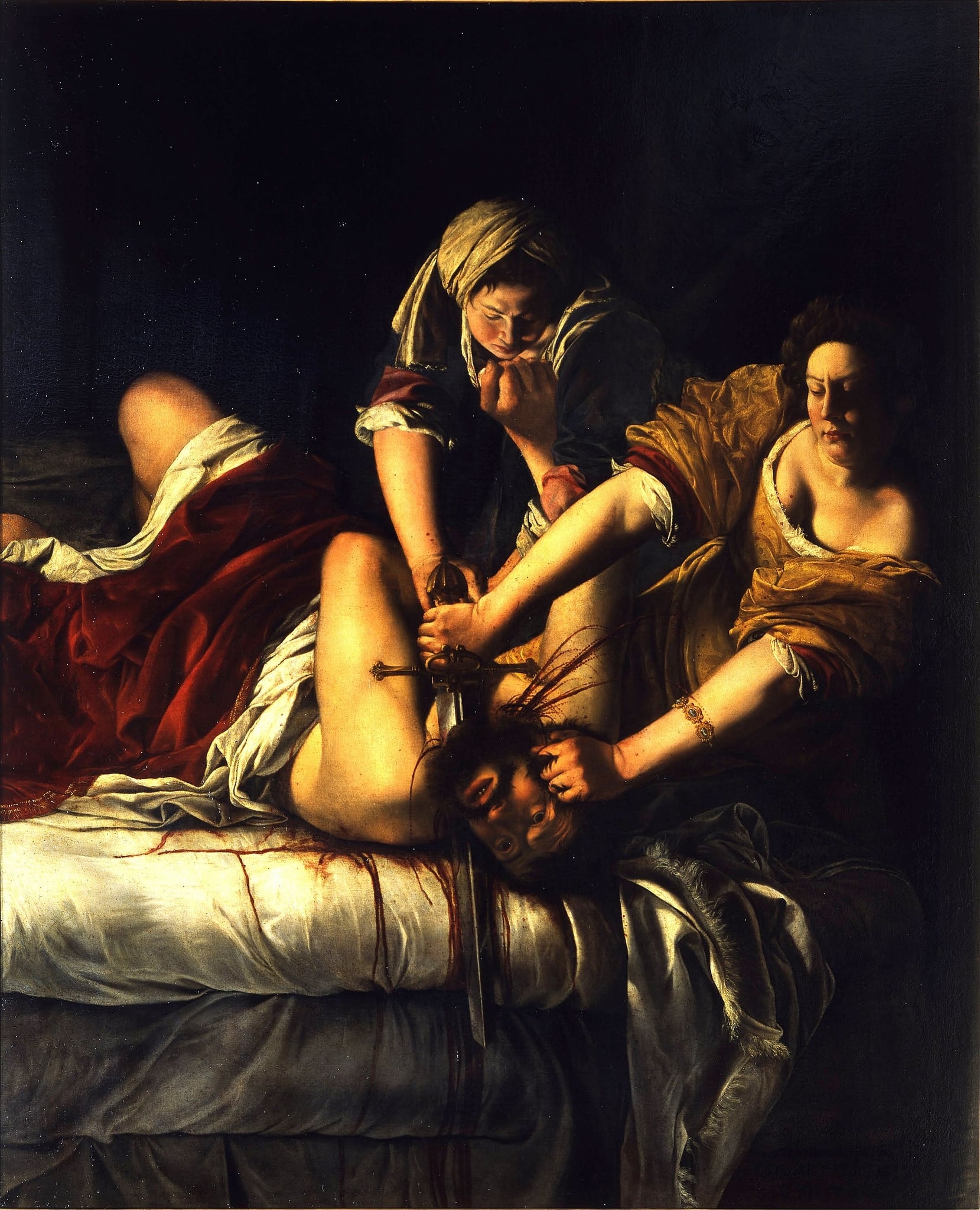
Judith Slaying Holofernes
Artemisia Gentileschi (c. 1612–13)
Artemisia Gentileschi’s Judith Slaying Holofernes hurls us into the fatal instant when Judith and her maid overpower the Assyrian general. In a void of darkness, a hard light chisels out straining arms, a heavy sword, and blood darkening the white sheets—an image of <strong>justice enacted through female collaboration</strong> <sup>[1]</sup><sup>[2]</sup>.
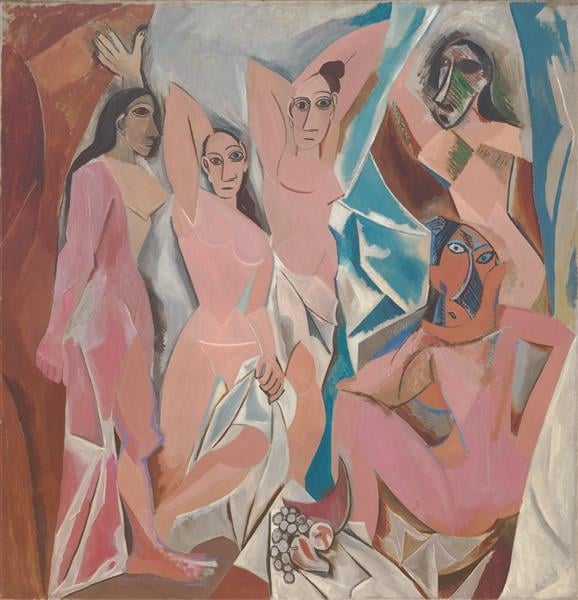
Les Demoiselles d'Avignon
Pablo Picasso (1907)
Les Demoiselles d'Avignon hurls five nudes toward the viewer in a shallow, splintered chamber, turning classical beauty into <strong>sharp planes</strong>, <strong>masklike faces</strong>, and <strong>fractured space</strong>. The fruit at the bottom reads as a sensual lure edged with threat, while the women’s direct gazes indict the beholder as participant. This is the shock point of <strong>proto‑Cubism</strong>, where Picasso reengineers how modern painting means and how looking works <sup>[1]</sup><sup>[2]</sup>.
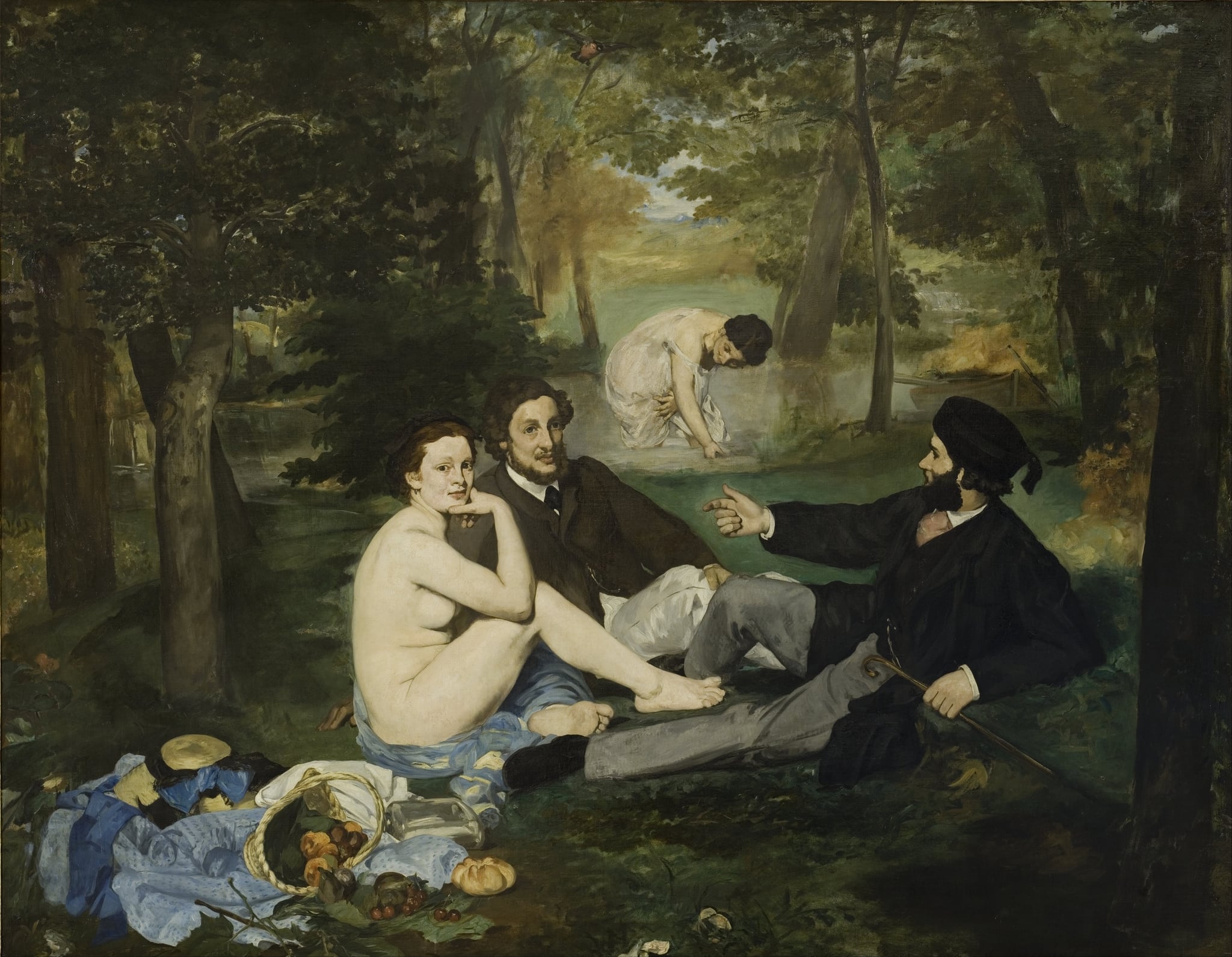
Luncheon on the Grass
Édouard Manet (1863)
Luncheon on the Grass stages a confrontation between <strong>modern Parisian leisure</strong> and <strong>classical precedent</strong>. A nude woman meets our gaze beside two clothed men, while a distant bather and an overturned picnic puncture naturalistic illusion. Manet’s scale and flat, studio-like light convert a park picnic into a manifesto of <strong>modern painting</strong> <sup>[1]</sup><sup>[2]</sup>.
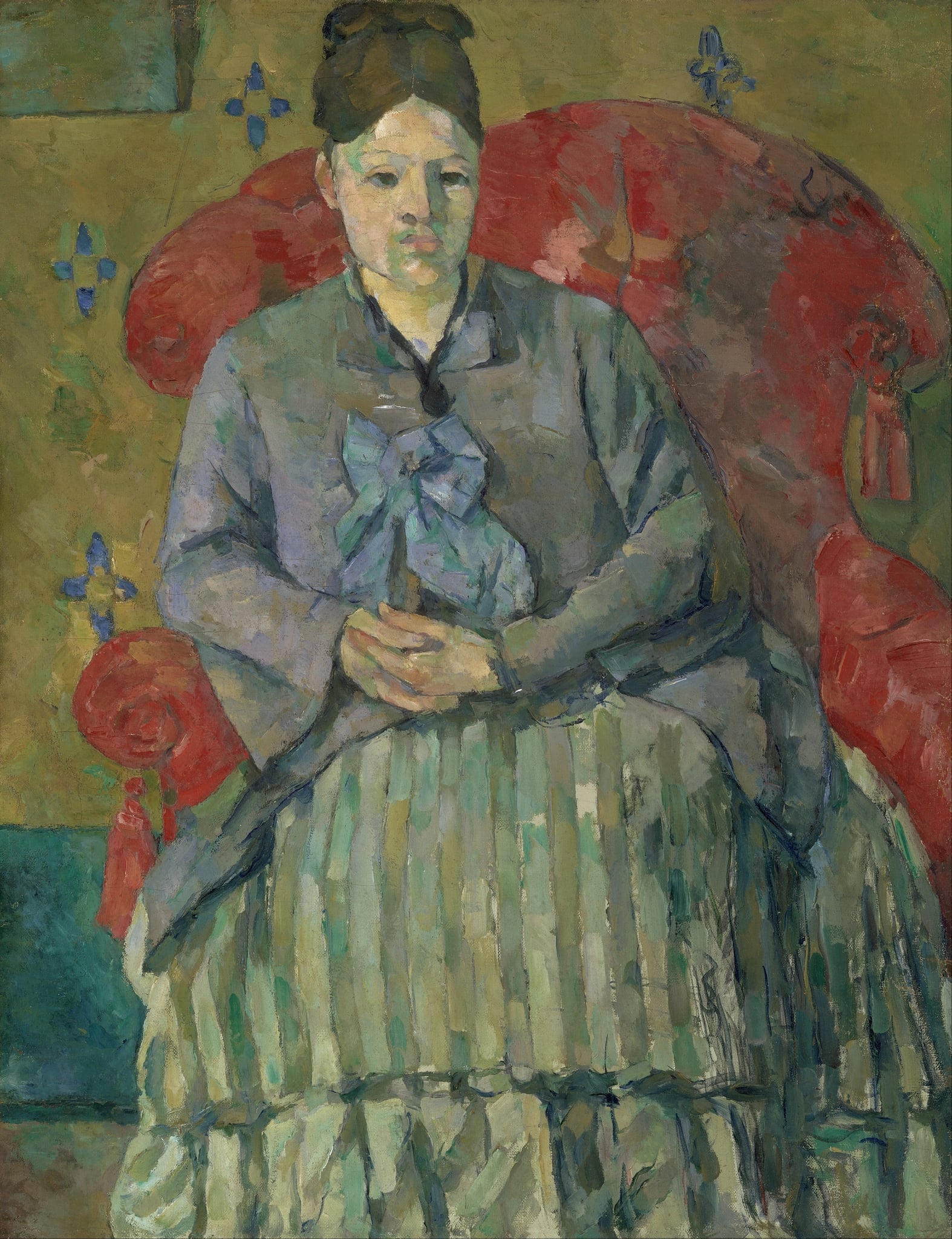
Madame Cézanne in a Red Armchair
Paul Cézanne (about 1877)
Paul Cézanne’s Madame Cézanne in a Red Armchair (about 1877) turns a domestic sit into a study of <strong>color-built structure</strong> and <strong>compressed space</strong>. Cool blue-greens of dress and skin lock against the saturated <strong>crimson armchair</strong>, converting likeness into an inquiry about how painting makes stability visible <sup>[1]</sup><sup>[3]</sup>.
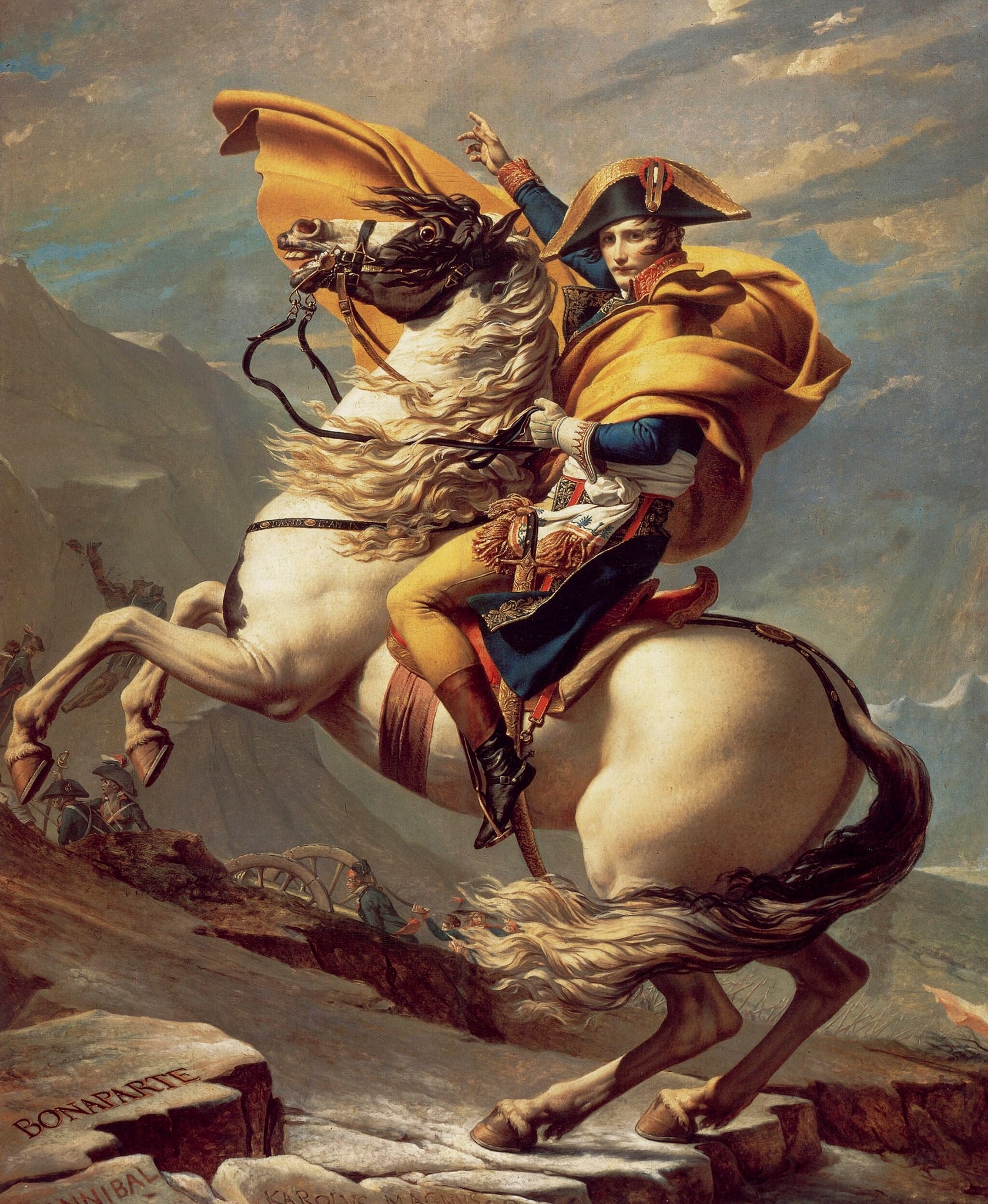
Napoleon Crossing the Alps
Jacques-Louis David (1801–1805 (series of five versions))
Jacques-Louis David turns a difficult Alpine passage into a <strong>myth of command</strong>: a serene leader on a rearing charger, a <strong>billowing golden cloak</strong>, and names cut into stone that bind the crossing to Hannibal and Charlemagne. The painting manufactures <strong>political legitimacy</strong> by fusing modern uniform and classical gravitas into a single, upward-driving image <sup>[1]</sup><sup>[2]</sup><sup>[3]</sup><sup>[4]</sup>.
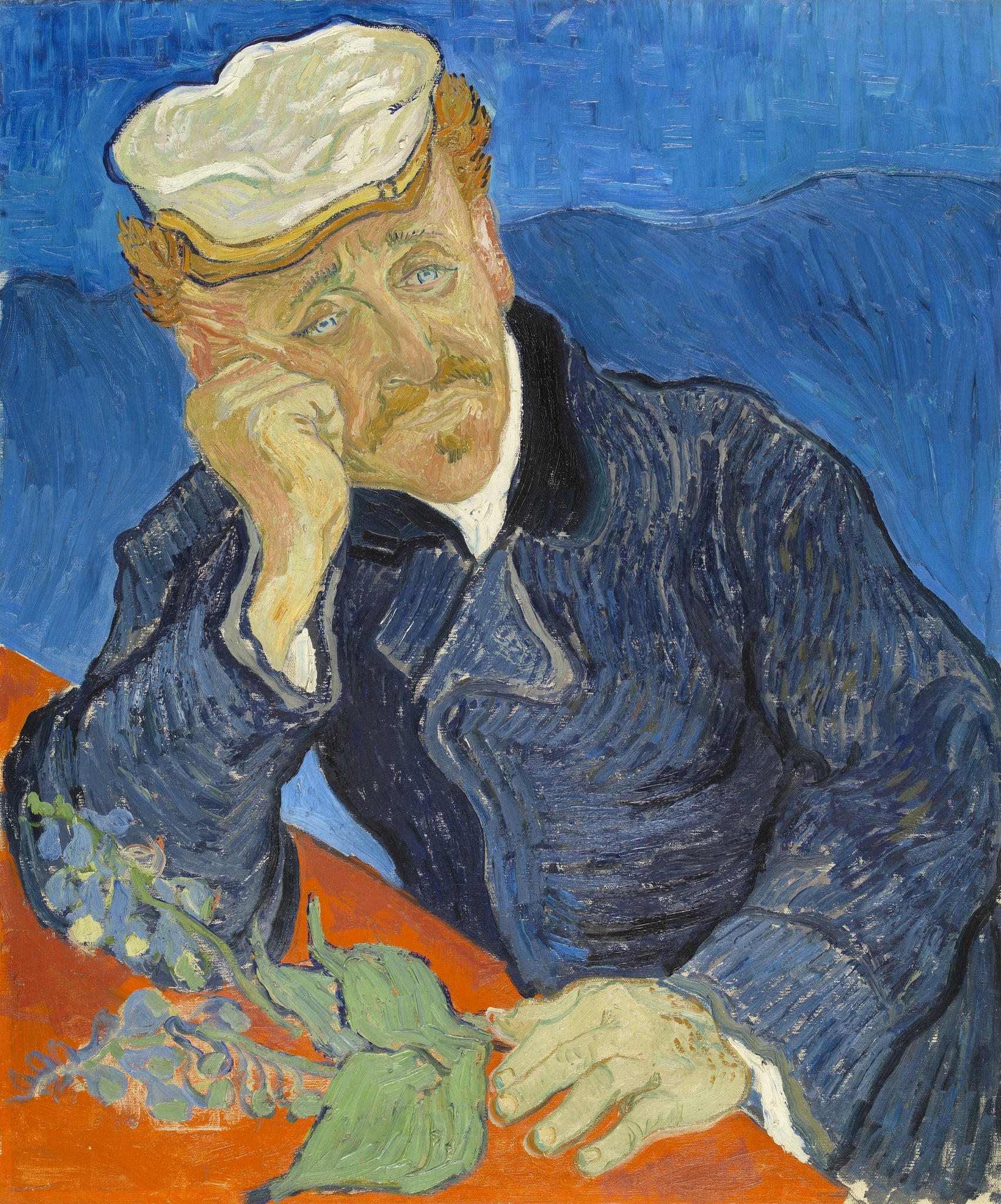
Portrait of Dr. Gachet
Vincent van Gogh (1890)
Portrait of Dr. Gachet distills Van Gogh’s late ambition for a <strong>modern, psychological portrait</strong> into vibrating color and touch. The sitter’s head sinks into a greenish hand above a <strong>blazing orange-red table</strong>, foxglove sprig nearby, while waves of <strong>cobalt and ultramarine</strong> churn through coat and background. The chromatic clash turns a quiet pose into an <strong>empathic image of fragility and care</strong> <sup>[1]</sup><sup>[2]</sup>.
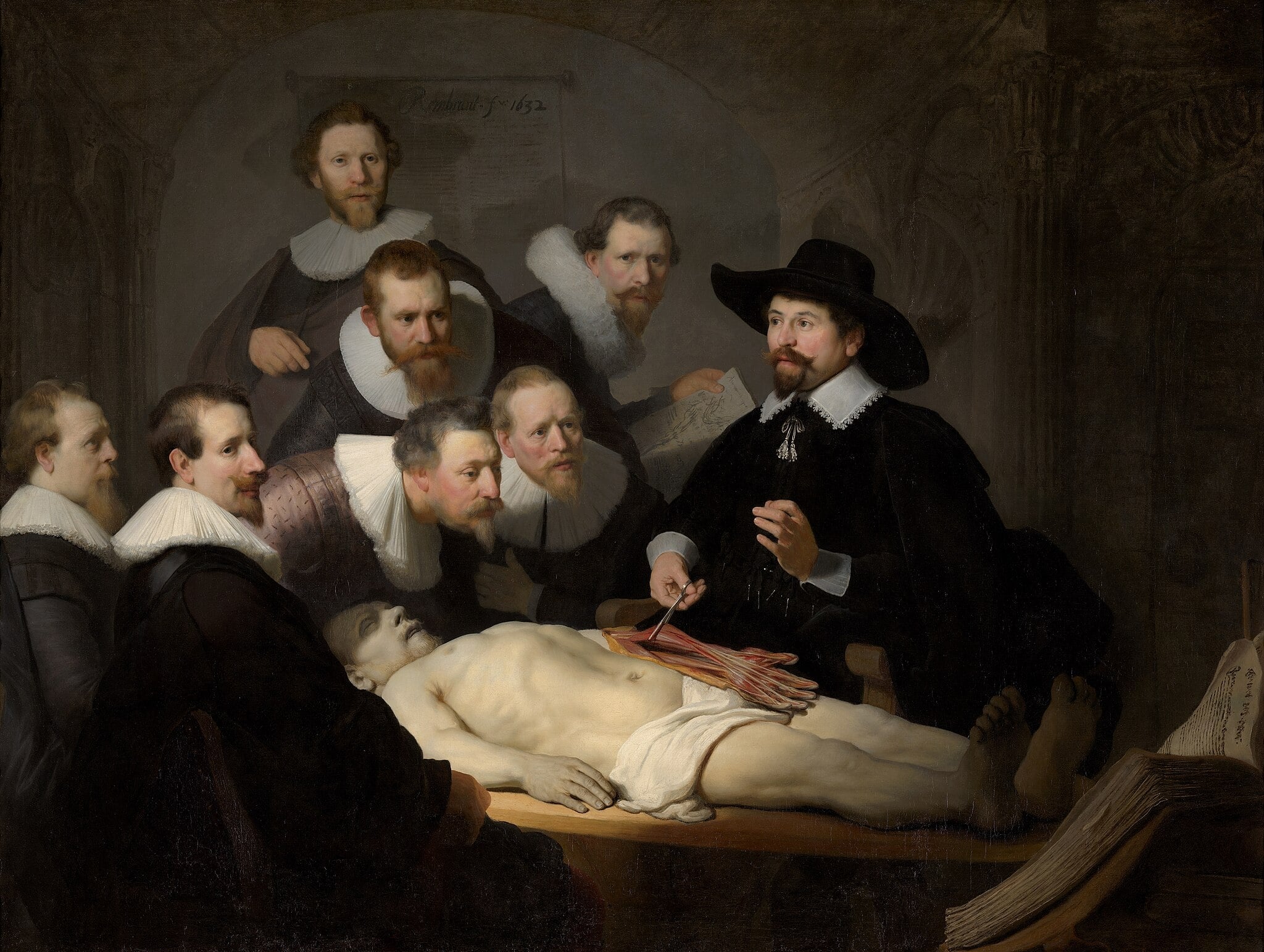
The Anatomy Lesson of Dr. Nicolaes Tulp
Rembrandt van Rijn (1632)
Rembrandt van Rijn turns a civic commission into a drama of <strong>knowledge made visible</strong>. A cone of light binds the ruff‑collared surgeons, the pale cadaver, and Dr. Tulp’s forceps as he raises the <strong>forearm tendons</strong> to explain the hand. Book and body face each other across the table, staging the tension—and alliance—between <strong>textual authority</strong> and <strong>empirical observation</strong> <sup>[1]</sup><sup>[2]</sup>.

The Assumption of the Virgin
Titian (1516–1518)
Titian’s The Assumption of the Virgin stages a three-tier ascent—apostles below, Mary rising on clouds, and God the Father above—fused by radiant light and Venetian <strong>colorito</strong>. Mary’s red and blue drapery, open <strong>orant</strong> hands, and the vortex of putti visualize grace lifting humanity toward the divine. The painting’s scale and kinetic design turned a doctrinal mystery into a public, liturgical drama for Venice. <sup>[1]</sup><sup>[2]</sup>

The Creation of Adam
Michelangelo (c.1511–1512)
Michelangelo’s The Creation of Adam crystallizes the instant before life is conferred, staging a charged interval between two nearly touching hands. The fresco turns Genesis into a study of <strong>imago Dei</strong>, bodily perfection, and the threshold between inert earth and <strong>active spirit</strong> <sup>[1]</sup><sup>[2]</sup>.
The Jewish Bride
Rembrandt van Rijn (c. 1665–1669)
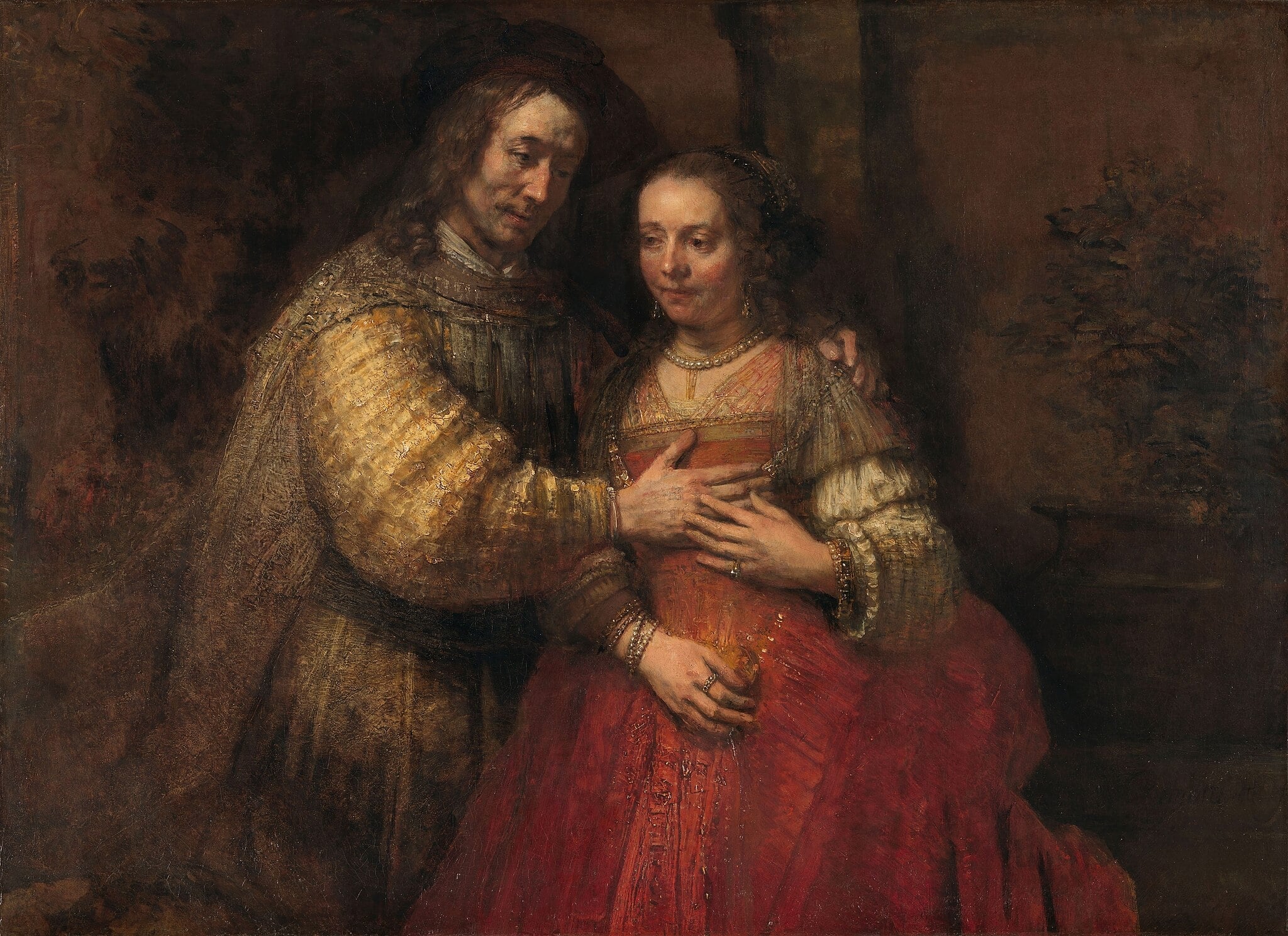
The Jewish Bride by Rembrandt van Rijn stages an intimate covenant: two figures, read today as <strong>Isaac and Rebecca</strong>, seal their union through touch rather than spectacle. Light concentrates on faces and hands, while the man’s glittering <strong>gold sleeve</strong> and the woman’s <strong>coral-red gown</strong> turn paint itself into a metaphor for fidelity and tenderness <sup>[1]</sup><sup>[3]</sup>. This late masterpiece embodies Rembrandt’s <strong>material eloquence</strong>—impasto as feeling—within a hushed, dark setting <sup>[1]</sup><sup>[2]</sup>.
The Large Bathers
Pierre-Auguste Renoir (1884–1887)
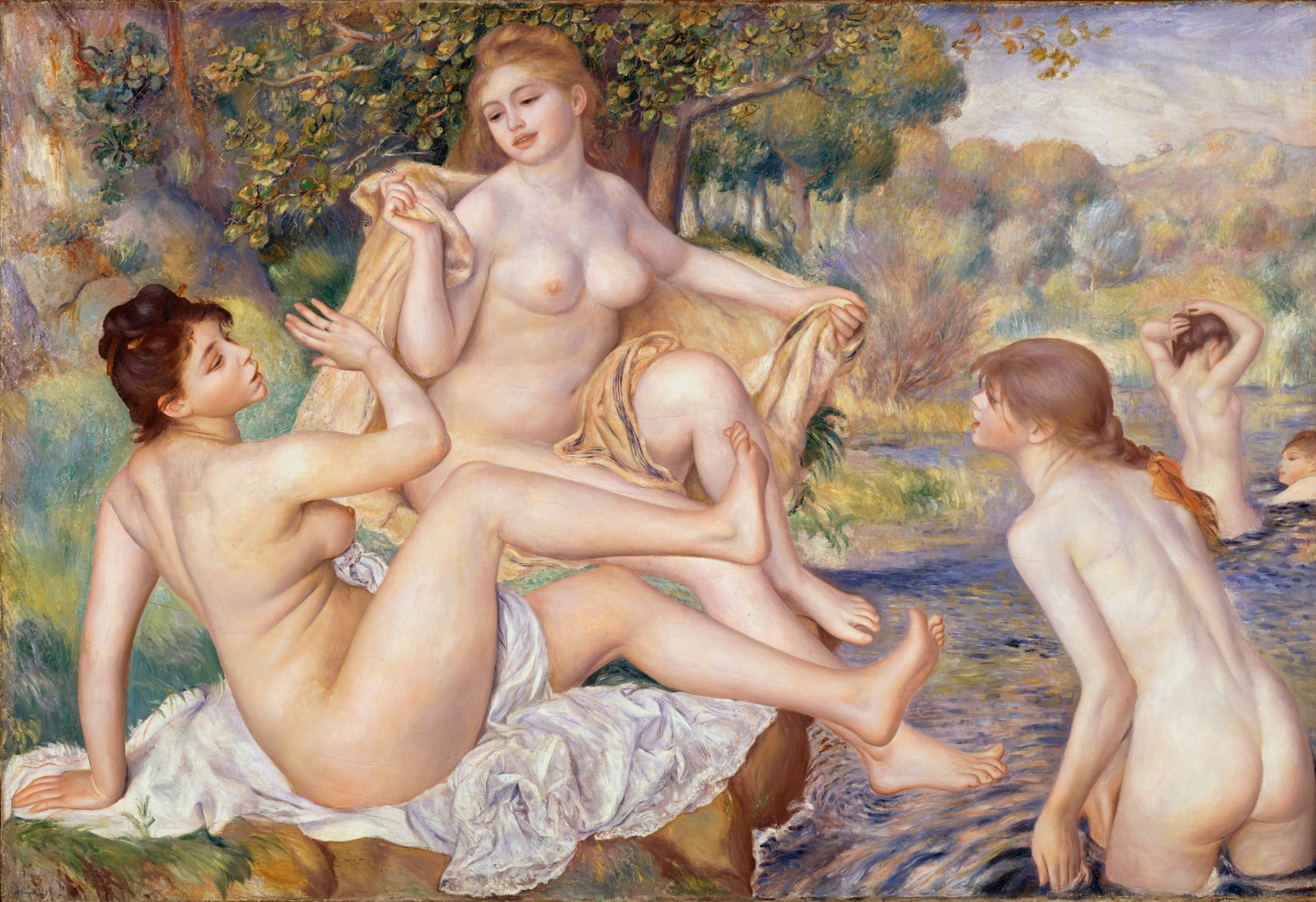
Pierre-Auguste Renoir’s The Large Bathers unites modern bodies with a pastoral grove to stage an <strong>Arcadian ideal</strong>. Three monumental nudes form interlocking curves and triangles while two background figures splash and groom, fusing <strong>sensual warmth</strong> with <strong>classical order</strong> <sup>[1]</sup><sup>[2]</sup>.
The Oath of the Horatii
Jacques-Louis David (1784 (exhibited 1785))
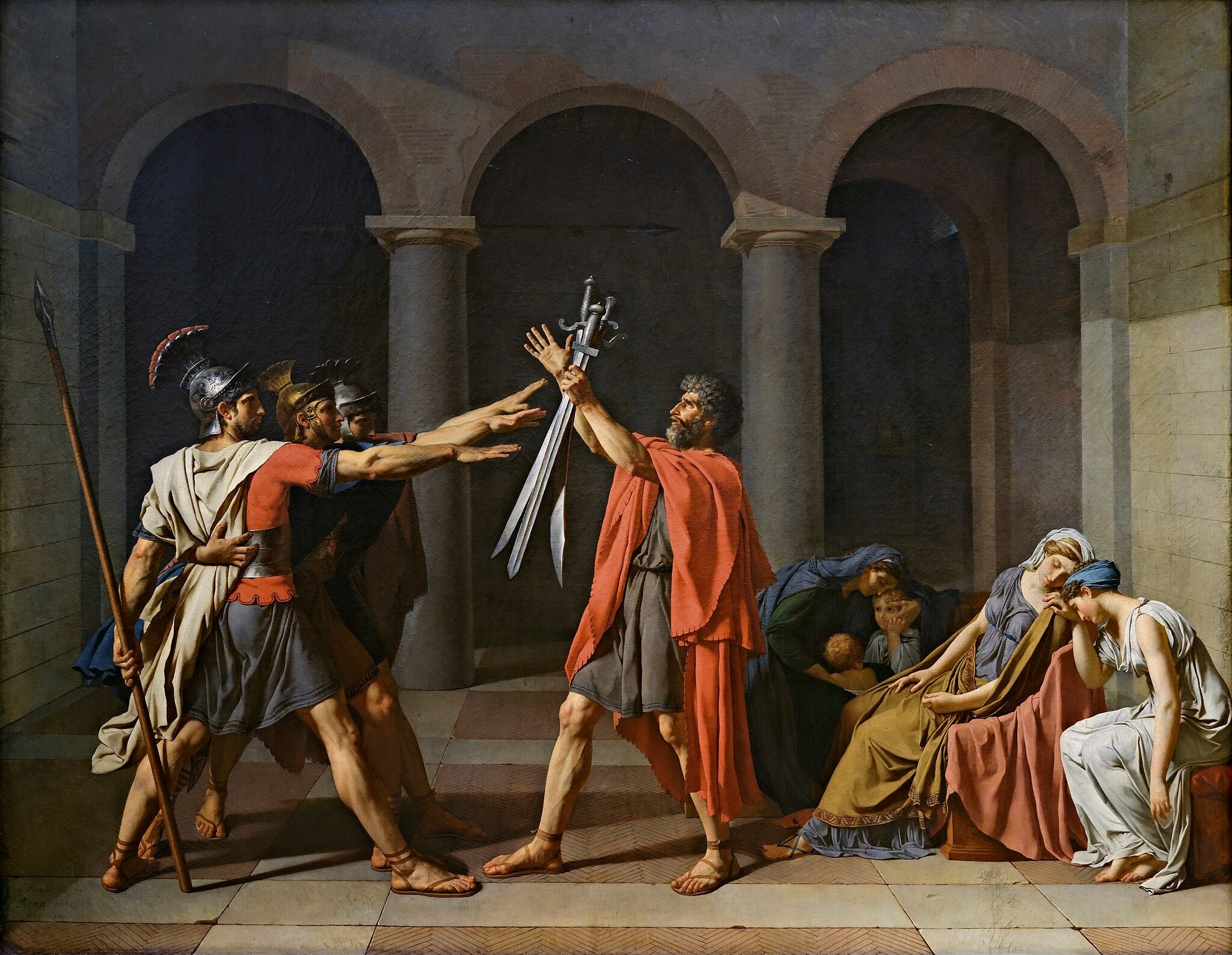
In The Oath of the Horatii, Jacques-Louis David crystallizes <strong>civic duty over private feeling</strong>: three Roman brothers extend their arms to swear allegiance as their father raises <strong>three swords</strong> at the perspectival center. The painting’s severe geometry, austere architecture, and polarized groups of <strong>rectilinear men</strong> and <strong>curving mourners</strong> stage a manifesto of <strong>Neoclassical virtue</strong> and republican resolve <sup>[1]</sup><sup>[2]</sup><sup>[3]</sup>.
The Tub
Edgar Degas (1886)
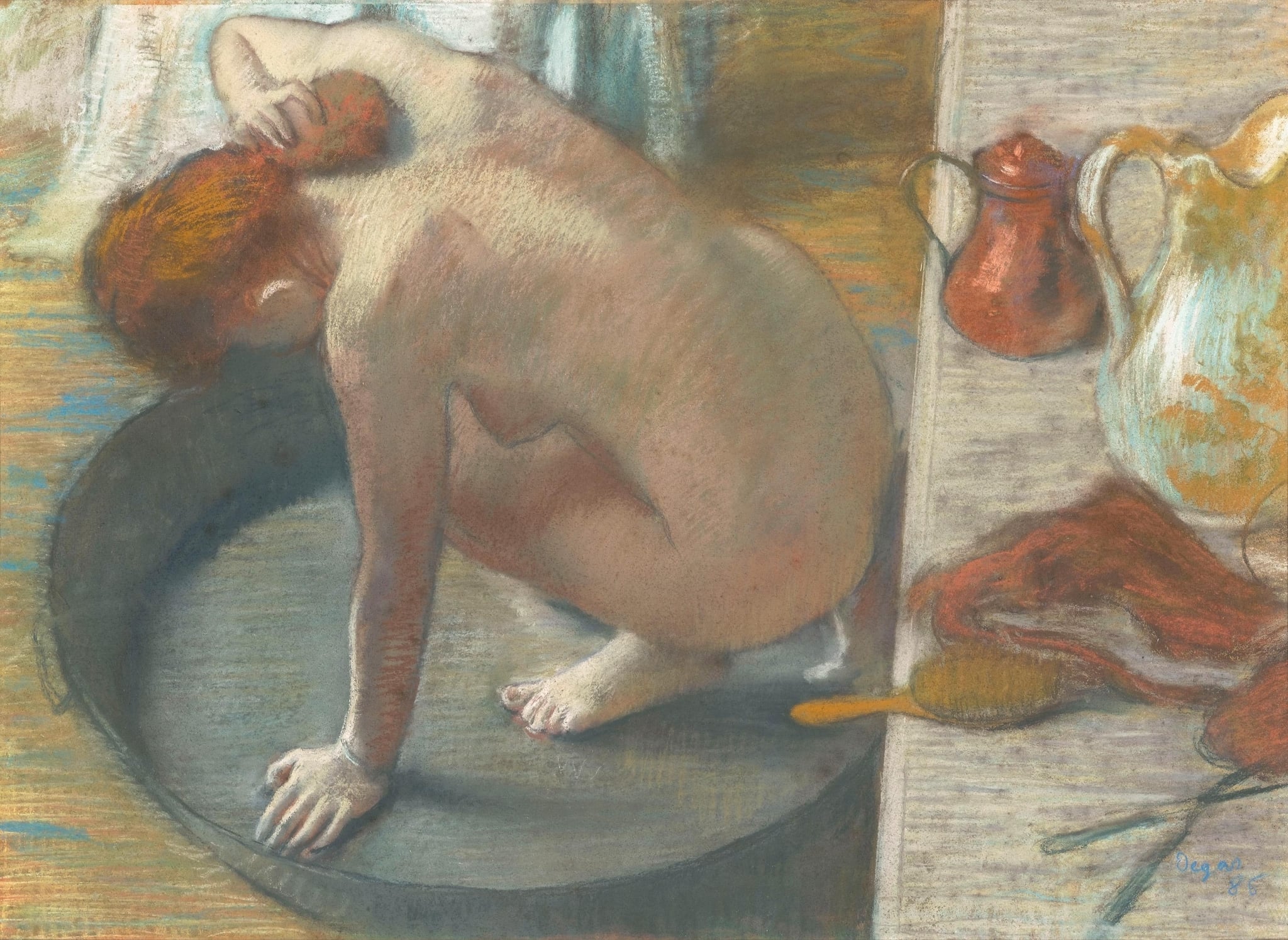
In The Tub (1886), Edgar Degas turns a routine bath into a study of <strong>modern solitude</strong> and <strong>embodied labor</strong>. From a steep, overhead angle, a woman kneels within a circular basin, one hand braced on the rim while the other gathers her hair; to the right, a tabletop packs a ewer, copper pot, comb/brush, and cloth. Degas’s layered pastel binds skin, water, and objects into a single, breathing field of <strong>warm flesh tones</strong> and blue‑greys, collapsing distance between body and still life <sup>[1]</sup>.

The Two Fridas
Frida Kahlo (1939)
The Two Fridas presents a doubled self seated under a storm-charged sky, their opened chests revealing two hearts joined by a single artery. One Frida in a European dress clamps the vessel with a surgical <strong>hemostat</strong> as blood stains her skirt, while the other in a <strong>Tehuana</strong> dress steadies a locket and the shared pulse. The canvas turns private injury into a public image of <strong>dual identity</strong> and endurance <sup>[1]</sup><sup>[2]</sup>.
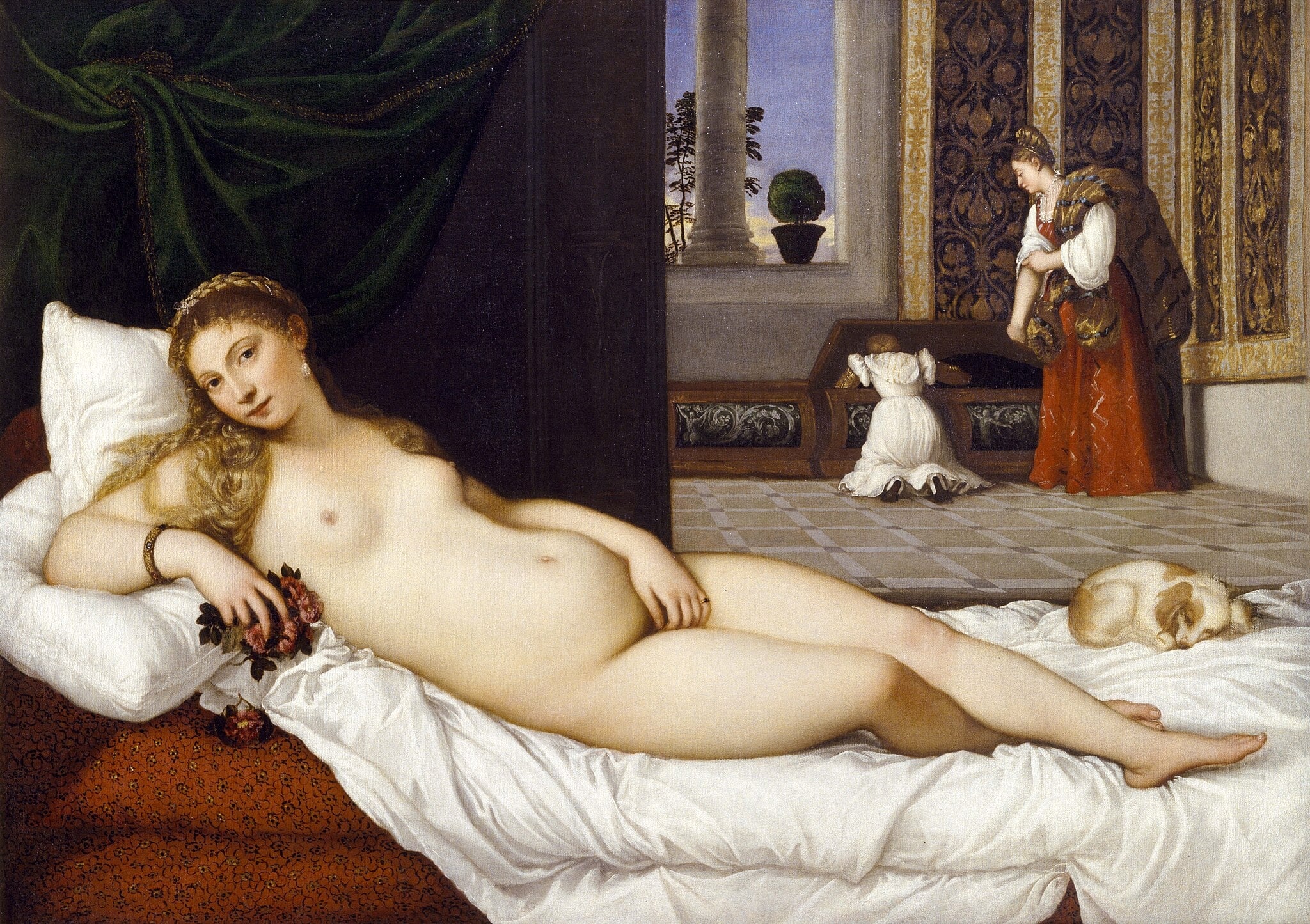
Venus of Urbino
Titian (1538)
Titian’s Venus of Urbino turns the mythic goddess into an ideal bride, merging frank <strong>eroticism</strong> with the codes of <strong>marital fidelity</strong>. In a Venetian bedroom, the nude’s direct gaze, roses, sleeping lapdog, and attendants at a cassone bind desire to domestic virtue and fertility <sup>[1]</sup><sup>[2]</sup>.

Woman at Her Toilette
Berthe Morisot (1875–1880)
Woman at Her Toilette stages a private ritual of self-fashioning, not a spectacle of vanity. A woman, seen from behind, lifts her arm to adjust her hair as a <strong>black velvet choker</strong> punctuates Morisot’s silvery-violet haze; the <strong>mirror’s blurred reflection</strong> with powders, jars, and a white flower refuses a clear face. Morisot’s <strong>feathery facture</strong> turns a fleeting toilette into modern subjectivity made visible <sup>[1]</sup>.
Related Themes
Related Symbolism Categories
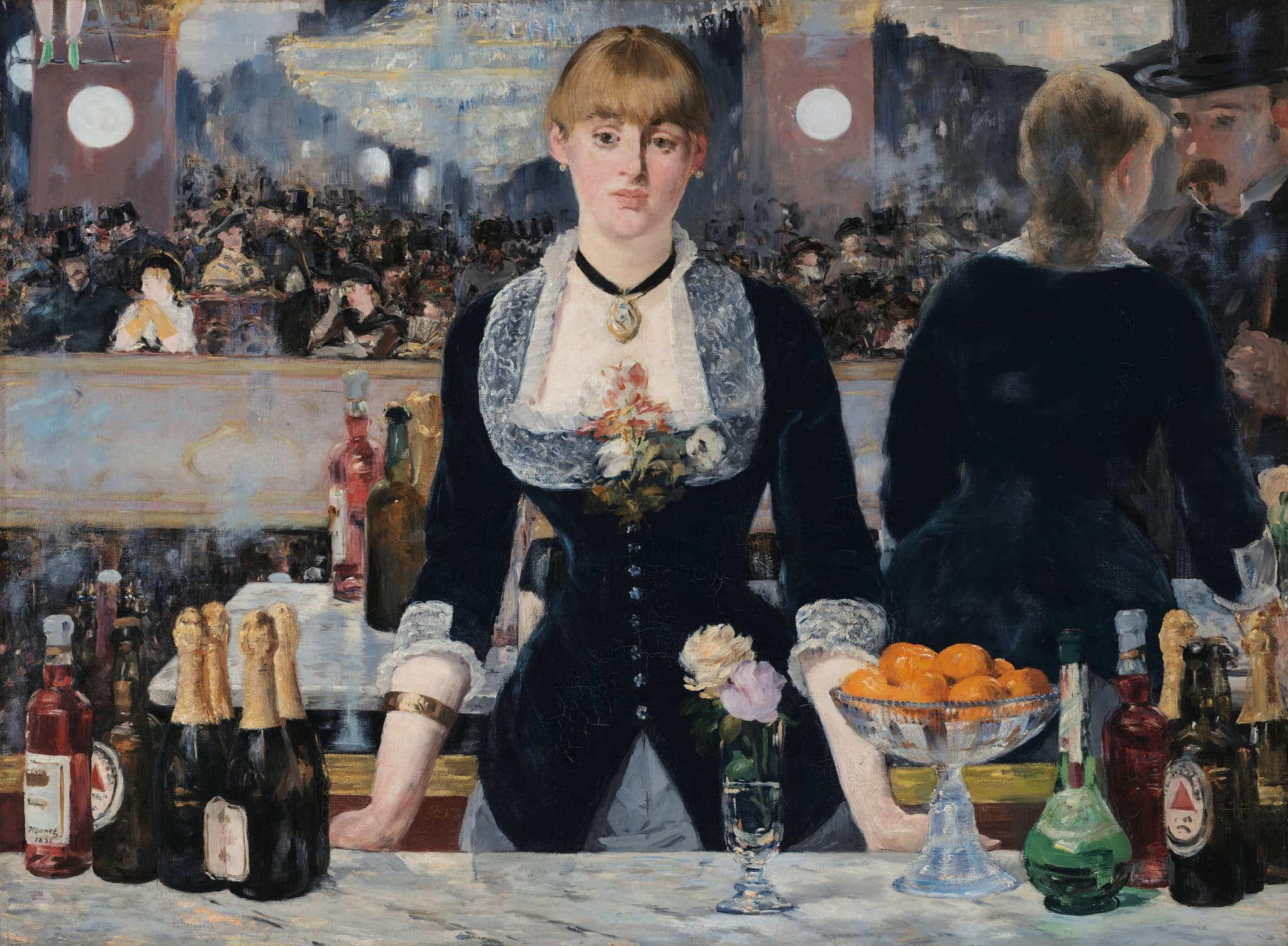
Interiority
“Interiority” symbols in modern painting transform gesture, gaze, and domestic props into visual indices of inward life, staging psychological depth, self-consciousness, and mediated subjectivity within scenes of everyday modernity.
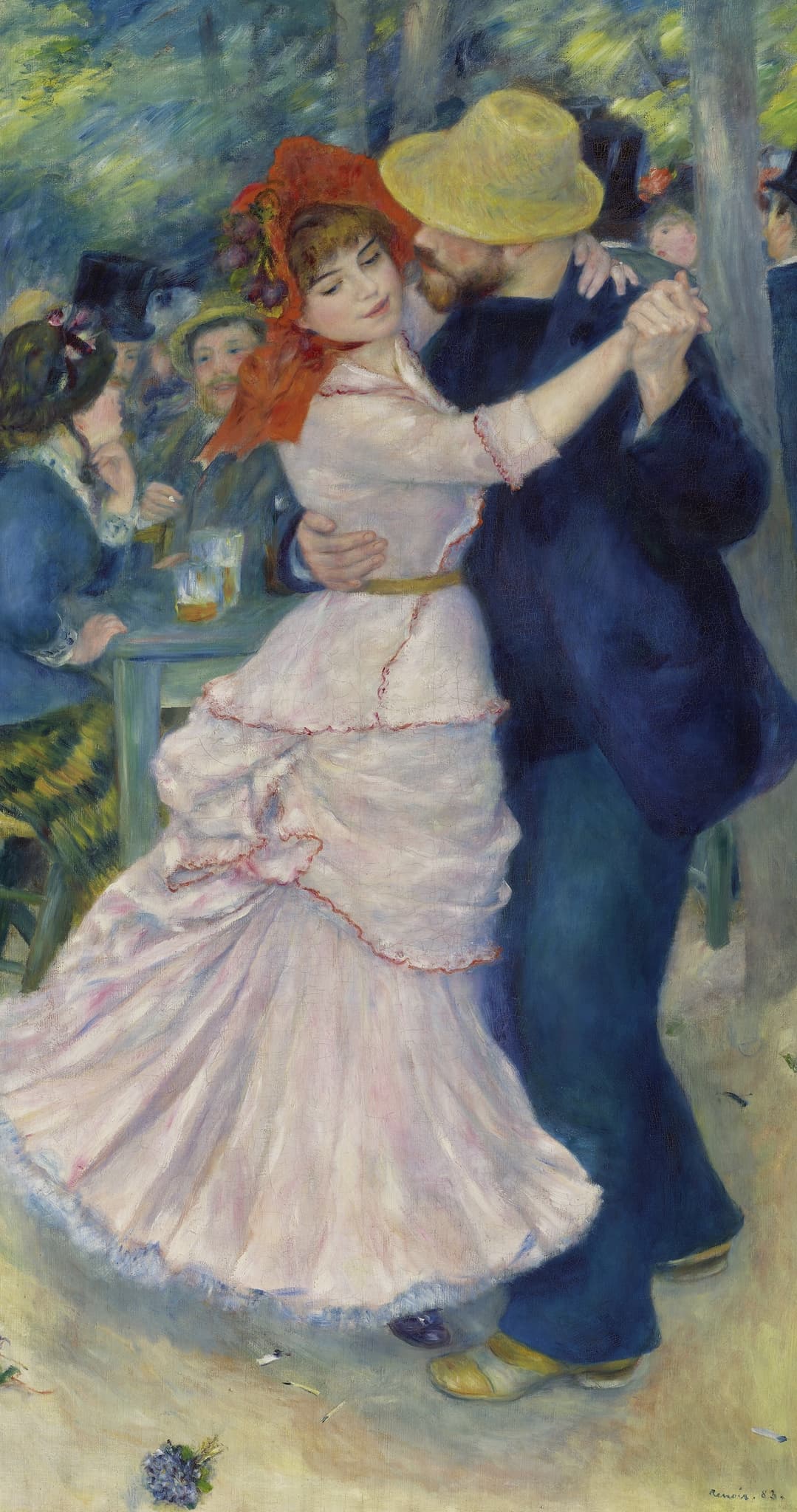
Gesture
Gesture in modern painting operates as a charged system of signs in which the smallest inflection of hand, arm, or posture encodes shifting relations of intimacy, labor, authority, and selfhood, reworking a long iconographic tradition for a newly self-conscious age of looking.
Femininity
In late nineteenth‑century painting, femininity is articulated not as an essence but as a mutable ensemble of fashion, gesture, and setting, through which modern artists probe women’s visibility, labor, and agency within emerging urban and suburban worlds.
Within the longer history of Western art, the human body has served as the most flexible and contested sign system, bearing theological doctrine, civic virtue, erotic desire, and private psychology in turn. Renaissance contrapposto and the orant gesture, for instance, codified dignity and prayerful assent, while later traditions of melancholy heads-in-hand and Madonna-and-Child embraces translated doctrine into affective, legible poses. The symbols gathered under this “Body” category belong to that lineage yet expose its fractures: in nineteenth- and twentieth‑century painting the body becomes less a stable vehicle of ideal types than a field where social roles, interior states, and power relations are negotiated through gaze, gesture, and the smallest inflection of hands and arms.
Semiotically, these bodily signs operate as what art historians would call motivated, rather than arbitrary, symbols. The braced forearms, tense hands, or clasped grips do not merely stand for effort or attachment; they show the musculature, weight, and balance that effort requires, turning anatomy itself into a visible mechanism of agency. In Andrew Wyeth’s Christina’s World (1948), for example, the “braced forearms and tense hands” are not incidental drawing but the core of the work’s meaning. Christina’s forearms are planted in the dry grass, fingers spread and taut, while one leg trails behind, visually underused. This configuration converts landscape into task: the sloping field is legible as resistance only because her body pushes against it. The symbol’s definition—resolve and self‑propelled effort, dignity through determined movement—is borne out by Wyeth’s tempera technique, whose granular, repetitive strokes mirror the labor implicit in her crawl toward the distant Olson House. Body here is not a passive container for pathos; it is the engine of will.
Renoir’s modern leisure scenes explore a different but related axis of bodily signification in the domain of intimacy and sociability. In Dance at Bougival (1883), “clasped, ungloved hands” form the literal and symbolic axis around which the dance turns. The man’s and woman’s bare hands interlock at the center of the canvas, their physical connection emphasized by the chromatic duel of scarlet bonnet and ultramarine jacket. Public, ungloved contact in an open‑air dance hall reads as flirtatious exposure; the symbol thus condenses “physical connection and public intimacy” into a single, rotational point. Renoir intensifies this through circular rhythms—the swing of the skirt, the arc of the man’s arm—so that the couple’s interlaced grip becomes both a structural hinge and an icon of modern, negotiable affection enacted before an audience.
In the Garden (1885) refines this semiotics of touch into a more tentative key. “Clasped hands” here signify “courtship, a tentative bond, emotional petition versus restraint.” The man leans in, his fingers curling over the woman’s; she counters his inclination with a straightened arm braced along the table’s diagonal edge. That bracing forearm—echoing, in a domestic register, the worklike brace of Christina’s arms in Wyeth—modulates the symbolic value of the contact. The handclasp is real, but it is provisional, mediated by a trestle of red wood that functions as a polite barrier. The bouquet on the table and her composed, front-facing gaze calibrate the scene as testing ground rather than consummation. In both Renoirs, then, hands are the privileged site where emotional states are made legible as posture: they stage the negotiation between desire and decorum that underwrites late nineteenth‑century urban sociability.
Where Renoir tracks the choreography of courtship, Henri de Toulouse-Lautrec in Jane Avril (c. 1891–1892) compresses the body into a volatile silhouette that dramatizes the tension between performed persona and private fatigue. Although the work does not foreground a single codified gesture like the orant or contrapposto twist, it depends on what might be called an “averted gaze and closed mouth”: reserve and composure, sociability performed without confession. Avril’s head turns slightly away, eyes not locking onto the viewer but sliding past, her lips sealed into a line that resists easy reading. Lautrec’s economical contour and chromatic shocks—lemon, lilac, carmine in the face, violet in the cloak—reinforce that ambiguity. The semiotics of the body here are distinctly modern: instead of stable allegorical signs, we encounter a mask whose very incompleteness signals the slippage between the entertainer’s public image and an inaccessible interiority.
By contrast, Vincent van Gogh’s Portrait of Dr. Gachet (1890) returns to a venerable iconographic resource—the “hand‑to‑cheek pose”—and rewrites it in a modern, expressionistic idiom. Historically, the head supported by a hand connoted melancholy and contemplative weariness; Van Gogh preserves this convention while amplifying its affective charge through color. Gachet’s cheek sinks into a pallid, greenish hand above an orange‑red table that blazes against a cobalt field of coat and background. The gesture’s definition—“compassionate fatigue rather than collapse”—is enacted via the sitter’s soft, if tired, gaze, which meets the viewer without dramatics. The body thus becomes a hinge between psychological interior and chromatic “weather”: the slight sag of flesh into palm is mirrored by the wave‑like strokes of blue that seem to press upon him. The symbol has migrated from religious or moral allegory into the realm of empathic, clinical modernity; this is a physician whose own body speaks the strain of caring.
Across these works, a network of related symbols emerges, linking arms, hands, and gaze into complex relational diagrams. The “interlocked female hands and straining forearms” that define Artemisia Gentileschi’s Judith Slaying Holofernes are an earlier, violent counterpart to Wyeth’s solitary braced arms and Renoir’s clasped hands of courtship. In Gentileschi’s painting (though not described in full here, it anchors the symbol’s definition), Judith and her maid’s joined grips and taut musculature “symbolize cooperative strength—will made operative through shared action.” That collaborative engine of force, illuminated against tenebrist darkness, shares a structural logic with later images of single figures bracing against circumstance: in each, the arm is the visible vector of agency. Similarly, Van Gogh’s solitary, propping hand and Renoir’s mutually clasped fingers participate in a continuum where the hand can either support an overburdened self or reach across to bind another. The differences in context—biblical tent, provincial field, Parisian café, Montmartre theater, bourgeois parlor—register as differences in what that agency is for: salvation, endurance, flirtation, self-fashioning, care.
Historically, these bodily symbols mark a shift from the transcendent to the immanent. Early modern codes such as the orant gesture or contrapposto twist anchored the body within shared theological or classical frameworks; their legibility depended on collective literacy in sacred history and antiquity. By the time of Manet, Renoir, Lautrec, and Van Gogh, those frameworks had loosened, and the burden of meaning shifted toward the micro‑gestures of everyday life—hands tentatively joined over a café table, a weary head in a physician’s palm, an entertainer’s averted eyes. The body remained a central sign system, but its symbolic vocabulary was redeployed to register psychological nuance, social negotiation, and individual agency. The works discussed here thus exemplify not the abandonment of bodily symbolism, but its modernization: inherited gestures persist, yet they are reinterpreted through new media, color languages, and social contexts, yielding a body that is at once historically coded and insistently, vulnerably present.