Most Expensive Pieter Bruegel the Elder Paintings
Pieter Bruegel the Elder occupies a rarefied position in the market: few Northern Renaissance masters command such sustained collector appetite, and his canvases routinely surface in the upper echelons of art valuation. At the pinnacle sits The Tower of Babel, often estimated between $300–600 million, a testament to both its monumental subject and its scarcity on the open market. Landscape-driven masterpieces like Hunters in the Snow ($150–450 million) and The Return of the Hunters ($200–400 million) underline how Bruegel’s winter vistas and narrative panoramas translate into blue-chip assets. His genre scenes—The Harvesters ($100–300 million), Netherlandish Proverbs, The Blind Leading the Blind, and The Peasant Wedding (each commonly assessed in the $100–150 million range)—are prized for their dense moralizing detail and unrivaled social observation. Darker, allegorical works such as The Triumph of Death ($100–150 million) and The Fall of the Rebel Angels ($30–120 million) add dramatic breadth to his market profile, while Dulle Griet (Mad Meg) ($30–80 million) demonstrates how vivid iconography and rarity together drive collectibility. Collectors chase Bruegel for provenance, narrative depth, and the enduring cultural resonance that sustains these extraordinary price points.
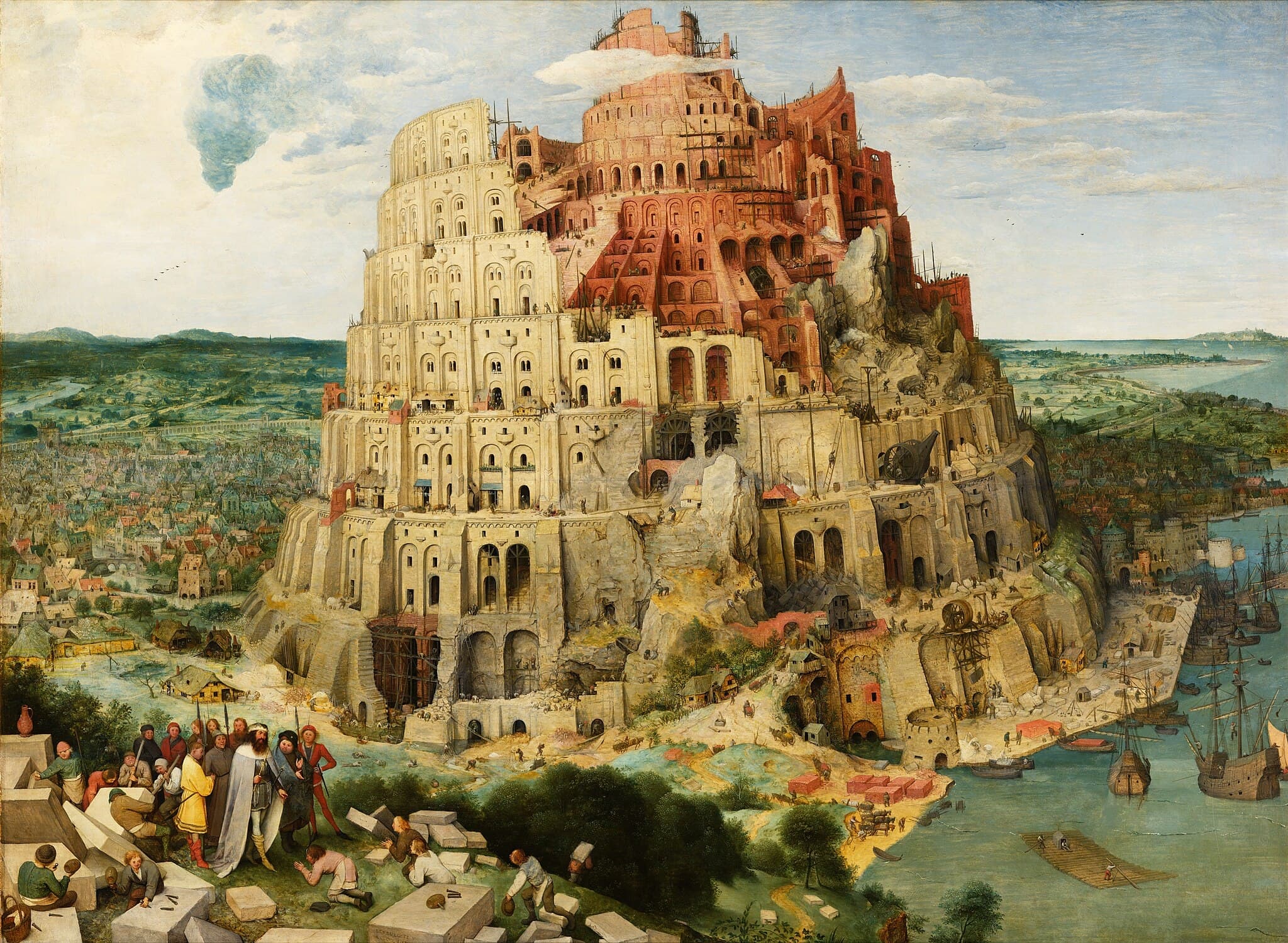
$300-600 million
Valued hypothetically at $300–600M, Bruegel’s Tower of Babel is effectively unsellable: singular canonical status, no modern sale history, and deaccession is virtually implausible.
See full valuation →
$150-450 million
Hunters in the Snow’s $150–450M theoretical band reflects museum ownership, zero market testing, and valuation derived solely from top Old Master trophy comparables.
See full valuation →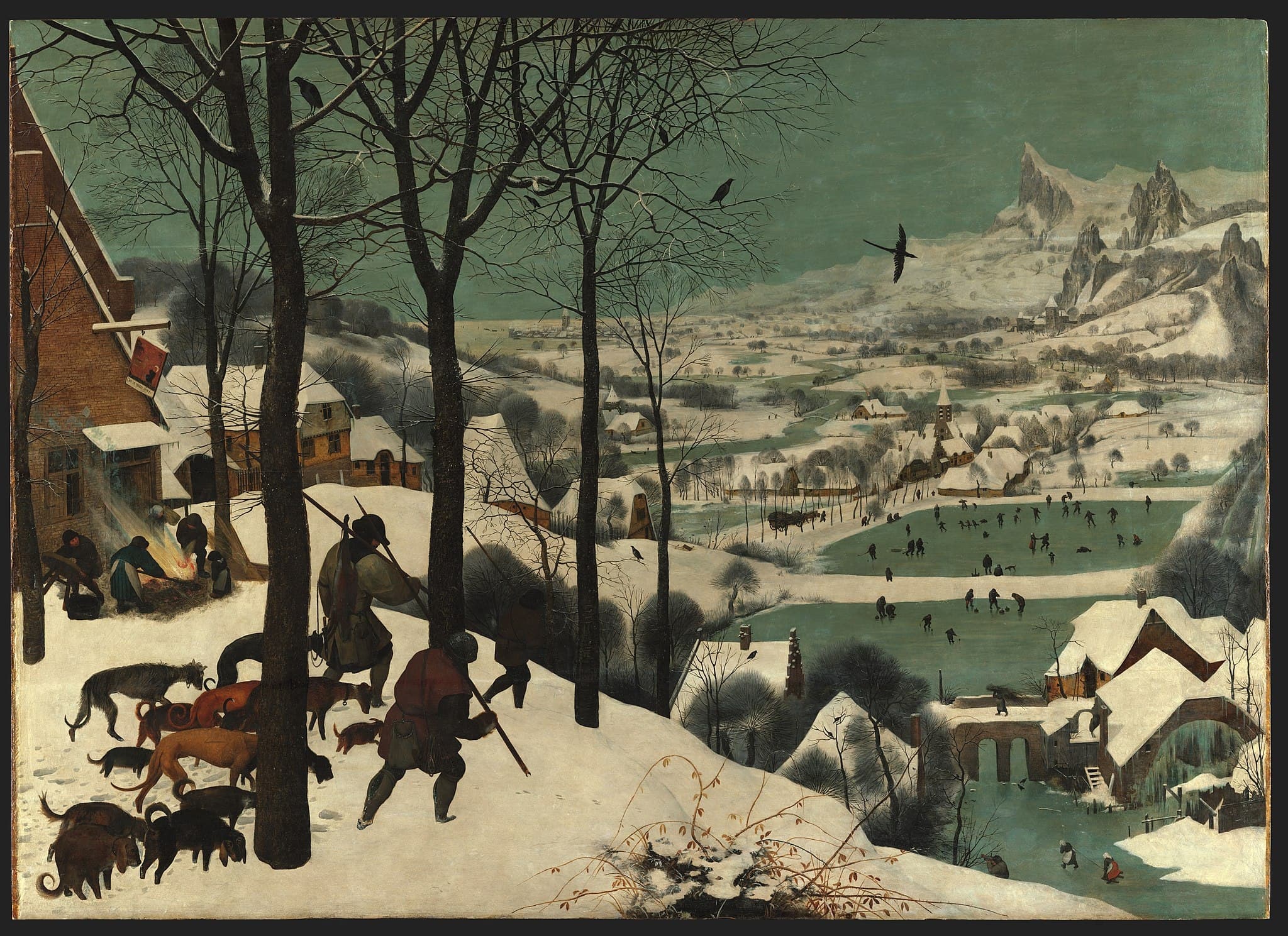
$200-400 million
The Return of the Hunters is pegged at $200–400M as a canonical Northern Renaissance masterpiece with no modern sale precedent and anchor comparables from Rembrandt, Botticelli and Leonardo.
See full valuation →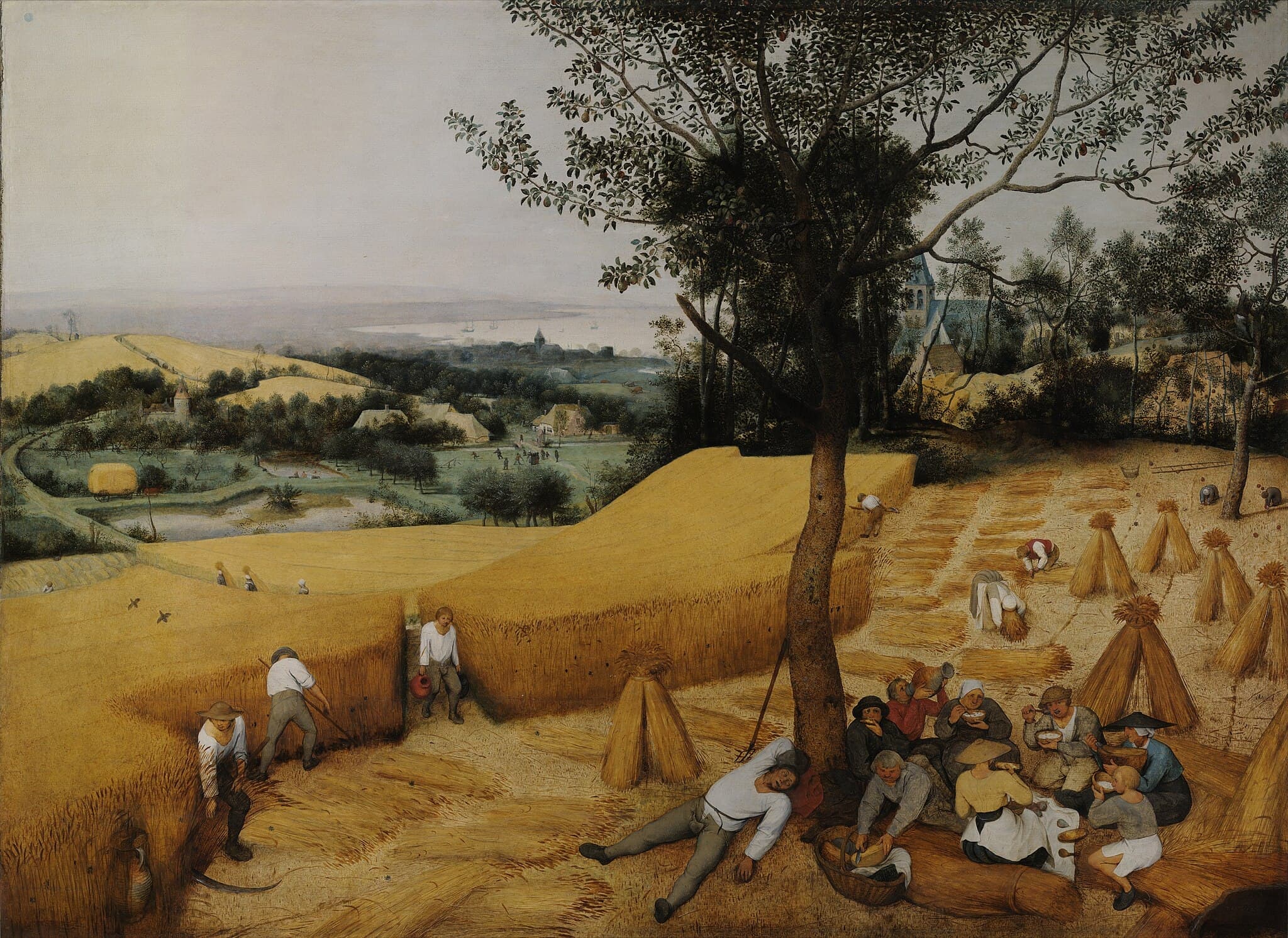
$100-300 million
The Harvesters’ $100–300M hypothetical value stems from extreme scarcity of autograph Bruegel panels and its Metropolitan Museum provenance, absent conservation reports or confidential comparables.
See full valuation →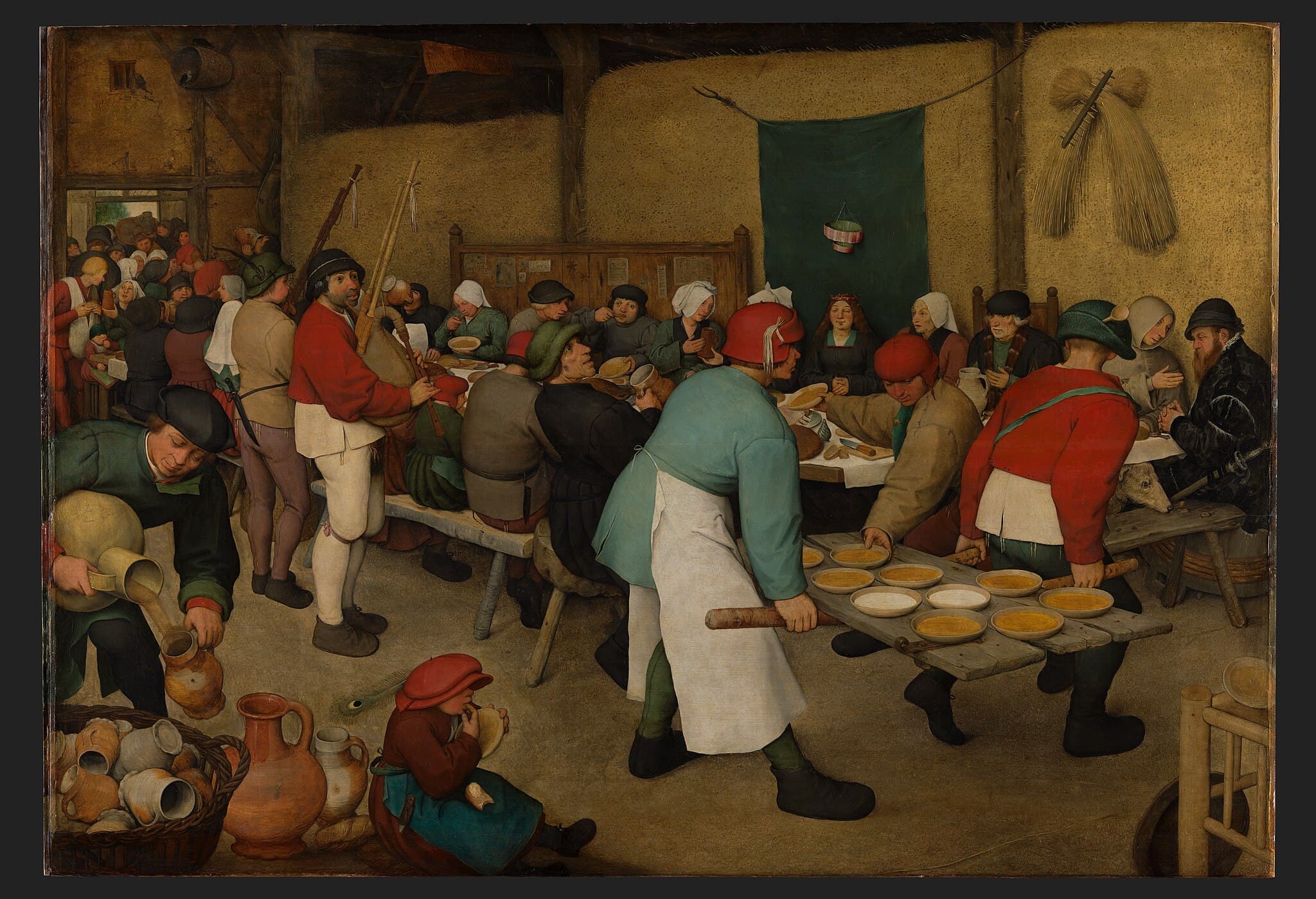
$100-150 million
The Peasant Wedding’s ~$100–150M private‑sale estimate acknowledges the painting’s museum irreplaceability and reliance on sparse Bruegel auction precedents.
See full valuation →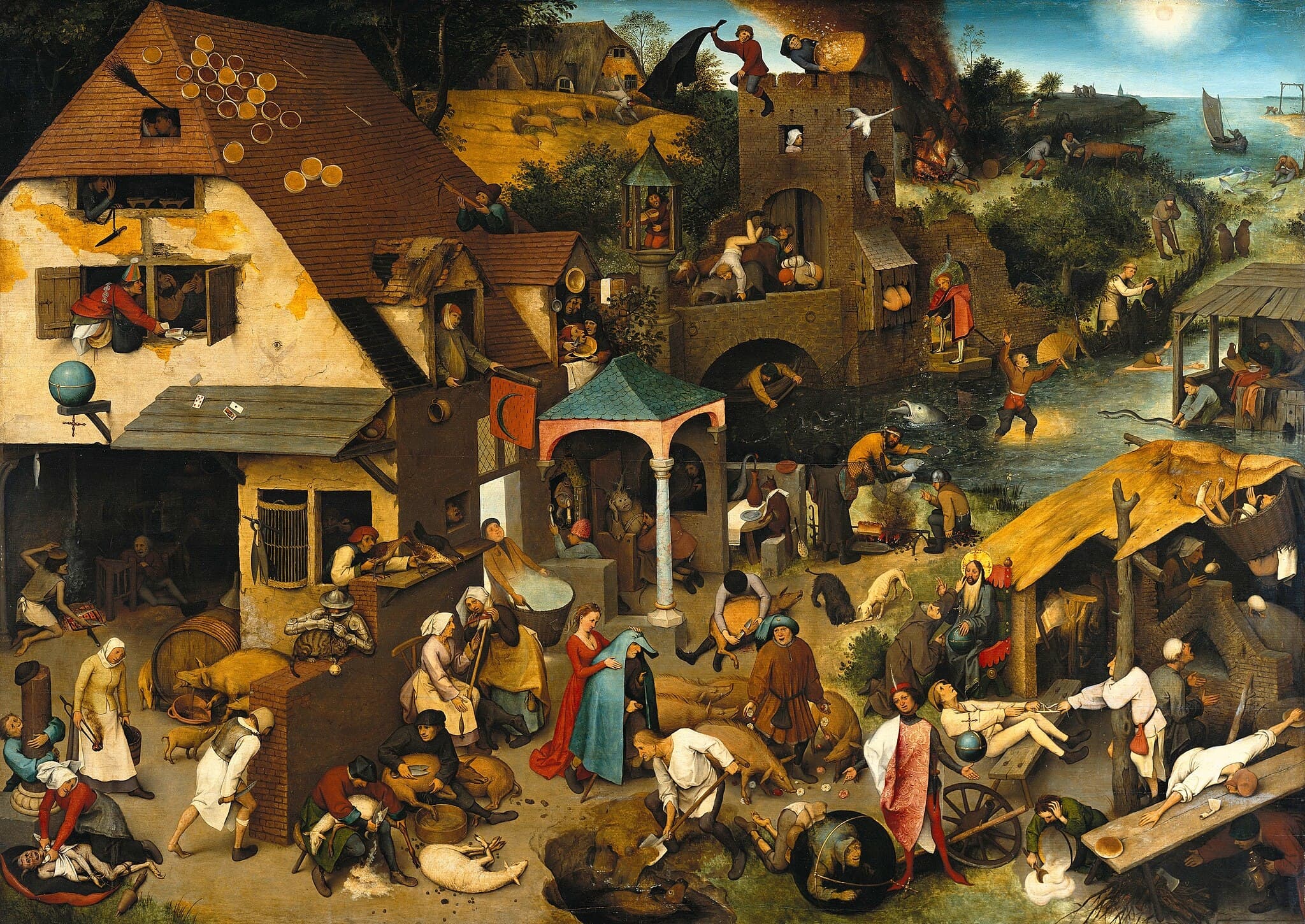
$100-150 million
Netherlandish Proverbs’ $100–150M estimate is contingent and extrapolated from Old Master benchmarks because the autograph 1559 panel is museum‑held and off‑market.
See full valuation →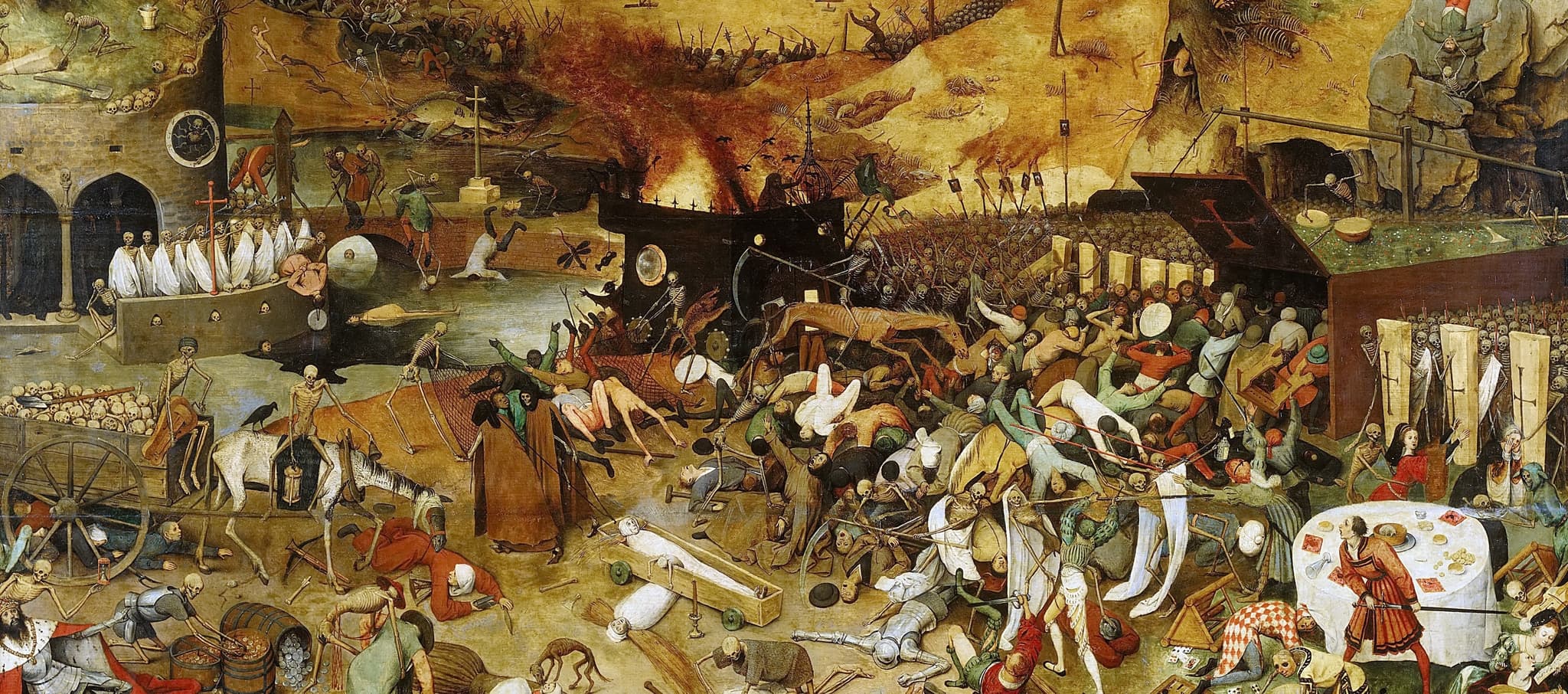
$100-150 million
Triumph of Death is valued at $100–150M only if autograph; a workshop or later copy would collapse value to mid‑five to low‑seven figures depending on attribution.
See full valuation →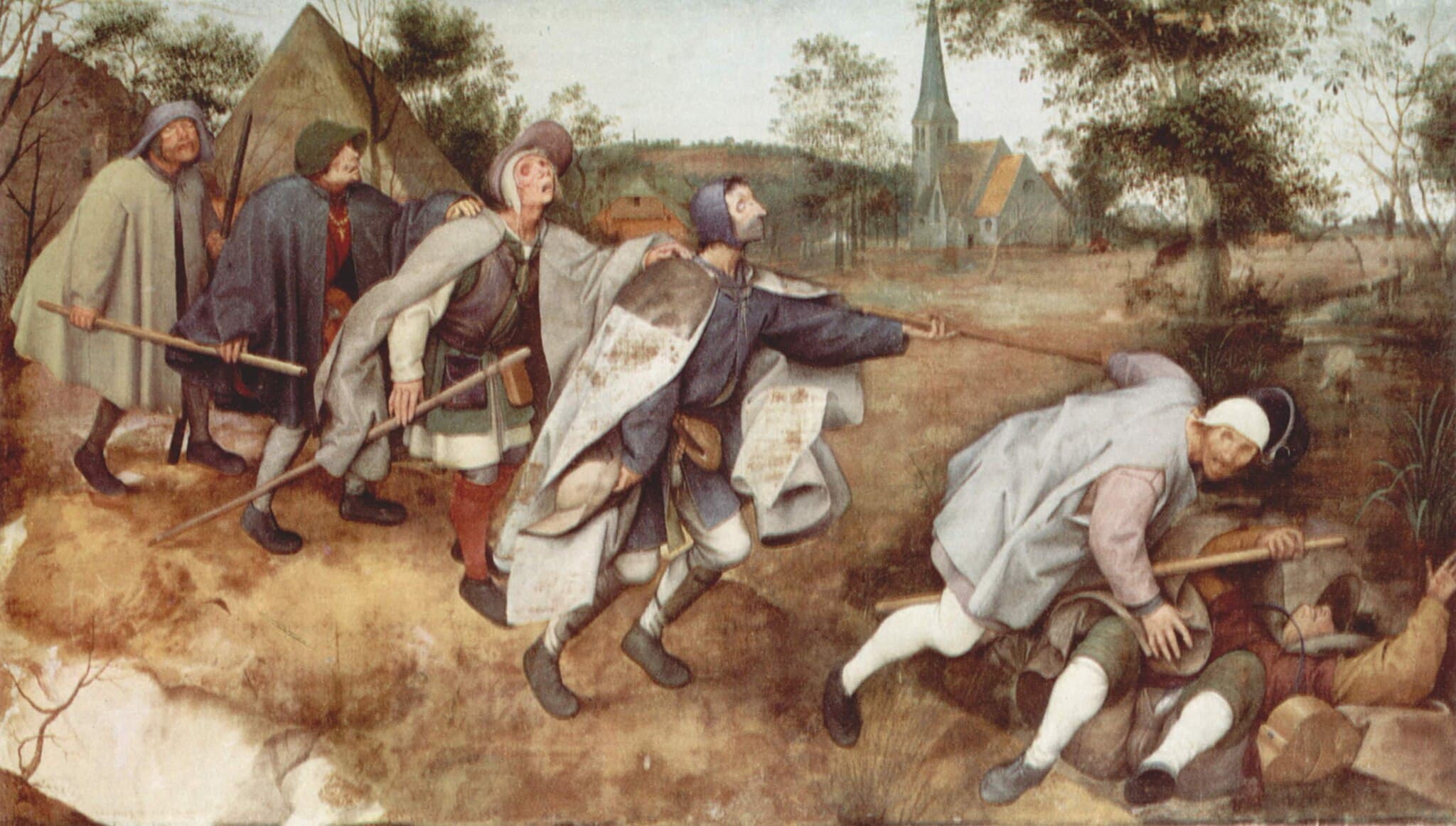
$100-150 million
The Blind Leading the Blind’s $100–150M range is tempered by its rare distemper-on-linen technique and strict Italian patrimony/export constraints despite canonical status.
See full valuation →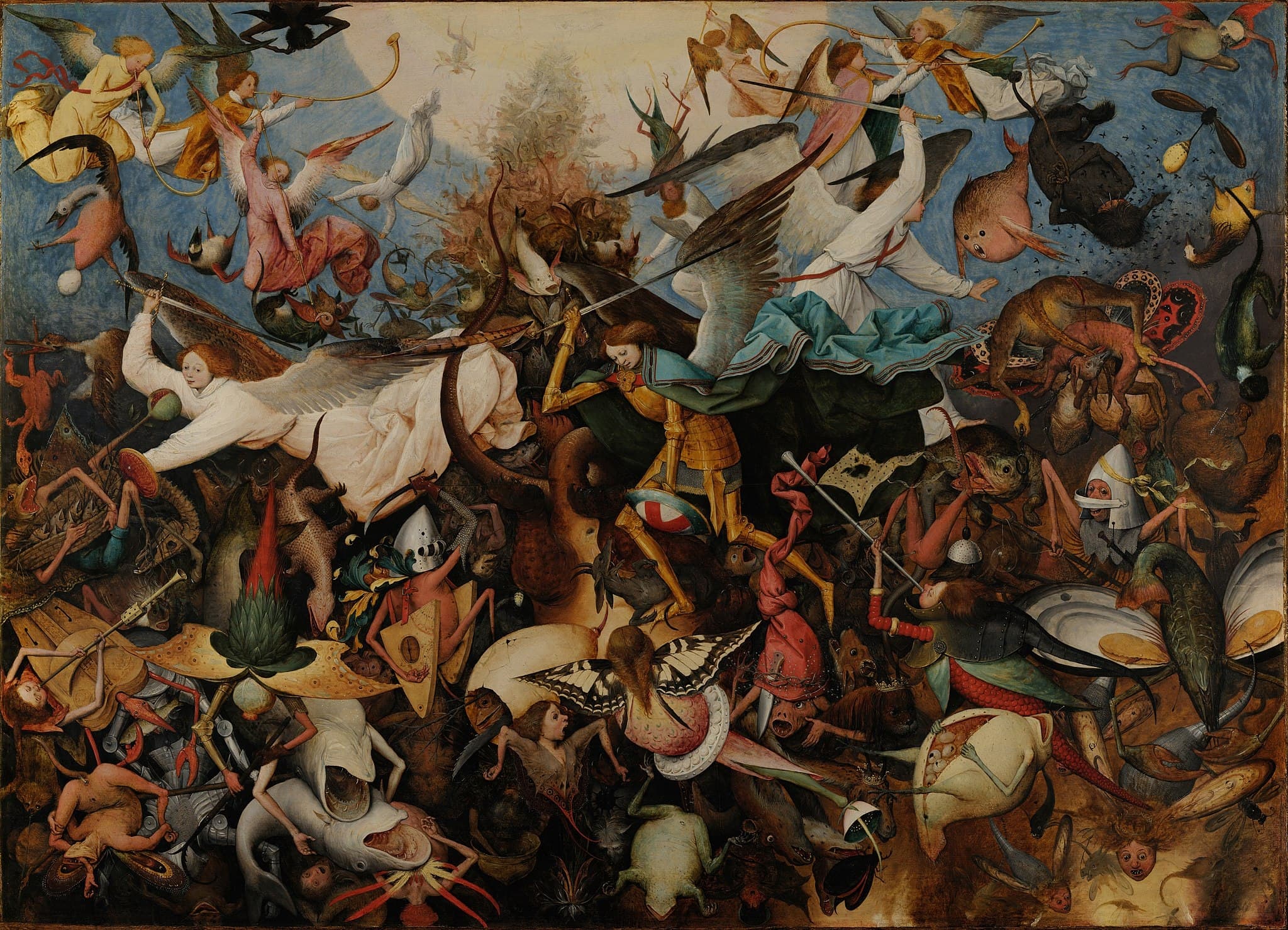
$30-120 million
The Fall of the Rebel Angels’ wide $30–120M band reflects extreme attribution sensitivity, institutional ownership and pronounced condition‑ and provenance‑driven price volatility.
See full valuation →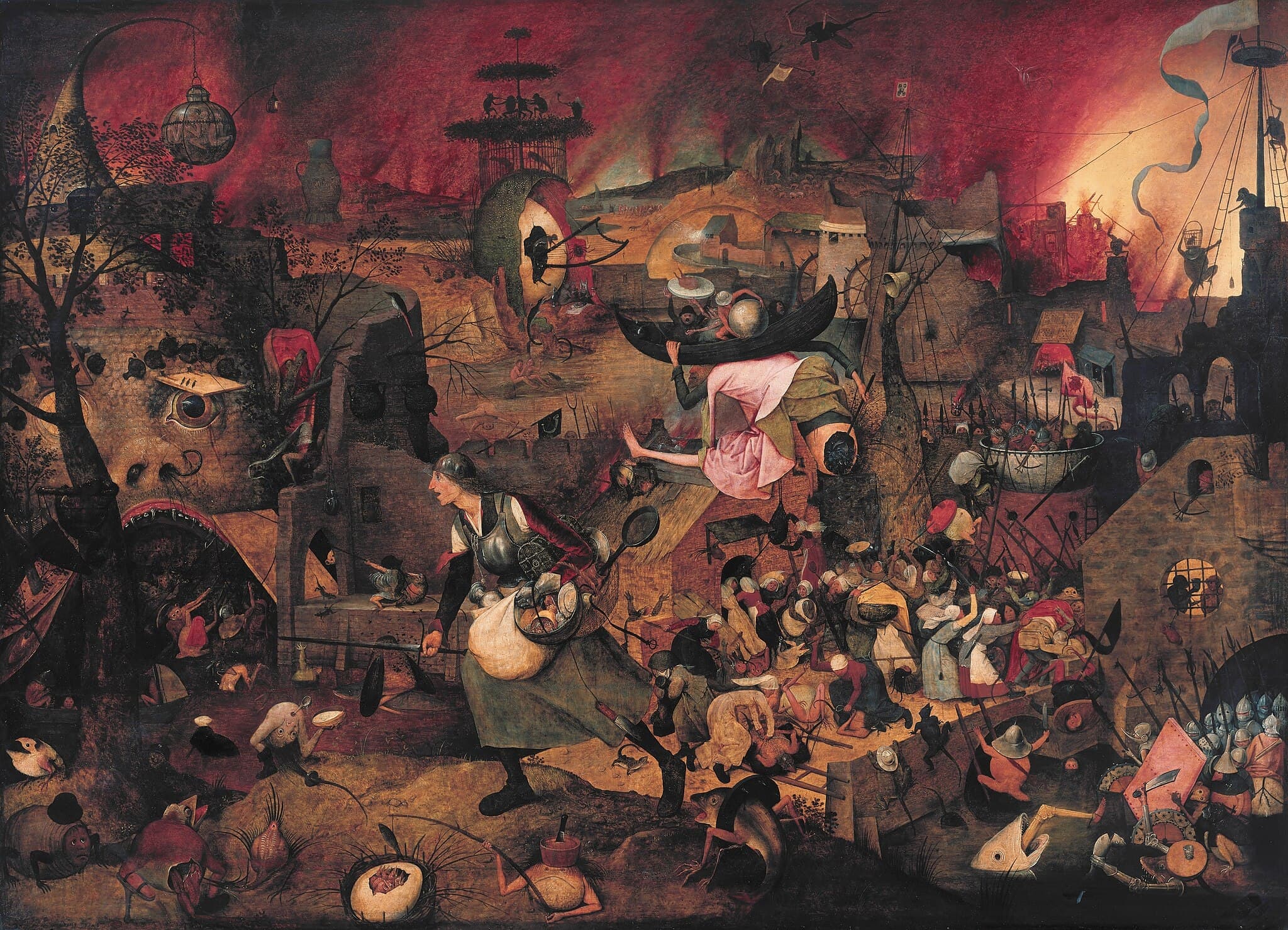
$30-80 million
Dulle Griet’s $30–80M preliminary range (central $40–60M) is purely extrapolated from sparse auction evidence and constrained by museum ownership and export/legal barriers.
See full valuation →What Drives Value in Pieter Bruegel the Elder's Work
Autograph vs. Workshop Attribution
For Bruegel the Elder the single biggest price inflection is secure autograph status. Technical proof (dendrochronology, IR underdrawing) and catalogue‑raisonné acceptance convert a panel from workshop/younger copy (low‑seven to low‑eight figures) to a museum‑grade masterpiece (potentially tens or hundreds of millions). Examples: Netherlandish Proverbs, Triumph of Death and Dulle Griet command huge uplifts when unanimously judged autograph vs. when treated as workshop or later copy.
Canonical Series and Iconic Subjects
Works that belong to Bruegel’s signature cycles or iconic themes—Seasons/Months panels (Hunters in the Snow, The Harvesters, The Peasant Wedding), proverbs (Netherlandish Proverbs), and apocalyptic narratives (Triumph of Death)—carry disproportionate value. These images anchor scholarship and museum displays, creating trophy demand. A verified canonical panel from a named series attracts institutional competition and a premium well above isolated or genre‑attributed pictures.
Image Fame and Cross‑Category Trophy Demand
Certain Bruegels have global recognizability—Tower of Babel, Hunters in the Snow, The Blind Leading the Blind—which expands the bidder universe beyond Old‑Master specialists to sovereigns, foundations and contemporary‑trophy collectors. Because these compositions are broadly reproduced in textbooks and exhibitions, they generate cross‑category bidding that can push prices toward top Old Master benchmarks, unlike obscure works that rely solely on specialist collectors.
Provenance, Museum Anchoring and Liquidity Constraints
Many of Bruegel’s best pictures have early high‑status provenance (Habsburg/imperial chains) and long museum stewardship (Kunsthistorisches, Prado, Met, Gemäldegalerie, Mayer van den Bergh). That provenance elevates theoretical value but simultaneously suppresses real‑world liquidity via deaccession rules and patrimony laws. Hunters in the Snow, The Harvesters and The Peasant Wedding exemplify how museum anchoring raises a ceiling while making actual market transactions rare and legally complex.
Market Context
Pieter Bruegel the Elder is a canonical Northern Renaissance blue‑chip whose autograph oils are exceptionally scarce and overwhelmingly museum‑held, so public auction comparables are limited—a small tondo sold in 2002 (circa £3.3m/$5.1m) and the Prado’s private acquisition of The Wine of Saint Martin’s Day (≈€7m, 2010) are among the few price touchpoints, while Christie’s 2013 valuation of The Wedding Dance at $100–200m signalled institutional viewings of top Bruegel works as nine‑figure trophies. Market activity centers on drawings, prints and workshop pieces, which trade at far lower levels; after a 2024 softening the Old Masters segment rebounded through 2025–26 with renewed depth at the top, aided by guarantees and institutional/sovereign participation. Were a museum‑quality Bruegel to appear, intense cross‑category competition and constrained supply make true price discovery likely to occur at the very top of the market.