Objects
Object-symbols in modern painting turn everyday tools, vessels, and branded commodities into compact signs of labor, sociability, discipline, and commodified desire, reworking older still-life and genre conventions for an urban, industrial age.
Member Symbols
Featured Artworks
A Bar at the Folies-Bergère
Édouard Manet (1882)
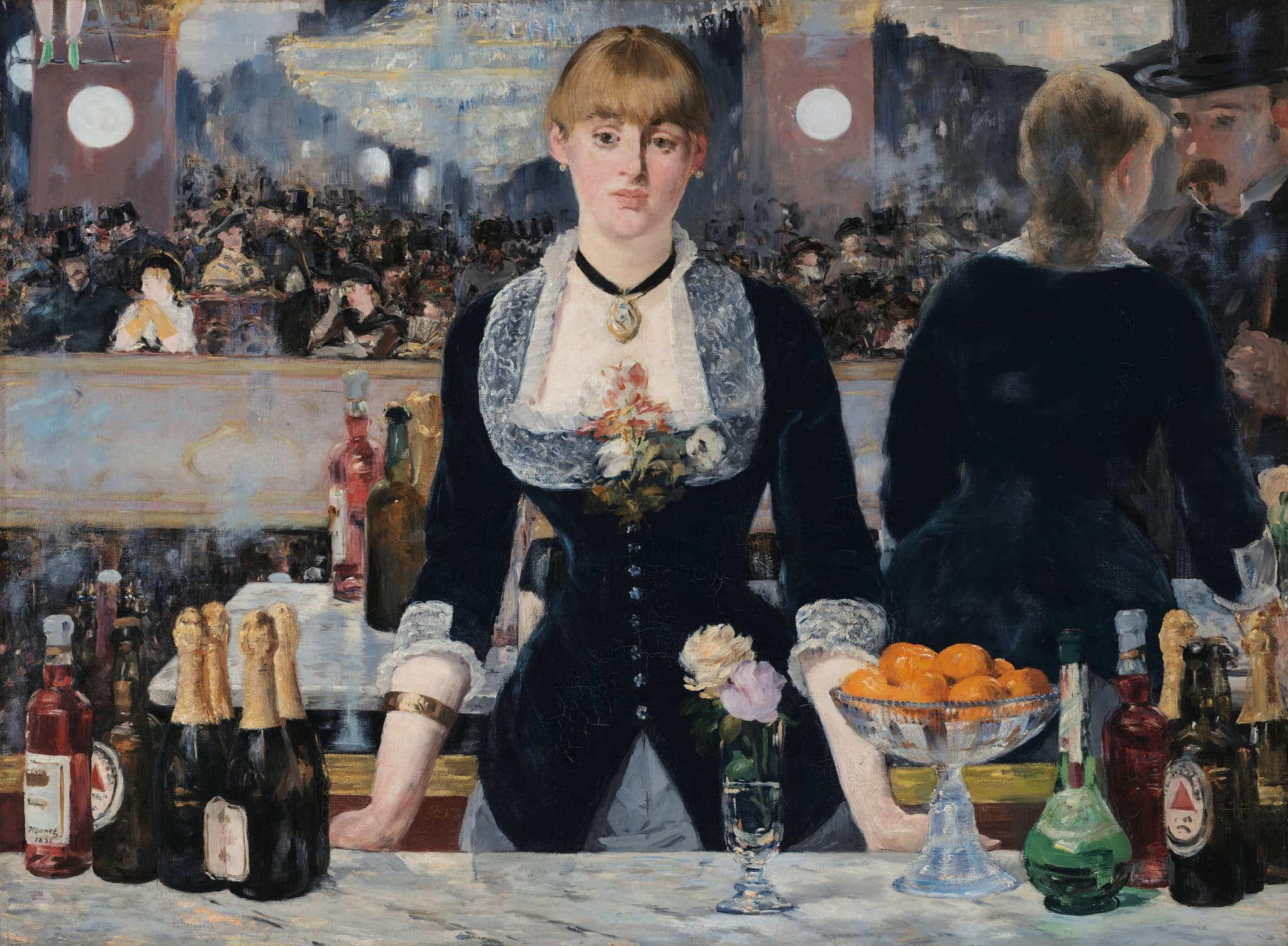
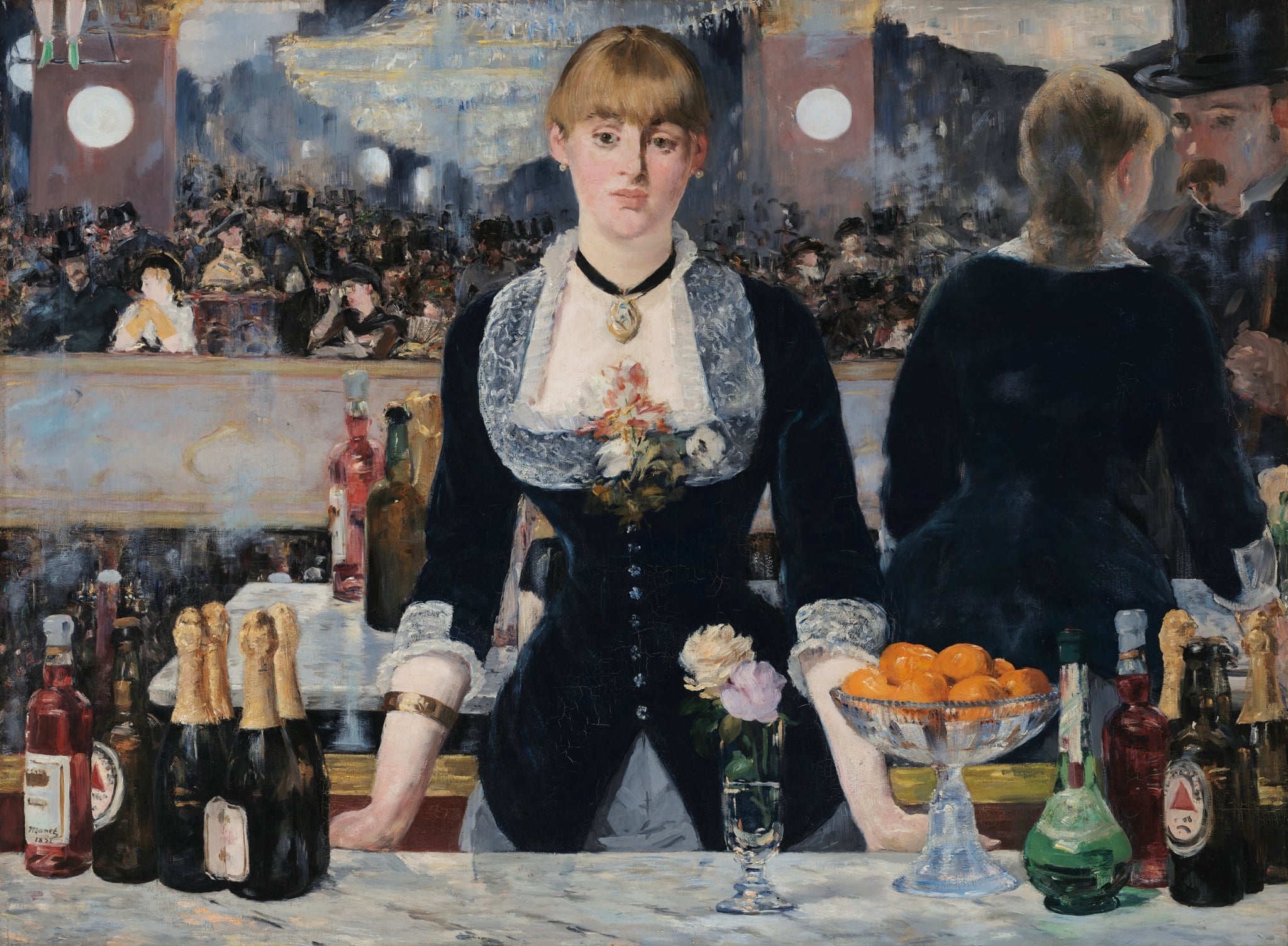
Édouard Manet’s A Bar at the Folies-Bergère stages a face-to-face encounter with modern Paris, where <strong>commerce</strong>, <strong>spectacle</strong>, and <strong>alienation</strong> converge. A composed barmaid fronts a marble counter loaded with branded bottles, flowers, and a brimming bowl of oranges, while a disjunctive <strong>mirror</strong> unravels stable viewing and certainty <sup>[1]</sup><sup>[2]</sup>.

After the Luncheon
Pierre-Auguste Renoir (1879)
After the Luncheon crystallizes a <strong>suspended instant</strong> of Parisian leisure: coffee finished, glasses dappled with light, and a cigarette just being lit. Renoir’s <strong>shimmering brushwork</strong> and the trellised spring foliage turn the scene into a tapestry of conviviality where time briefly pauses.
At the Moulin Rouge
Henri de Toulouse-Lautrec (1892–1895)
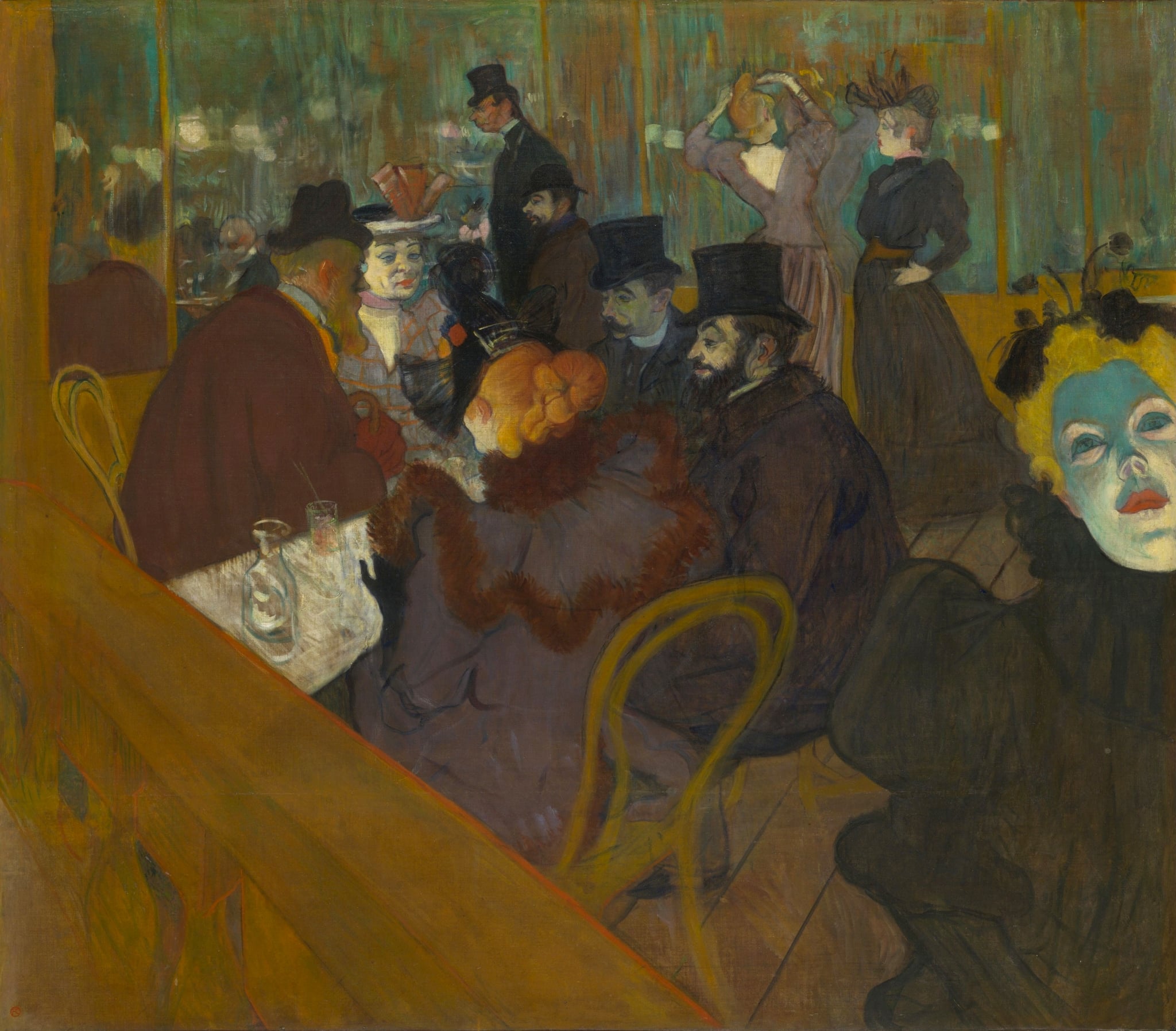
At the Moulin Rouge plunges us into the churn of Paris nightlife, staging a crowded room where spectacle and fatigue coexist. A diagonal banister and abrupt croppings create <strong>off‑kilter immediacy</strong>, while harsh artificial light turns faces <strong>masklike</strong> and cool. Mirrors multiply the crowd, amplifying a mood of allure tinged with <strong>urban alienation</strong> <sup>[1]</sup><sup>[3]</sup><sup>[4]</sup>.
Campbell's Soup Cans
Andy Warhol (1962)
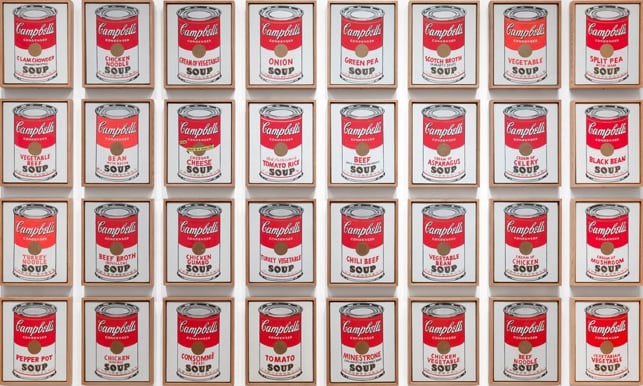
Warhol’s Campbell’s Soup Cans turns a shelf-staple into <strong>art</strong>, using a gridded array of near-identical red-and-white cans to fuse <strong>branding</strong> with <strong>painting</strong>. By repeating 32 flavors—Tomato, Clam Chowder, Chicken Noodle, and more—the work stages a clash between <strong>mass production</strong> and the artist’s hand <sup>[1]</sup><sup>[3]</sup>.

Combing the Hair
Edgar Degas (c.1896)
Edgar Degas’s Combing the Hair crystallizes a private ritual into a scene of <strong>compressed intimacy</strong> and <strong>classed labor</strong>. The incandescent field of red fuses figure and room, turning the hair into a <strong>binding ribbon</strong> between attendant and sitter <sup>[1]</sup>.
Les Demoiselles d'Avignon
Pablo Picasso (1907)
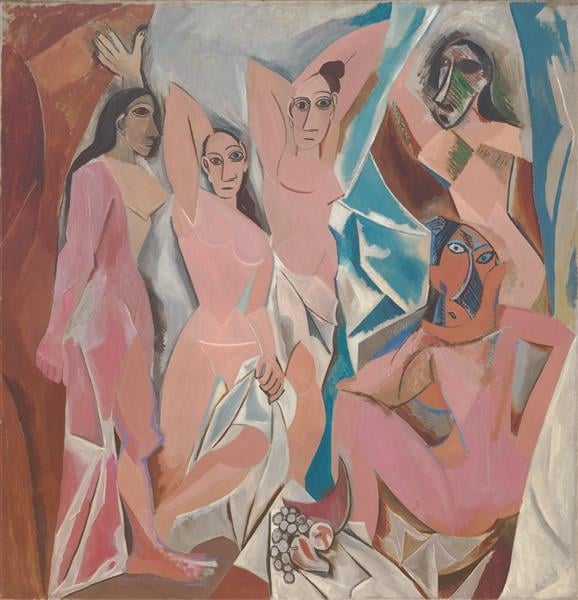
Les Demoiselles d'Avignon hurls five nudes toward the viewer in a shallow, splintered chamber, turning classical beauty into <strong>sharp planes</strong>, <strong>masklike faces</strong>, and <strong>fractured space</strong>. The fruit at the bottom reads as a sensual lure edged with threat, while the women’s direct gazes indict the beholder as participant. This is the shock point of <strong>proto‑Cubism</strong>, where Picasso reengineers how modern painting means and how looking works <sup>[1]</sup><sup>[2]</sup>.
Nighthawks
Edward Hopper (1942)
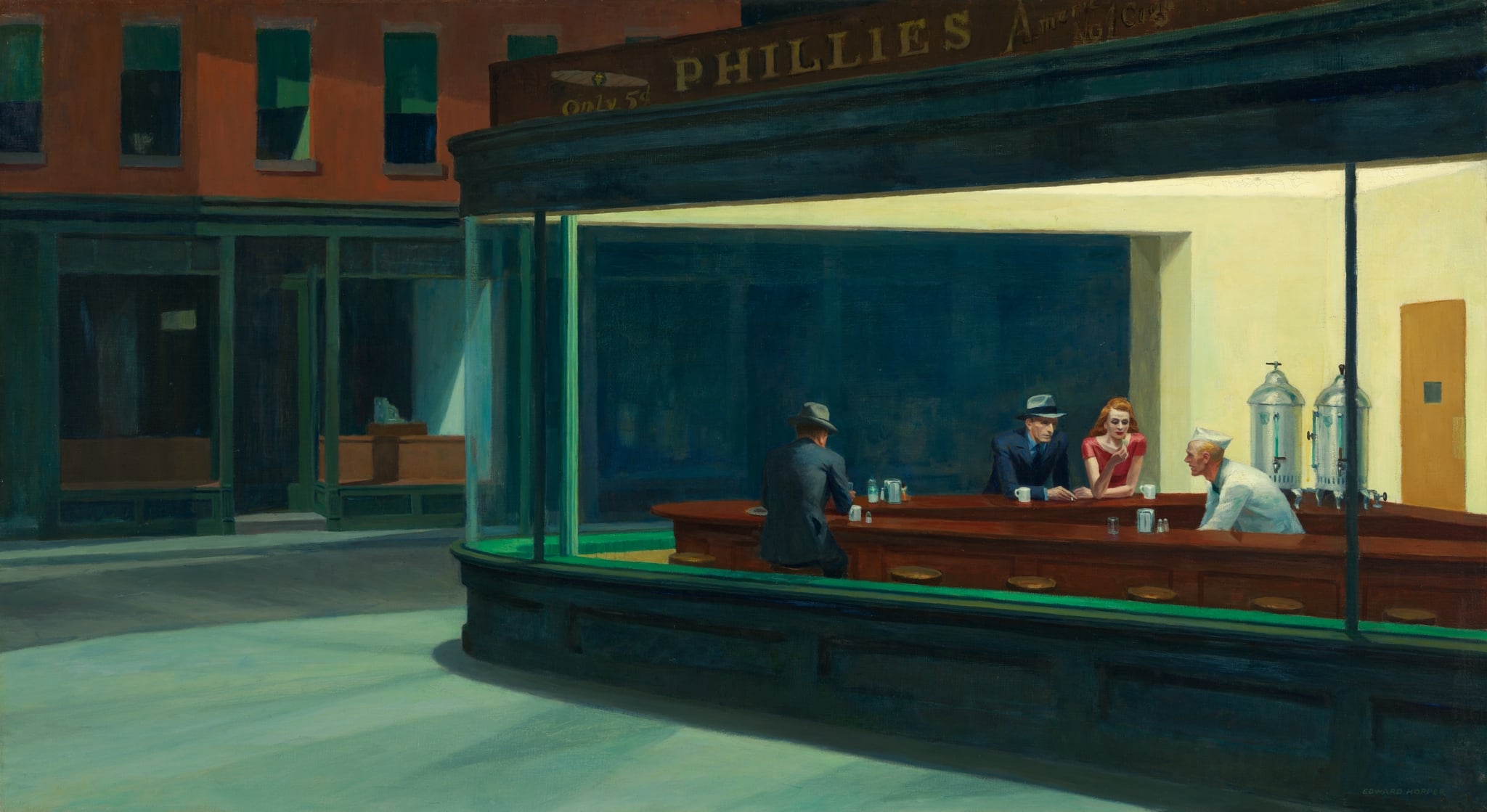
Edward Hopper’s Nighthawks turns a corner diner into a sealed stage where <strong>fluorescent light</strong> and <strong>curved glass</strong> hold four figures in suspended time. The empty streets and the “PHILLIES” cigar sign sharpen the sense of <strong>urban solitude</strong> while hinting at wartime vigilance. The result is a cool, lucid image of modern life: illuminated, open to view, and emotionally out of reach.
Plum Brandy
Édouard Manet (ca. 1877)
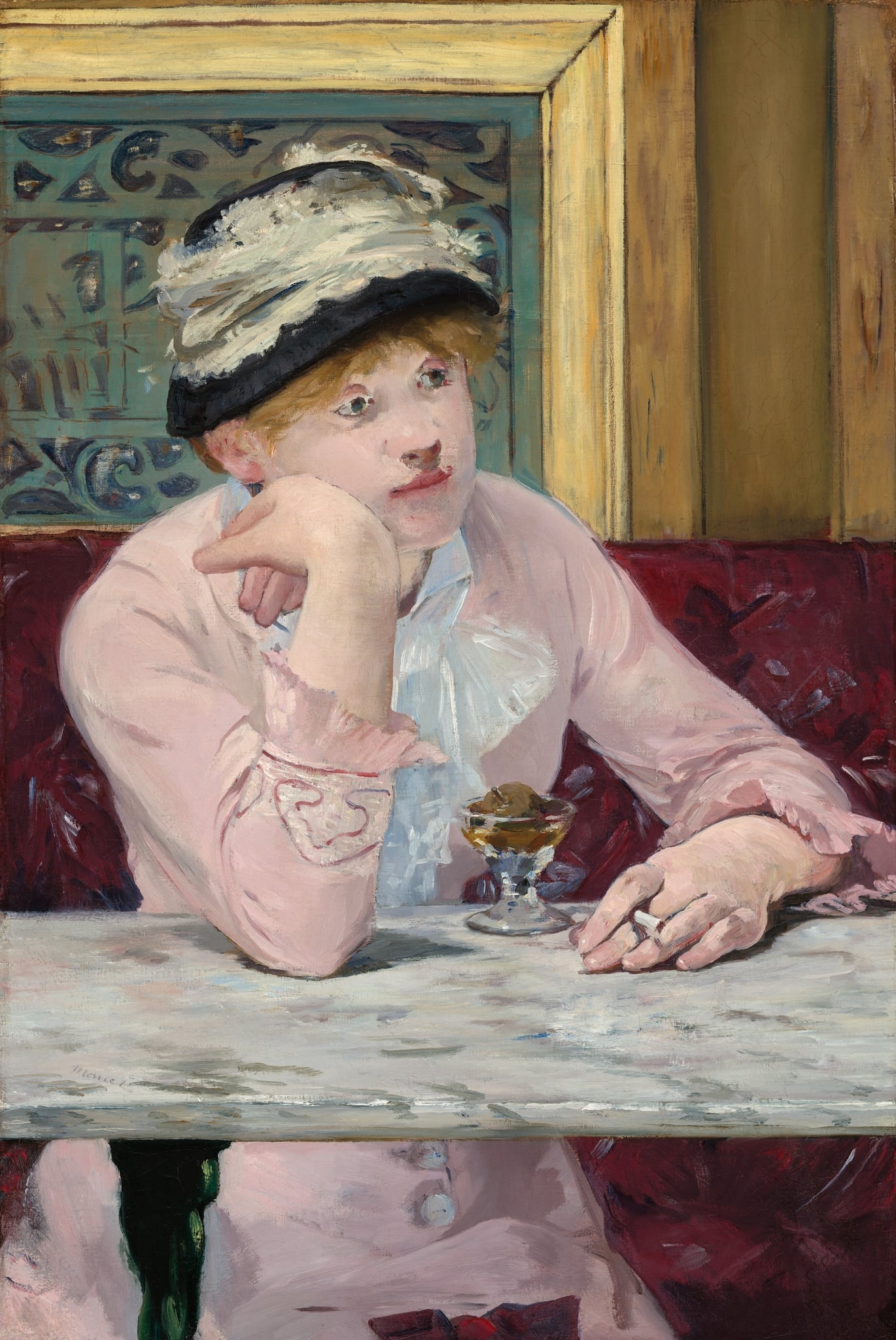
Manet’s Plum Brandy crystallizes a modern pause—an urban <strong>interval of suspended action</strong>—through the idle tilt of a woman’s head, an <strong>unlit cigarette</strong>, and a glass cradling a <strong>plum in amber liquor</strong>. The boxed-in space—marble table, red banquette, and decorative grille—turns a café moment into a stage for <strong>solitude within public life</strong> <sup>[1]</sup><sup>[2]</sup>.
The Ballet Class
Edgar Degas (1873–1876)
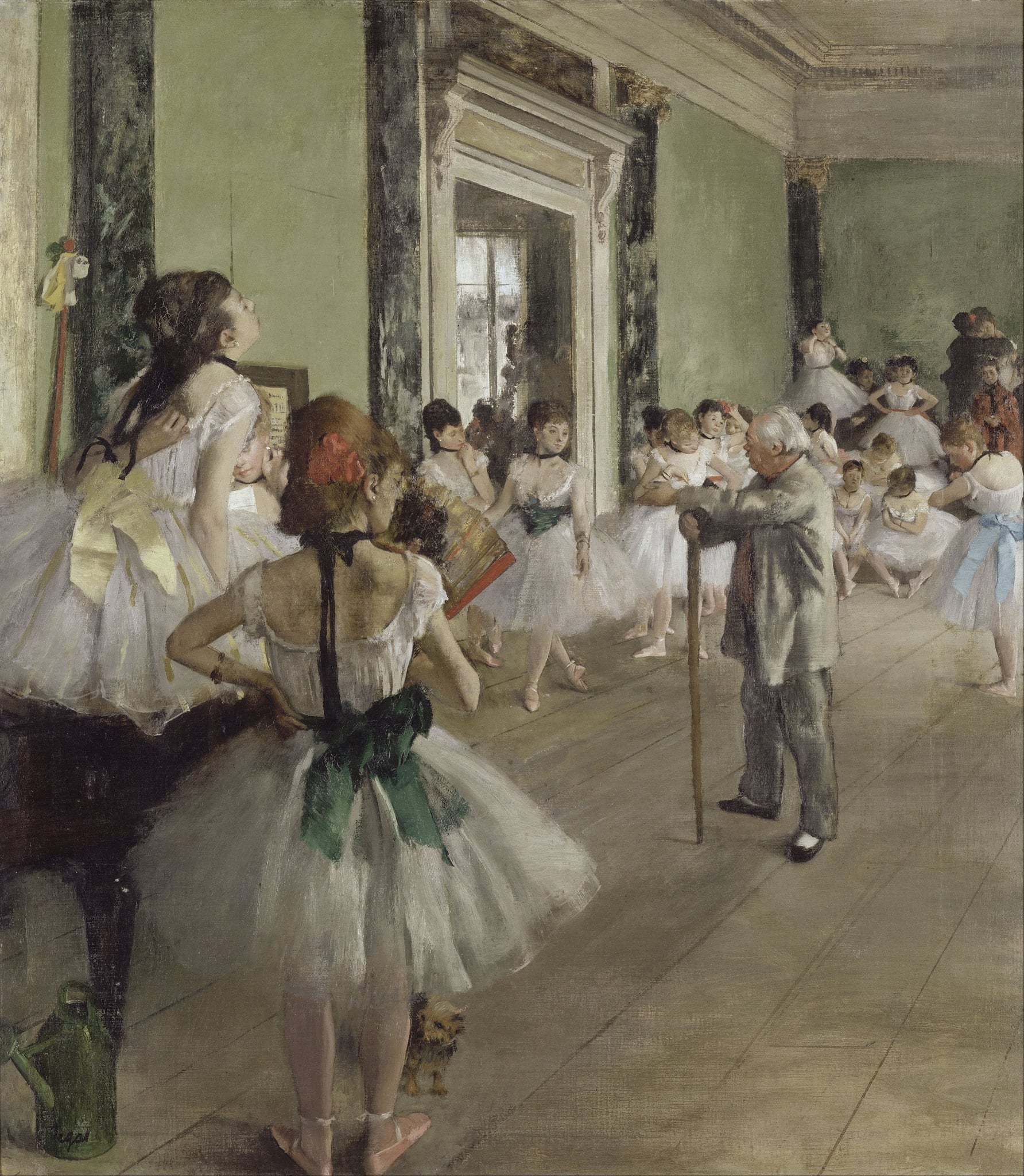
<strong>The Ballet Class</strong> shows the work behind grace: a green-walled studio where young dancers in white tutus rest, fidget, and stretch while the gray-suited master stands with his cane. Degas’s diagonal floorboards, cropped viewpoints, and scattered props—a watering can, a music stand, even a tiny dog—stage a candid vision of routine rather than spectacle. The result is a modern image of discipline, hierarchy, and fleeting poise.
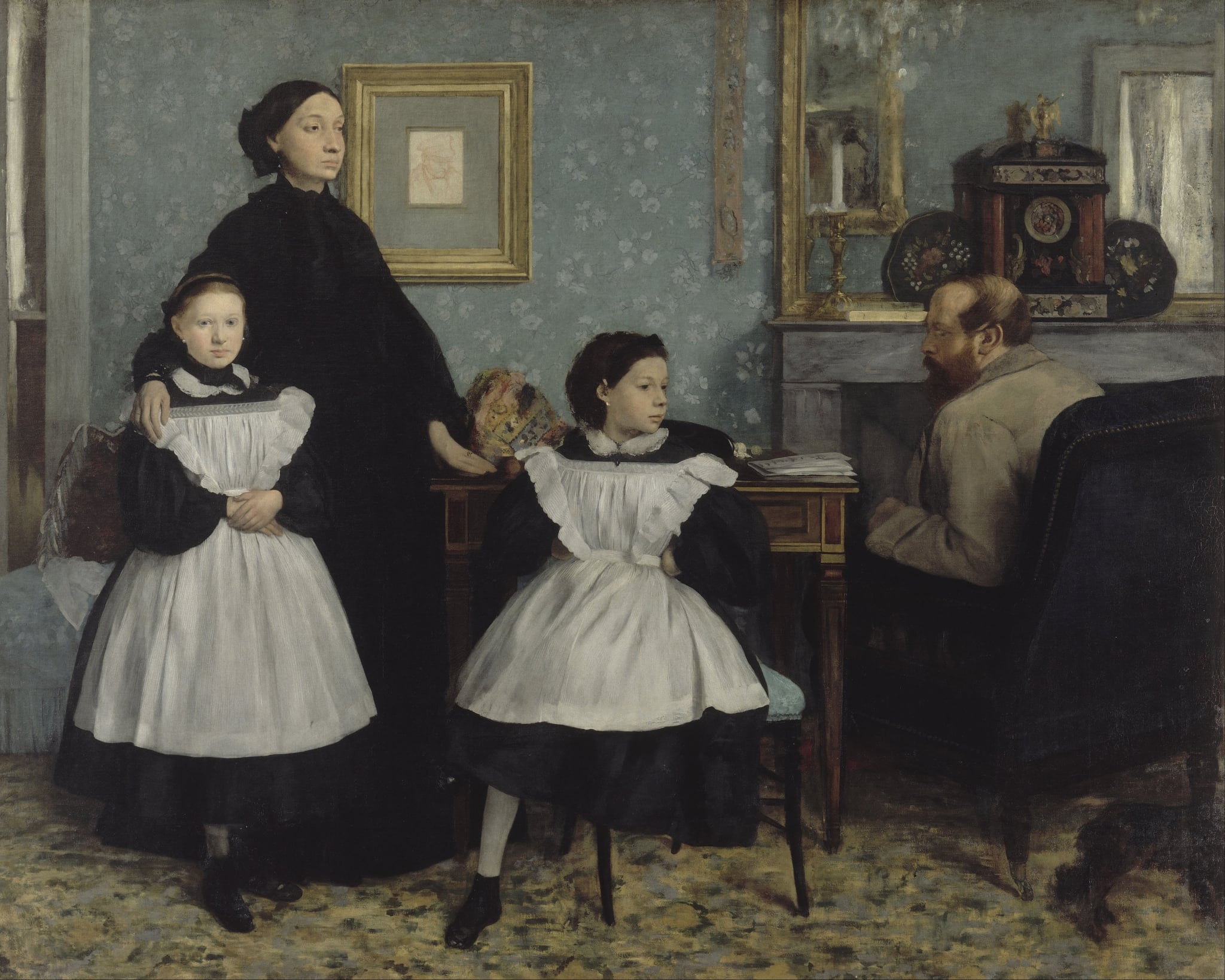
The Bellelli Family
Edgar Degas (1858–1869)
In The Bellelli Family, Edgar Degas orchestrates a poised domestic standoff, using the mother’s column of <strong>mourning black</strong>, the daughters’ <strong>mediating whiteness</strong>, and the father’s turned-away profile to script roles and distance. Rigid furniture lines, a gilt <strong>clock</strong>, and the ancestor’s red-chalk portrait create a stage where time, duty, and inheritance press on a family held in uneasy equilibrium.
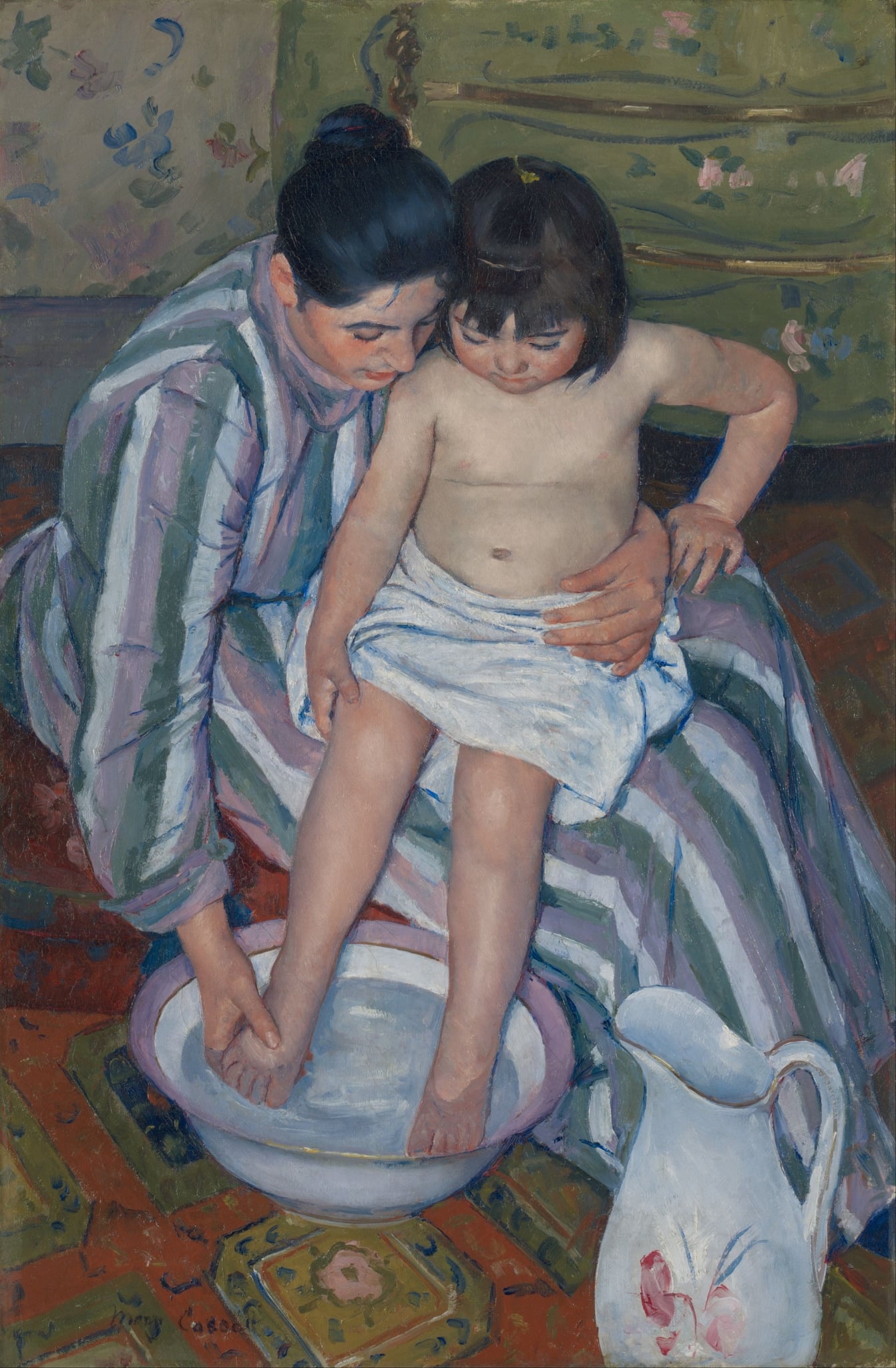
The Child's Bath
Mary Cassatt (1893)
Mary Cassatt’s The Child’s Bath (1893) recasts an ordinary ritual as <strong>modern devotion</strong>. From a steep, print-like vantage, interlocking stripes, circles, and diagonals focus attention on <strong>touch, care, and renewal</strong>, turning domestic labor into a subject of high art <sup>[1]</sup><sup>[3]</sup>. The work synthesizes Impressionist sensitivity with <strong>Japonisme</strong> design to monumentalize the private sphere <sup>[1]</sup><sup>[2]</sup>.

The Floor Scrapers
Gustave Caillebotte (1875)
Gustave Caillebotte’s The Floor Scrapers stages three shirtless workers planing a parquet floor as shafts of light pour through an ornate balcony door. The painting fuses <strong>rigorous perspective</strong> with <strong>modern urban labor</strong>, turning curls of wood and raking light into a ledger of time and effort <sup>[1]</sup><sup>[3]</sup>. Its cool, gilded interior makes visible how bourgeois elegance is built on bodily work.
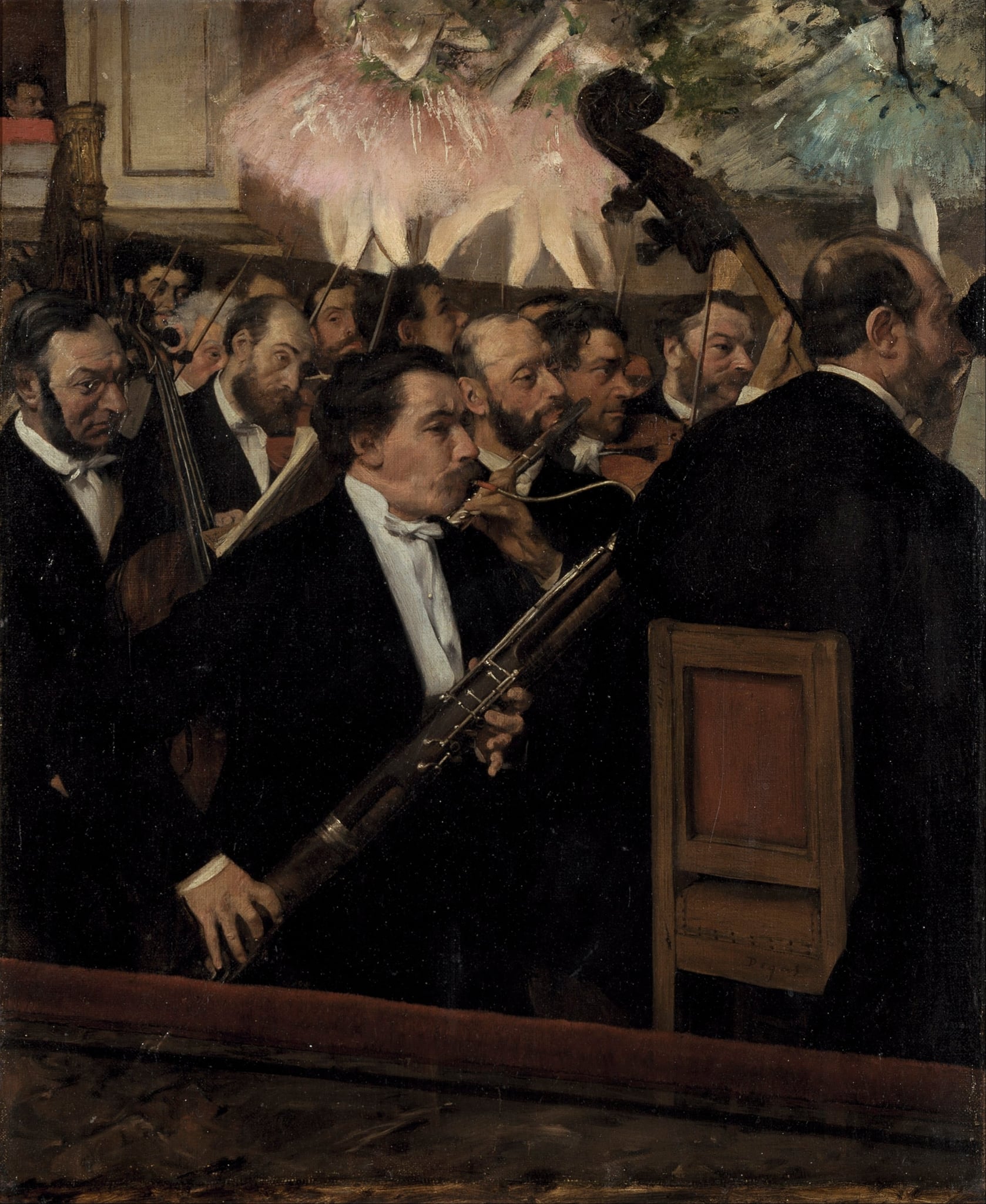
The Opera Orchestra by Edgar Degas | Analysis
Edgar Degas
In The Opera Orchestra, Degas flips the theater’s hierarchy: the black-clad pit fills the frame while the ballerinas appear only as cropped tutus and legs, glittering above. The diagonal <strong>bassoon</strong> and looming <strong>double bass</strong> marshal a dense field of faces lit by footlights, turning backstage labor into the subject and spectacle into a fragment <sup>[1]</sup><sup>[2]</sup>.
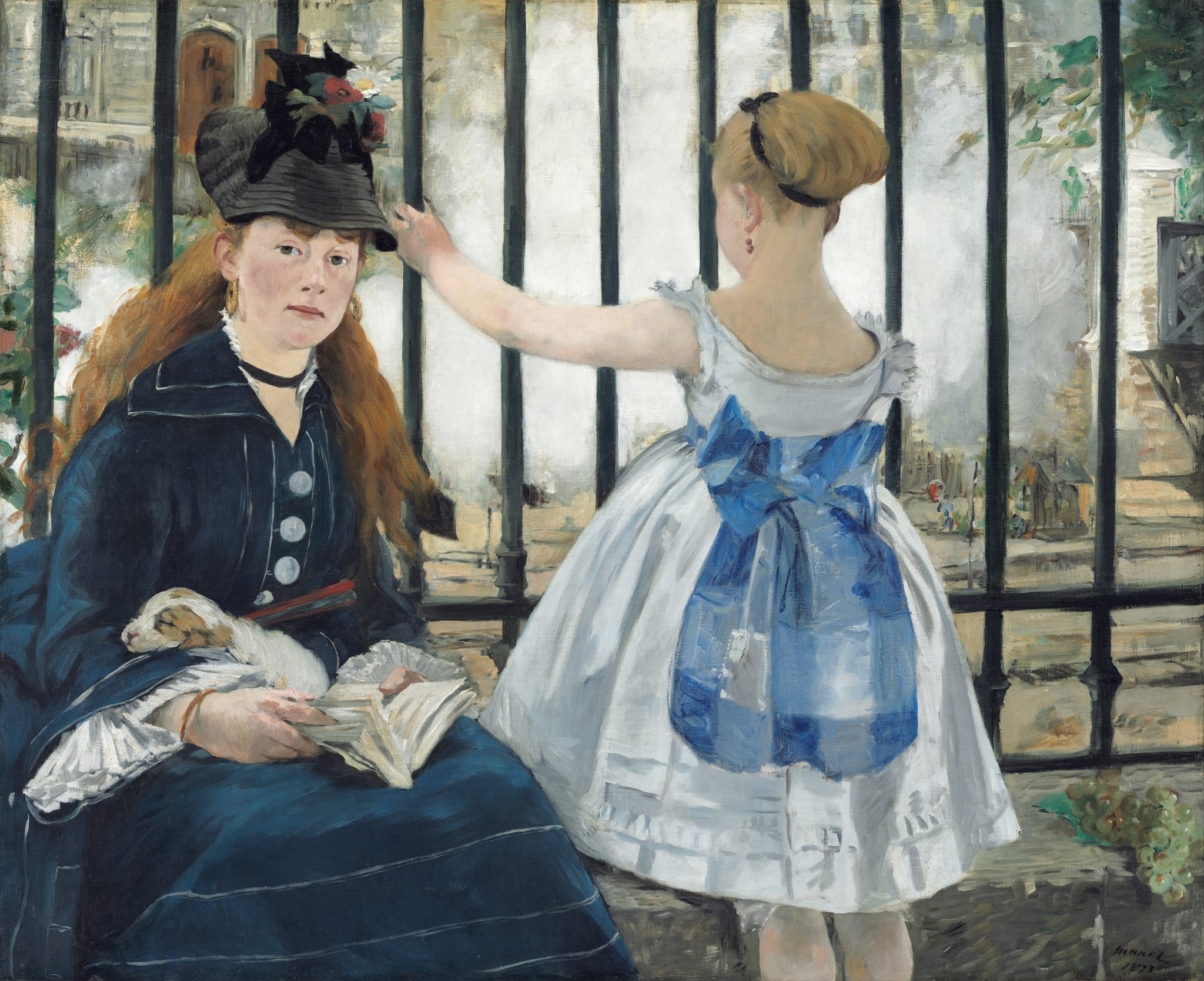
The Railway
Édouard Manet (1873)
Manet’s The Railway is a charged tableau of <strong>modern life</strong>: a composed woman confronts us while a child, bright in <strong>white and blue</strong>, peers through the iron fence toward a cloud of <strong>steam</strong>. The image turns a casual pause at the Gare Saint‑Lazare into a meditation on <strong>spectatorship, separation, and change</strong> <sup>[1]</sup><sup>[3]</sup>.
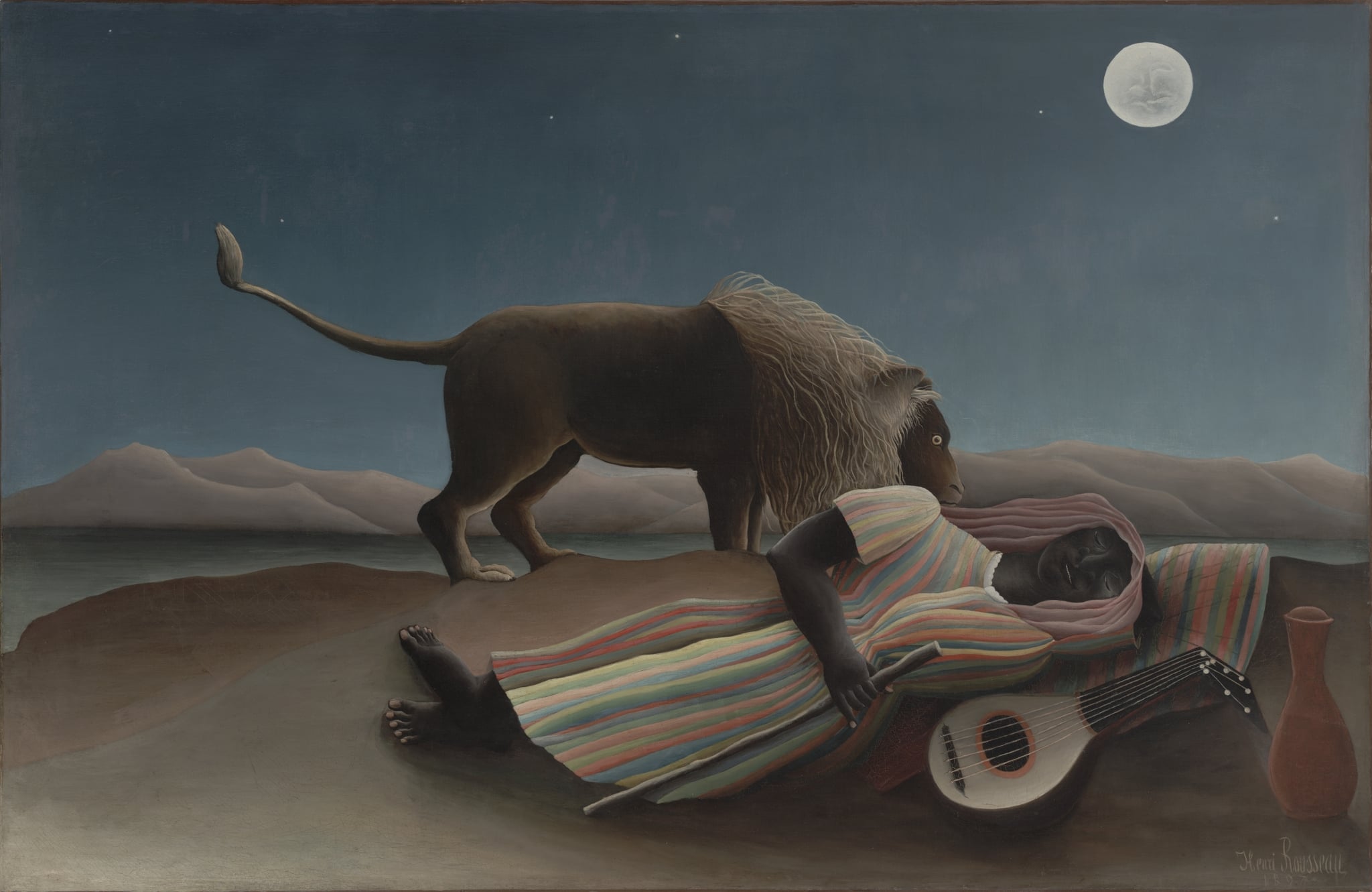
The Sleeping Gypsy
Henri Rousseau (1897)
Under a cold moon, a traveler sleeps in a striped robe as a lion pauses to sniff, not strike—an image of <strong>danger held in suspension</strong> and <strong>imagination as protection</strong>. Rousseau’s polished surfaces, flattened distance, and toy-like clarity turn the desert into a <strong>dream stage</strong> where art (the mandolin) and life (the water jar) keep silent vigil <sup>[1]</sup><sup>[2]</sup>.
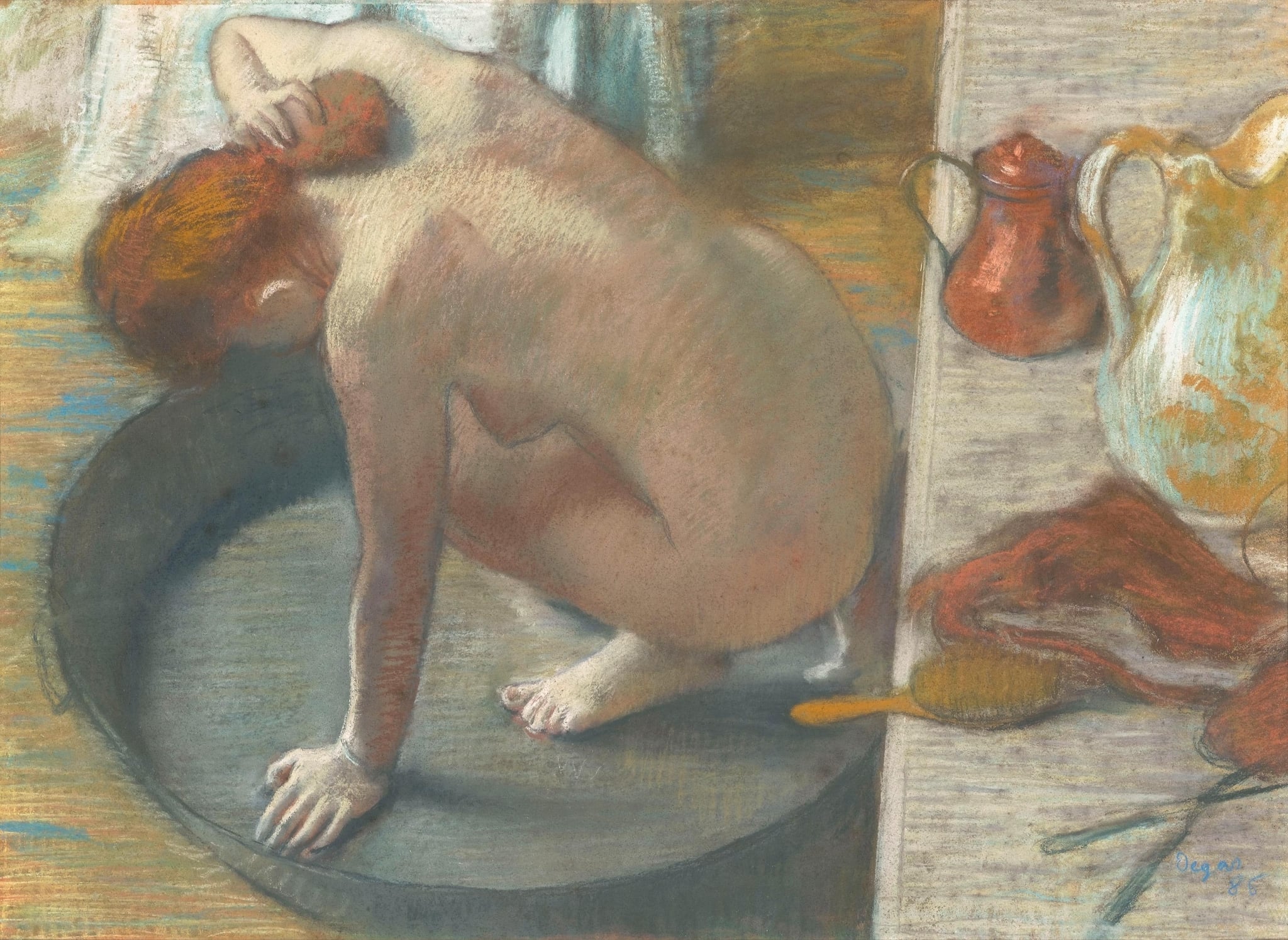
The Tub
Edgar Degas (1886)
In The Tub (1886), Edgar Degas turns a routine bath into a study of <strong>modern solitude</strong> and <strong>embodied labor</strong>. From a steep, overhead angle, a woman kneels within a circular basin, one hand braced on the rim while the other gathers her hair; to the right, a tabletop packs a ewer, copper pot, comb/brush, and cloth. Degas’s layered pastel binds skin, water, and objects into a single, breathing field of <strong>warm flesh tones</strong> and blue‑greys, collapsing distance between body and still life <sup>[1]</sup>.

The Two Fridas
Frida Kahlo (1939)
The Two Fridas presents a doubled self seated under a storm-charged sky, their opened chests revealing two hearts joined by a single artery. One Frida in a European dress clamps the vessel with a surgical <strong>hemostat</strong> as blood stains her skirt, while the other in a <strong>Tehuana</strong> dress steadies a locket and the shared pulse. The canvas turns private injury into a public image of <strong>dual identity</strong> and endurance <sup>[1]</sup><sup>[2]</sup>.
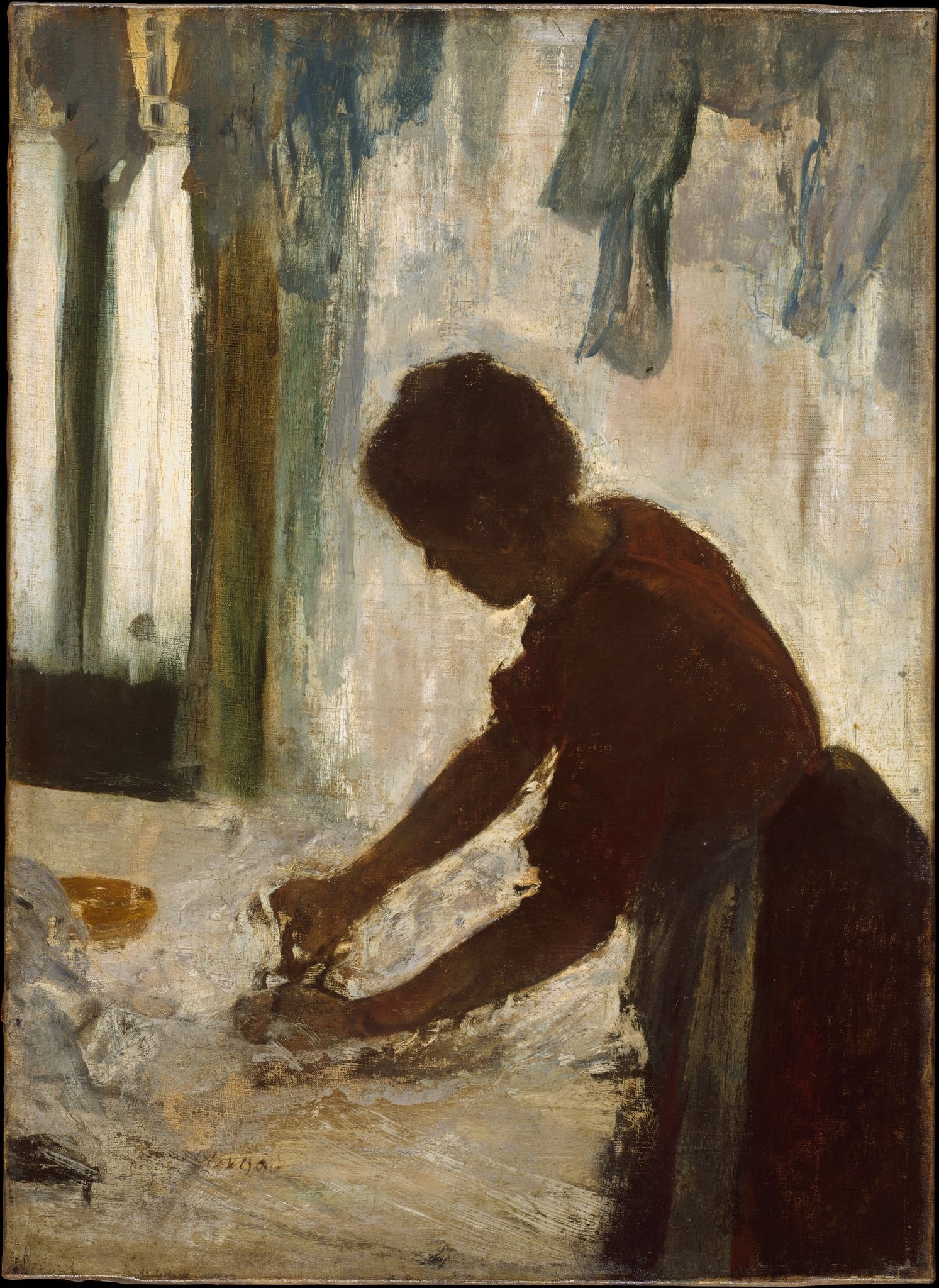
Woman Ironing
Edgar Degas (c. 1876–1887)
In Woman Ironing, Degas builds a modern icon of labor through <strong>contre‑jour</strong> light and a forceful diagonal from shoulder to iron. The worker’s silhouette, red-brown dress, and the cool, steamy whites around her turn repetition into <strong>ritualized transformation</strong>—wrinkled cloth to crisp order <sup>[1]</sup><sup>[2]</sup>.
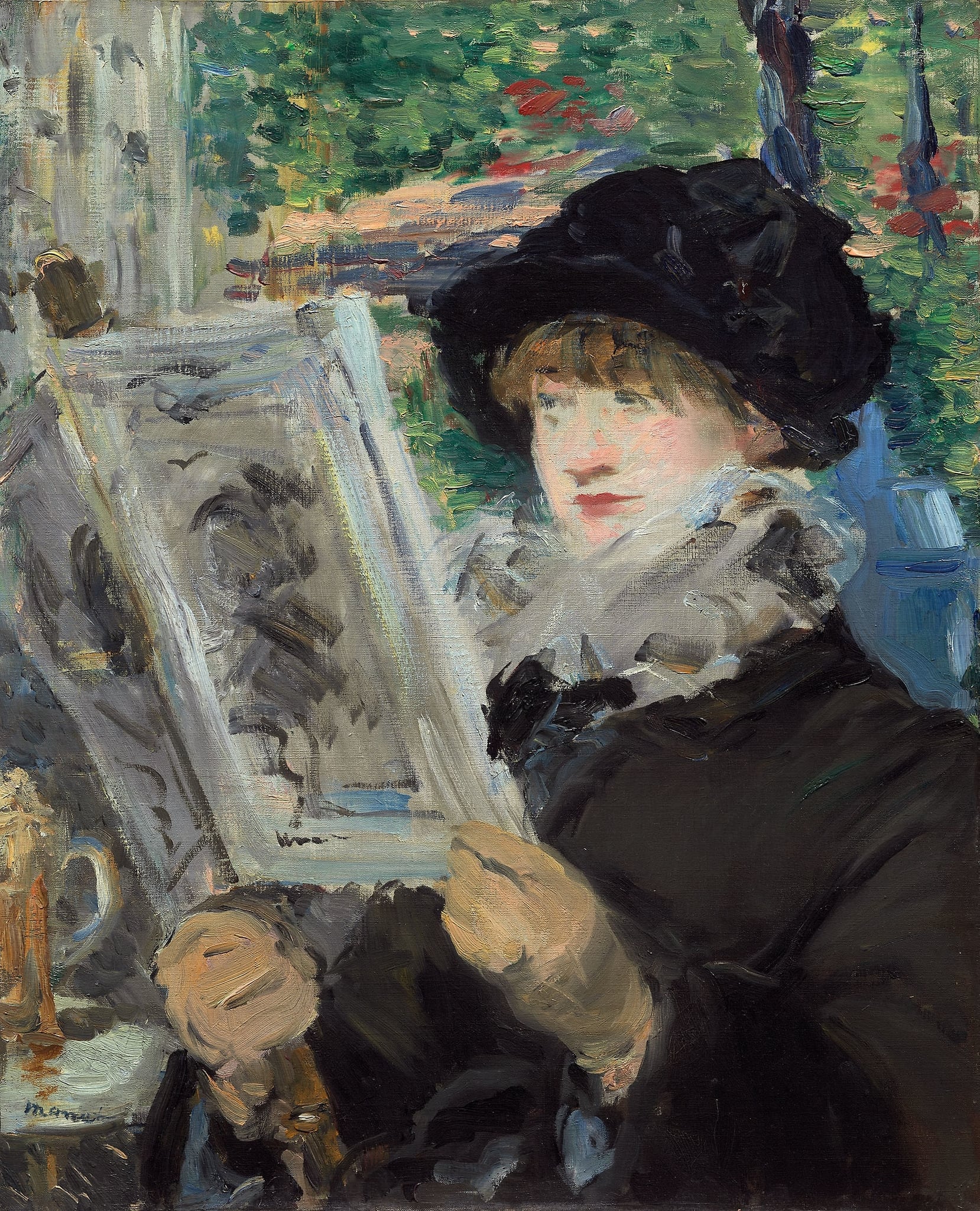
Woman Reading
Édouard Manet (1880–82)
Manet’s Woman Reading distills a fleeting act into an emblem of <strong>modern self-possession</strong>: a bundled figure raises a journal-on-a-stick, her luminous profile set against a brisk mosaic of greens and reds. With quick, loaded strokes and a deliberately cropped <strong>beer glass</strong> and paper, Manet turns perception itself into subject—asserting the drama of a private mind within a public café world <sup>[1]</sup><sup>[2]</sup>.
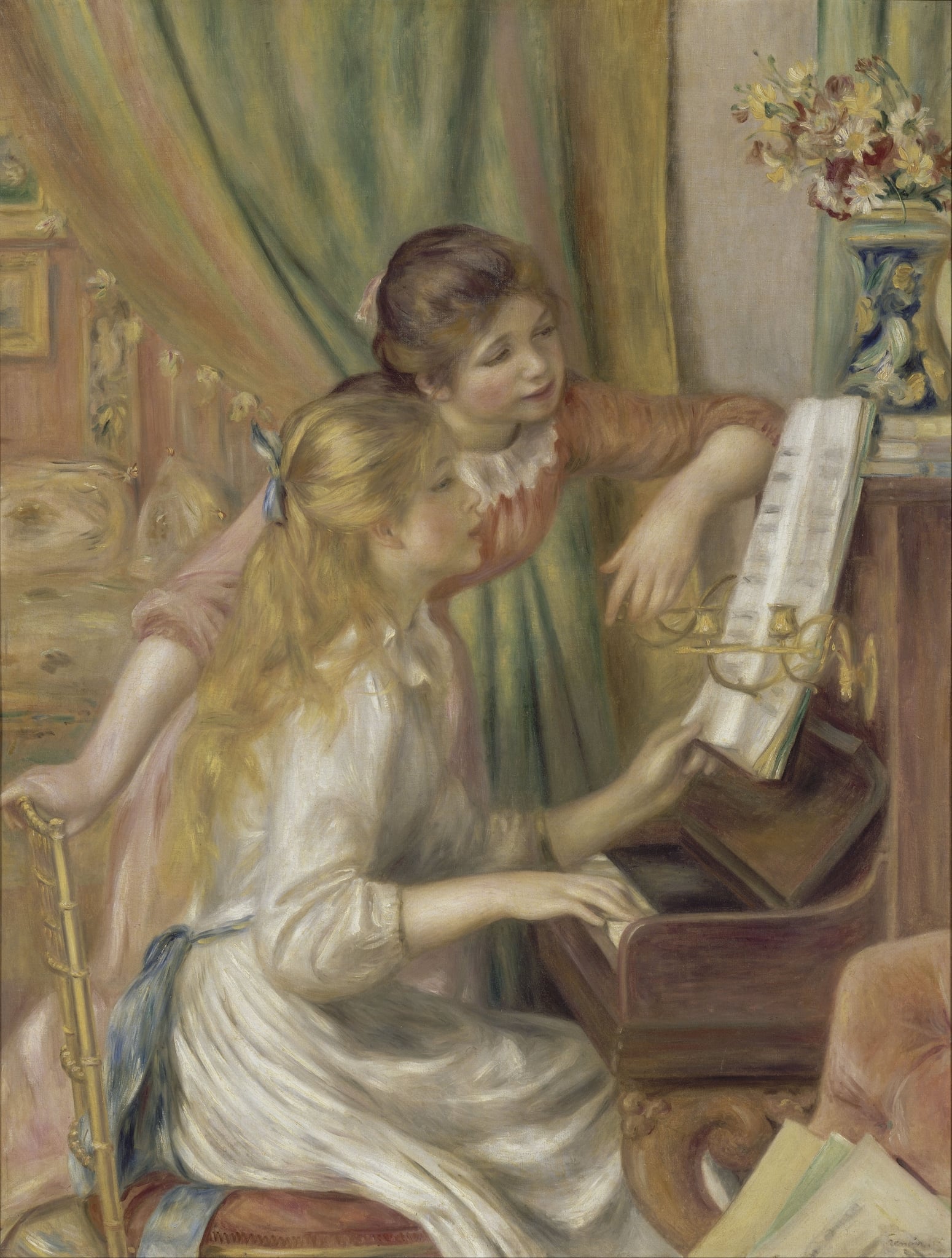
Young Girls at the Piano
Pierre-Auguste Renoir (1892)
Renoir’s Young Girls at the Piano turns a quiet lesson into a scene of <strong>attunement</strong> and <strong>bourgeois grace</strong>. Two adolescents—one seated at the keys, the other leaning to guide the score—embody harmony between discipline and delight, rendered in Renoir’s late, <strong>luminous</strong> touch <sup>[1]</sup><sup>[2]</sup>.
Related Themes
Related Symbolism Categories
Object
Object symbolism charts how seemingly ordinary tools, vessels, and furnishings—books, bottles, clocks, tables, instruments—become dense sign-carriers of labor, leisure, desire, and modern perception from early modern iconography to Impressionist and post‑Impressionist painting.
Objecthood
The “Objecthood” symbolism category traces how seemingly ordinary implements—bottles, clocks, mirrors, gloves, café tableware—become charged mediators of labor, time, spectacle, and selfhood in modern painting, shifting from stable attributes to critical signs of fractured, commodity-driven experience.
Domesticity
The “Domesticity” symbolism category traces how modern artists transform humble household objects, routines, and furnishings into a complex visual language of labor, intimacy, and psychological tension within the home and its adjacent social spaces.
Within Western art, objects have long borne symbolic weight—from the memento mori skull on a scholar’s desk to the glimmering glass in a Dutch breakfast piece. In the nineteenth and twentieth centuries, this inherited vocabulary is neither abandoned nor merely repeated; it is redirected toward the conditions of modern life. The objects that populate cafes, dance studios, music halls, and shop interiors become instruments through which artists theorize labor, sociability, and commodification. What had been devotional emblems or moralizing attributes turn into semiotic devices that articulate the pressures of urban modernity, often by folding older iconographic habits into newly commercial and industrial environments.
A striking continuity with early modern painting lies in the persistent centrality of drinking vessels and tableware, yet their meanings shift. In Pierre-Auguste Renoir’s After the Luncheon (1879), the table acts as a temporal register: empty decanters, coffee cups and saucers, and a small liqueur glass collectively trace the arc of a social ritual from wine to coffee and digestif. Semiologically, each vessel is less an allegory in itself than a marker in a sequence; the viewer reads the white cloth as a “ledger of time,” where consumption has already taken place. The glass objects glint and refract, binding figures and setting into a single luminous atmosphere, but their iconographic charge resides in their status as residues—empty or half‑used containers that demonstrate conviviality already spent. The tableware thus codes sociability as a process rather than a static virtue, translating the vanitas concern with time’s passage into the tempo of modern leisure.
Édouard Manet radicalizes this logic of vessels as social signs in Plum Brandy (ca. 1877). Here the single glass with plum brandy stands untouched, its amber liquid encasing the preserved fruit as “sweetness offered, but not yet tasted.” Coupled with the woman’s unlit cigarette, the object functions as a symbol of deferred consumption—pleasure held in reserve and, by extension, a self temporarily suspended between public spectacle and private reverie. The drink is not merely a token of café culture; it is a hinge between action and inaction. Semiotically, its stillness and small scale do crucial work: they punctuate a boxed-in field of marble table and red banquette, insisting that in the modern café the possibility of indulgence is omnipresent yet perpetually negotiable. Where Renoir’s array visualizes the social after, Manet’s solitary glass crystallizes the not yet, reorienting the still-life tradition around psychological states.
The café and bar environment recurs in Manet’s A Bar at the Folies-Bergère (1882), but here vessels and bottles become enmeshed in an explicit economy of branding and spectacle. The marble counter, like the white cloth in Renoir, is a stage on which objects accumulate: branded beer bottles with the Bass red triangle, gleaming champagne, and a bowl of oranges positioned as bright currency. These branded bottles serve a dual semiotic function. On one level they literalize commercial pleasure, standing for standardized consumer goods in a globalizing market. On another, they operate metonymically, framing the barmaid as part of the same system of commodities. Their labels are legible in a way that her expression is not, so that the clarity of commercial text contrasts with the opacity of human interiority. Iconographically, the still-life group reprises the seventeenth‑century heap of luxury goods, yet the introduction of recognizable logos—the red triangle, the scripted marks—shifts the emphasis from moralizing abundance to a pointed reflection on how identity can be subsumed within brand visibility.
If on the counter of Manet’s bar products are named and differentiated through corporate insignia, Andy Warhol’s Campbell’s Soup Cans (1962) monumentalizes the inverse condition: an industrial order in which differentiation is reduced to the most minimal textual variation. The Campbell’s cursive script logo, painted with machine-like regularity across thirty‑two canvases, is the paramount object-sign here. It functions as a corporate signature that borrows the authority and intimacy of handwriting while guaranteeing brand sameness. Within each panel, the label’s red-and-white field, gold roundel, and fleur-de-lis band announce the can’s identity before flavor is read. Semiologically, the logo is both signifier and subject: the work teaches the viewer to experience the script itself as content, not mere ornament. Iconographically, Warhol evacuates the traditional still-life of its moral or sensual resonances; the soup can does not stand for transience or luxury but for an entire regime of consumption in which aesthetic attention is directed to replication. The small “slippages” in hand-painted lines merely underscore how far the ideal lies in industrial perfection, turning the classical painterly mark into a residue of obsolescent craft.
Where Warhol explores corporate typography as object, Edgar Degas uses more modest implements to probe structures of discipline and backstage labor. In The Ballet Class (1873–1876), the ballet master’s cane appears as a thin, vertical staff planted beside the gray-clad teacher. Iconographically, it is an attribute of role—authority, rule, and timekeeping—akin to the staff of a conductor or drillmaster. Yet in Degas’s choreography of bodies and floorboards, the cane also functions semiotically as a visible metronome: it translates invisible counting and tempo into a material sign. The scattered objects of the studio—a watering can, a music stand—further anchor the room in the ordinary apparatus of training. They are not allegorical in the old sense; instead, they index the prosaic labor that underwrites the fleeting illusion of weightless performance. These tools of discipline and maintenance insist that modern grace is a manufactured condition sustained by a network of seemingly trivial things.
At the opposite end of the social spectrum, Edward Hopper’s Nighthawks (1942) turns the diner counter into a boundary object, a long mahogany run lined with cups, shakers, and a chrome sugar dispenser that “act like small sentinels” between figures. As in Degas’s studio, implements regulate spacing and relation, but here the emphasis is on separation rather than training. The two tall coffee urns behind the counter, gleaming under fluorescent light, epitomize what might be called instrumental hospitality: they are service apparatuses rather than tokens of intimacy. Semiologically, they translate the promise of comfort—coffee, warmth—into the impersonal forms of mass catering equipment, much like Warhol’s cans convert nourishment into repeatable packaging. The PHILLIES cigar sign that dominates the exterior fascia extends this logic beyond the diner’s interior: commercial text outshouts human utterance, turning language itself into an object that structures urban experience. In this environment, the cup and urn are no longer moral symbols but infrastructural nodes within a network of consumption and solitude.
Taken together, these object-symbols chart a trajectory from the moralized still life and genre scene to a modern iconography keyed to systems—of leisure, branding, training, and nocturnal commerce. The glass with plum brandy and Renoir’s empty decanters rework the Dutch interest in consumption and time into nuanced psychologies of pause and aftermath. Manet’s branded bottles and Warhol’s soup cans register the rise of corporate identity and standardized pleasure, displacing allegory onto the very surfaces of packaging. Degas’s cane, watering can, and studio paraphernalia, like Hopper’s cups and urns, reveal how the tools of labor and service quietly govern bodies and relations in spaces otherwise devoted to entertainment or respite. Across this arc, objects lose none of their symbolic force; rather, their meanings are re-specified. They become compact theorists of modernity—material signs through which artists interrogate how work, desire, and identity are organized in an increasingly commodified and disciplined world.